
Torque And Force Calibration Company In Abqaiq
Traceable torque and force testing for industrial tools, load devices and maintenance teams working in Abqaiq and the Eastern Province.
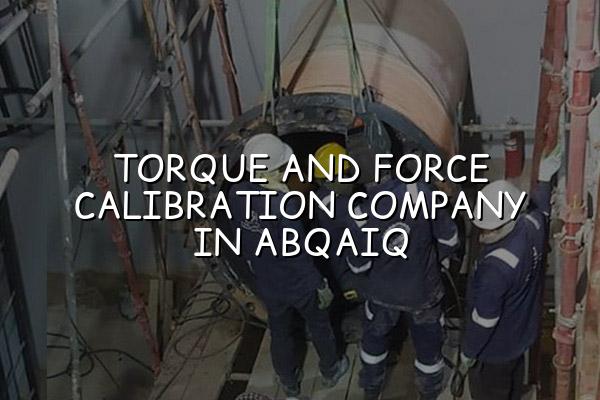
Torque and force calibration company in Abqaiq clients call us when they need tools, sensors and load devices checked against traceable references before the next shutdown, maintenance round or commissioning job. We help you keep measurements defensible, so your technicians can work with confidence instead of guessing on tightening or applied load.
In Abqaiq and the wider Eastern Province, that usually means day-to-day oil and gas maintenance, workshop tooling, lifting-related checks and field jobs where a bad reading can waste time fast. Our team supports that work with ISO/IEC 17025:2017 discipline, mobile-lab capability and practical reporting that fits industrial decision-making.
What this service covers in Abqaiq
Our torque and force calibration company in Abqaiq work is built around the tools people actually use on site: torque wrenches, torque multipliers, torque transducers, force gauges, push-pull meters, load cells and related fixtures. We handle calibration checks for workshop, maintenance and inspection teams who need results that tie back to controlled references, not just a quick bench check with no paper trail.
Torque calibration for field and workshop tools
Torque tools can drift after hard use, rough handling or storage in hot plant areas. We see this often with wrenches used around pumps, flanges, skids and rotating equipment. A clean calibration record helps your maintenance crew know the tool is still doing the job it was bought for, and it gives QA teams something they can file during audits or internal checks.
Force calibration for loads, pull tests and applied force checks
Force calibration matters when your work depends on pull, push, compression or load verification. That includes test rigs, lifting-related checks, mechanical fixtures and instruments used in production, inspection or repair shops. We support those requirements with careful handling, proper traceability and practical advice on whether the instrument should stay in service, go for repair, or be rechecked after a user-side issue.
- Receive and identify the instrument — we confirm the tool type, range, serial number and any visible issues before testing starts.
- Check the condition first — we look for wear, damage, missing parts, contamination and signs of poor storage that can affect performance.
- Test against suitable references — the instrument is checked at relevant points across its operating range, not just one convenient point.
- Review the results and status — you get a clear outcome so your team can decide whether to use, repair or replace the device.
- Useful for torque wrenches, torque multipliers and torque transducers
- Supports force gauges, load cells and applied-force devices
- Helps maintenance and QA teams document traceability properly
- Fits onsite work and temperature-controlled in-house lab testing
Typical torque and force instruments we handle
| Instrument | Common use | Why calibration matters |
|---|---|---|
| Torque wrench | Bolt tightening on flanges, covers and assemblies | Prevents under-tightening or over-tightening during maintenance |
| Torque transducer | Testing torque output from tools or rigs | Confirms the reference used for verification is trustworthy |
| Force gauge | Push-pull checks, spring testing and shop inspection | Supports repeatable readings during acceptance checks |
| Load cell | Load verification in fixtures, rigs and test stands | Helps maintain traceability in measurement-based decisions |
Why Abqaiq teams ask for traceable results
Oil and gas facilities around Abqaiq work with tight maintenance windows, high-value assets and repeat jobs that have to be done the same way each time. That is where traceable calibration helps. It gives your engineers a record they can stand behind when a bolt joint, lifting setup or load-based test is reviewed later.
Useful for audits, internal checks and tool control
We keep the focus on practical proof. That means the instrument details, measured points and final status are documented in a way your maintenance, procurement or quality teams can actually use. For clients running tool rooms or shared workshops, that makes it easier to control issue dates, recheck intervals and tool condition without creating extra confusion.
Built for plant environments
Abqaiq operations often need a mix of onsite support and controlled lab testing. We handle both, so your team can send delicate instruments for bench work or bring us to site when the job needs less downtime and less handling.
How we support instrument checks on site and in the lab
Some torque and force instruments are best checked in our temperature-controlled laboratory. Others are easier to verify onsite with our mobile calibration lab, especially when the customer wants less travel, less handling and a faster handover back to the line or workshop. We also arrange pick-up and delivery for instruments that need special care.
That flexibility matters in Saudi industrial work. A maintenance supervisor in a busy plant does not always have time to package every tool, chase a courier and wait around for paperwork. If the job can be handled onsite, we’ll say so. If it needs controlled conditions, we’ll route it to the lab.
Where this helps most
We often see this service requested for shutdown support, plant turnarounds, workshop tool control and inspection routines linked to mechanical maintenance. It also works well for contractors who need a dependable partner for temporary projects, because they can keep one process for several tool types instead of dealing with multiple vendors.
- Match the instrument to the job — choose onsite service when mobility matters, and lab service when controlled testing is the better fit.
- Prepare the tool properly — clean it, isolate accessories and note any faults or previous repairs.
- Share the required range — that helps us test at points that reflect how the instrument is actually used.
- File and review the report — keep the record with your asset log, so the next check is easier to plan.
- Onsite service for plant, workshop and contractor tools
- In-house laboratory support for controlled testing conditions
- Pick-up and delivery for sensitive or special-condition instruments
- Practical reports that suit maintenance and QA filing
What to check before you send a torque or force tool
A lot of delay comes from poor preparation, not the testing itself. If a torque wrench is still covered in grime, if accessories are missing, or if nobody knows the intended range, the job takes longer to sort out. A few minutes of prep on your side saves a lot of back-and-forth later.
We always tell customers to keep the tool history close by. If it was repaired, dropped, overloaded or used on a different application, say so. That context helps our engineers interpret the results and decide whether the instrument needs follow-up checks.
- Note the tool type, range and serial number
- Mention any recent repair, damage or abnormal reading
- Include accessories, adapters or fixtures used with the tool
- Tell us whether you need onsite work or lab handling
How Mayon Industrial Services Can Help
We support torque and force calibration for customers who need reliable results on the tools that keep plant work moving. Alongside calibration, our team can help with mechanical services, inspection, condition monitoring and lab support, so you’re not chasing separate vendors for every job. If you’re handling a shutdown, workshop control or a new project in Abqaiq, talk to us and we’ll help you choose the right route.
Call +91 99447 80844 (India) or +966 59 633 8012 (Saudi Arabia), email services@mayonservices.com, or message us on WhatsApp.
Frequently Asked Questions
Honestly, the right choice is the one that can handle your tool type, your site conditions and your paperwork properly. We work with torque and force instruments for industrial clients in Saudi Arabia using traceable methods and both onsite and lab options, which is what most maintenance teams want when the schedule is tight.
Yes, many torque tools can be checked onsite when the setup is suitable and the environment is under control. Our mobile calibration lab is useful for plant and workshop work where sending tools away would slow down maintenance. If the tool needs special handling, we can arrange pick-up and delivery instead.
We commonly handle force gauges, load cells, push-pull meters and similar applied-force devices used in maintenance, inspection and workshop testing. The exact setup depends on the instrument range and the application, so we always ask what it’s used for before we start.
Because the report is part of the control record. When a torque tool or force device is used on critical work, managers need evidence that the reading came from a controlled process and that the instrument was fit for use at the time. That helps during internal reviews, vendor checks and asset control.
Yes, we support clients across Saudi Arabia from our Dammam Industrial City 2 base through SMC Engineering Services / Sixfaces Maintenance Co. We also serve India from Chennai and handle projects across the Middle East, always within the areas we actually cover.
Ready to check the tools that keep your work on spec?
Send us your torque or force calibration requirement and we’ll help you choose the right onsite or lab route for Abqaiq.
Contact Mayon