
Torque and Force Calibration Company in Dawadmi
Traceable torque and force calibration support for Dawadmi sites, with onsite and lab-based options for maintenance and quality teams.
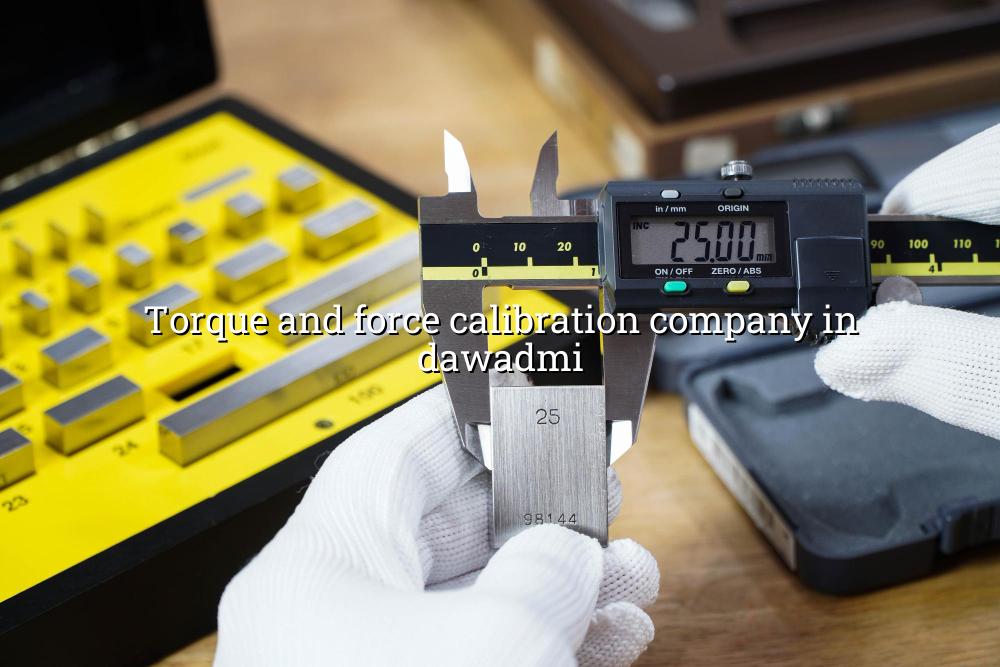
Torque and force calibration company in Dawadmi searches usually come from teams that need proof their tools are reading right before a shutdown, a handover, or a quality audit. We help you get that proof with traceable calibration work that suits maintenance crews, QA teams, and contractors working around industrial sites in Saudi Arabia.
Our team supports Dawadmi operations with onsite calibration where practical, plus in-lab handling for instruments that need tighter environmental control. That matters when you're dealing with torque wrenches, torque testers, force gauges, hydraulic tools, or production equipment that has to perform the same way every time.
Torque and Force Calibration in Dawadmi Done the Right Way
Torque and force measurements affect bolting quality, equipment safety, and repeatability. In our experience, the trouble starts when a wrench or gauge has drifted slowly over time; no one notices until a connection fails inspection or a machine starts behaving inconsistently. We work to ISO/IEC 17025:2017 principles, using controlled methods, traceable standards, and clear reporting so your records stand up to internal checks and customer audits.
Where torque and force calibration gets used
We see demand from construction, oil and gas support contractors, fabrication shops, power plants, and maintenance teams across Saudi Arabia. A torque wrench used on flange work, a force gauge used in a test rig, or a hydraulic tensioning setup all need different checks, but the same discipline: known reference, documented result, and a pass or fail that you can act on.
What customers in Dawadmi usually ask for
Most calls are simple. People want to know if the instrument is still within tolerance, whether the calibration can happen onsite, and if the certificate will show the readings clearly enough for a client file. We also get asked about inspection intervals, storage after use, and how to keep tools ready when several crews share the same kit.
- Identify the instrument — note the make, model, serial number, range, and current condition before the job starts.
- Match the reference — we compare the tool against suitable standards with the right capacity and resolution.
- Check performance points — readings are taken across the range so you can see where the tool holds and where it drifts.
- Review the result — you receive a documented outcome, so your team knows whether the item can stay in service or needs attention.
- Use calibration before critical bolting, not after a problem shows up.
- Keep torque tools grouped by range so the wrong tester isn't used by mistake.
- Record serial numbers and asset tags; missing IDs slow down certificate matching later.
- Store force gauges and torque equipment away from impact, dust, and moisture.
- Ask for onsite service when shutdown windows are tight and tools can’t leave the site easily.
Common Torque and Force Calibration Checks
| Instrument type | Typical use | What we verify |
|---|---|---|
| Click or digital torque wrench | Bolt tightening on flanges, machines, and frames | Applied torque at test points, repeatability, and condition |
| Torque screwdriver | Light assembly and controlled fastening | Low-range output and consistency across the set range |
| Force gauge | Push, pull, and product test fixtures | Load response, direction, and reading stability |
| Hydraulic tensioning tool | Heavy bolting and maintenance work | Output force behavior and traceable comparison |
Why Traceable Results Matter for Dawadmi Sites
When a customer in Dawadmi asks for calibration support, they're usually not looking for paperwork alone. They need evidence that the instrument was checked against recognised references and that the record can be filed with maintenance logs, site QA packs, or client documentation. That is where ISO/IEC 17025:2017-aligned work helps.
Built for industrial routines, not a lab-only mindset
Our work fits the way real sites operate. Some jobs are planned around shutdowns; others happen because a supervisor spots a wrench that feels off or a test fixture starts giving odd numbers. We can support with mobile calibration lab capability, and when special handling is needed, we can manage instruments through our in-house laboratory and pick-up and delivery flow.
What you get in practice
Clear identification, traceable readings, and a result you can use with confidence. If a torque tool is outside tolerance, you know it before the next round of bolting starts. If a force gauge is stable, you can keep using it without guessing.
Onsite or In-Lab Calibration: Which Fits Better?
Onsite service works well when the instrument is part of a live shutdown plan, a production line, or a maintenance campaign with multiple tools in circulation. In-lab work is often better for items that need controlled conditions, careful handling, or a broader check against reference standards. Many Dawadmi clients use both, depending on the asset and the schedule.
We also see requests tied to procurement and vendor approval. Teams want a calibration partner that can speak to engineers, not just to office buyers. That means practical answers about method, range, certificate detail, and how the service will fit into your inspection or maintenance records.
Keeping Torque and Force Equipment Ready
A good certificate only helps if the tool stays usable afterward. We advise customers to keep assets clean, tagged, and stored with the latest calibration status visible. That saves time when a job comes up fast and someone has to decide which wrench, tester, or gauge can go straight back into service.
Small habits that prevent bigger delays
Check the asset ID before sending equipment out. Keep broken seals or missing accessories noted on the handover sheet. If your team shares tools across several crews, make one person responsible for control. Those simple routines save a lot of back-and-forth later.
Typical record pack
Instrument details, calibration result, status, and traceability information. That’s the paperwork supervisors in power, petrochemical, and manufacturing sites usually want on file, and it keeps internal audits far cleaner.
How Mayon Industrial Services Can Help
We support Dawadmi clients with torque and force calibration as part of a wider industrial service range that includes calibration, mechanical work, inspection, and testing. If your team also needs related support for commissioning, maintenance, or lab setup, we can keep the same practical approach across the job. Share your instrument list, and we’ll help you plan the next step without guesswork.
Call +91 99447 80844 (India) or +966 59 633 8012 (Saudi Arabia), email services@mayonservices.com, or message us on WhatsApp.
Frequently Asked Questions
Usually maintenance teams, shutdown contractors, fabrication shops, and quality departments. If your site uses torque wrenches, force gauges, or hydraulic tools, calibration helps you keep records straight and reduce bolting errors.
Yes, for many tools we can support onsite work where the setup and environment suit the instrument. That saves time when the tools are tied to a shutdown or when moving them offsite would disrupt the job.
Force calibration commonly covers force gauges, test rigs, tensioning tools, and related equipment used for push or pull measurements. We confirm the right reference and test points so the reading matches the way the instrument is actually used.
Yes. The aim is to give you a clear record you can file with maintenance logs, QA documentation, or vendor packs. If you need the result matched to a specific asset list, we can work through that with you before the job starts.
If the wrench has been dropped, stored badly, used heavily, or feels inconsistent, it should be checked. A tool can also drift over time even when it looks fine, so scheduled calibration is safer than waiting for a failure in the field.
Yes, we support clients across Saudi Arabia and the wider Middle East from our local operating base in Dammam Industrial City 2 through SMC Engineering Services / Sixfaces Maintenance Co. If you’re planning work across more than one site, we can discuss the best way to organise it.
Ready to get your torque and force tools checked?
Send us your instrument list, and we'll help you plan a calibration route that fits your site, your schedule, and your records.
Contact MayonFor Dawadmi teams, the right calibration partner keeps jobs moving and paperwork clean. Mayon Industrial Services brings the technical discipline, onsite flexibility, and practical field experience you want when torque and force readings matter.