
Torque and Force Calibration Company in Khafji
Traceable torque and force calibration for tools, testers and load equipment used by industrial teams in Khafji and the Eastern Province.
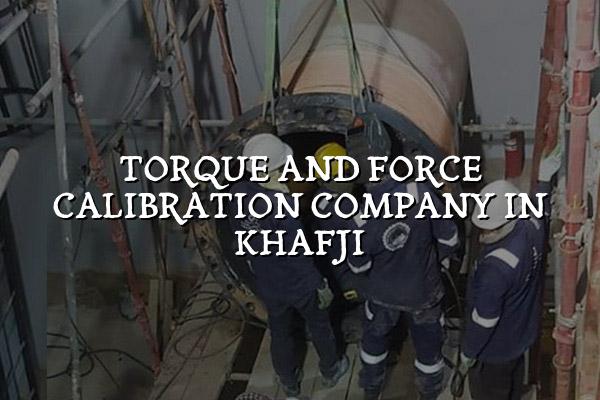
Torque and force calibration company in Khafji support matters when a bolt load, clamp force or torque setting has to be right the first time. If your team handles critical fastening, tensioning or load verification work, this page shows how to get traceable results without guesswork.
We work with maintenance teams, shutdown crews and QA staff serving Khafji, the Eastern Province and nearby GCC industrial sites. Our focus is practical: correct ranges, clear records, and calibration traceability that stands up to audit in oil & gas, power, manufacturing and heavy engineering jobs.
What a torque and force calibration company in Khafji should deliver
When people search for a torque and force calibration company in Khafji, they usually need more than a certificate. They need a partner who can check torque wrenches, torque transducers, force gauges, load cells, hydraulic tensioning systems and related tools against traceable standards, then explain the result in a way maintenance and procurement teams can use. That matters on flange work, structural fastening, pump skids and lifting-related applications where a missed setting can become a failed joint or a repeated rework job.
Where torque checks fit in day-to-day work
Torque tools drift. Sometimes it’s wear, sometimes it’s rough handling, and sometimes it’s simply a tool being used outside its intended range. In our experience, teams in Khafji often notice the problem after a stubborn assembly starts giving uneven clamp loads or a supervisor sees repeat loosening during inspection. A proper check looks at the tool condition, the measurement range and the test method, then compares the readings to the tolerance your job needs.
Force calibration is not just for labs
Force-related instruments show up in more places than people expect. Load cells on lifting setups, press force verification, test rigs, tensioning equipment and industrial weighing applications all depend on reliable force values. We keep the work practical: identify the instrument, verify the range, test at suitable points and return a record that your team can file with maintenance history or quality documentation.
- Identify the instrument and range — we confirm the tool type, serial number, capacity and the torque or force range that actually matters for your job.
- Inspect condition and setup — we look for worn sockets, adapter issues, bent hooks, damaged indicators and anything that could distort the reading.
- Test at defined points — readings are checked across the range so you can see how the instrument behaves at low, mid and higher values.
- Record traceable results — the outcome is documented for audits, maintenance files and internal approval, with clear pass or adjustment notes.
- Match the calibration range to the work range; a 5%–90% usage band is usually more meaningful than testing far outside normal use.
- Keep adapters, crow-foot attachments and extensions identified, because they can change effective torque values if they are not accounted for.
- Ask for traceable records that name the instrument, method and result points; that makes internal audits much easier.
- For force equipment, confirm the mounting setup before testing so the load path matches the way the device is used on site.
- If your tools work in a harsh environment, shorten your verification interval based on use history rather than waiting for a failure.
Common torque and force instruments we see in Khafji projects
| Instrument | Typical use | What we verify |
|---|---|---|
| Torque wrench | Bolt tightening on flanges, skids and assemblies | Reading accuracy, repeatability and condition across the working range |
| Torque transducer | Tool testing, maintenance verification and production support | Output response, traceability and measurement consistency |
| Force gauge | Push-pull checks, test fixtures and component validation | Load response, zero stability and usable force range |
| Load cell | Weighing, tensioning and lifting-related verification | Calibration points, mounting integrity and signal behavior |
Why traceable calibration helps your maintenance records
Most engineering teams in Khafji already know the equipment has to be accurate. The harder part is keeping the paper trail straight when tools move between workshop benches, shutdown teams and contractor crews. Traceable calibration supports that chain of responsibility. It helps your supervisors see when an instrument was last checked, what range it was tested on and whether it was fit for use.
Useful during audits and shutdowns
During plant turnaround work, even a small mismatch between intended torque and actual applied torque can slow the job down. The same goes for force equipment used on test rigs, presses or load verification tasks. A current calibration record reduces back-and-forth and gives your team something solid to stand on when a client or internal auditor asks for evidence.
Made for real industrial use
We see torque and force tools across oil & gas, petrochemical, power, construction and manufacturing sites. Some tools come in from the workshop, others are checked onsite with mobile equipment, and a few need careful handling in a controlled lab. The method changes, but the aim stays the same: clear results, practical records and equipment that does what the job expects.
How the work is handled onsite and in the laboratory
Some instruments are best checked onsite in Khafji or at your operating base, especially when the equipment is large, fixed or needed for an active shutdown window. Other items are better sent to the lab when the environment needs closer control or the instrument benefits from bench testing. We support both paths. Our temperature-controlled in-house laboratory is suited to precision work, and our mobile calibration lab helps when moving the instrument would slow your team down.
When onsite work makes sense
Onsite calibration is often the better option for instruments tied to plant equipment, lifting operations or assemblies that are difficult to remove. It cuts handling time and keeps your team closer to the actual working setup. If special conditions are needed, we can also arrange pick-up and delivery for instruments that should travel under controlled handling.
When the lab is the cleaner choice
Bench-based testing gives you a stable setting for detailed checks. That is useful for torque transducers, force gauges and other instruments where repeatable conditions matter. It also suits teams that want their calibration records grouped with other metrology items such as pressure, temperature or dimensional devices.
- Mobile calibration support for active industrial sites in Khafji and nearby Saudi locations
- Controlled in-house lab work for better environmental stability
- Pick-up and delivery for instruments that need special handling
- Records suited to maintenance logs, QA files and contractor handover packs
What Khafji buyers usually ask for before they approve a job
Procurement and maintenance teams usually ask the same handful of questions before releasing a torque or force job. They want to know whether the provider understands ISO/IEC 17025:2017 expectations, whether the result will be traceable, and whether the instrument can be supported onsite or in the lab. In some cases, they also need related help such as mechanical services, inspection or electrical testing for the same shutdown package.
Saudi and GCC jobsite realities
Khafji work often sits close to oil & gas and petrochemical operations, where documentation has to be tidy and tools have to be dependable. That means a calibration partner should be comfortable with contractor paperwork, plant access requirements and the practical pressure of turnaround schedules. We keep our approach straightforward, because engineers don’t need fluff. They need a tool that performs and a record they can trust.
One supplier, more than one service line
Many clients ask us to combine torque and force calibration with condition monitoring, mechanical support or inspection work. That reduces coordination time and keeps responsibility with one team. If your site also needs bolt torquing, tensioning, testing and commissioning or lifting-equipment inspection, we can line those up around the same visit where practical.
- ISO/IEC 17025:2017 aligned calibration approach
- Support for oil & gas, petrochemical, power and manufacturing sites
- Suitable for torque tools, force gauges, load cells and related test equipment
- Clear documentation for internal checks, vendor approval and audit review
How Mayon Industrial Services Can Help
We support torque and force calibration with the same practical mindset we bring to calibration services, mechanical work and inspection jobs. If your site in Khafji needs onsite verification, laboratory testing, or help managing a mixed instrument list, our team can plan the work around your shutdown or maintenance window. We also support clients across Saudi Arabia and the wider Middle East, so cross-site coordination stays simple.
Call +91 99447 80844 (India) or +966 59 633 8012 (Saudi Arabia), email services@mayonservices.com, or message us on WhatsApp.
Frequently Asked Questions
Yes, you can work with a provider that supports Khafji directly and also serves Saudi Arabia and the Middle East. The key is to choose a team that can handle both onsite work and lab-based calibration, because not every tool should travel. That gives you better control over downtime and handling.
Common items include torque wrenches, torque transducers, force gauges and load cells. In industrial settings we also see torque-related tools used for flange work, tensioning systems and test rigs. If you're not sure where a device fits, send the model details and we can tell you the right route.
Yes, onsite support is part of how we work, especially when the tools are tied to active plant equipment or a shutdown schedule. Our mobile calibration lab helps with field work, and we can also arrange pick-up and delivery for items that need special handling. That keeps the process practical for maintenance teams.
Traceability shows how the result was checked and what it was checked against. For audit work, contractor handovers and internal QA, that record matters almost as much as the reading itself. It helps your team prove the instrument was fit for the job at the time it was used.
Yes, that's a normal part of our work in Saudi Arabia. We support industrial clients in oil & gas, petrochemical, power and related sectors, and we can line up calibration, mechanical support and inspection tasks around the same visit where practical. That helps keep shutdown coordination simpler.
For calibration work we operate in line with ISO/IEC 17025:2017 expectations, which is what many industrial buyers want to see. Depending on the service, we also work with ISO 9001:2015, BS EN standards for inspection-related work and EURAMET CG-15 for electrical calibration references. We only mention what we actually use.
Ready to put your torque and force tools back on a traceable track?
Send us the instrument list, the site location and the range you use, and we’ll help you choose the right onsite or lab route.
Contact Mayon