
Torque And Force Calibration Company In Ras Tanura
Traceable torque and force calibration support for Ras Tanura plants, workshops, and shutdown teams.
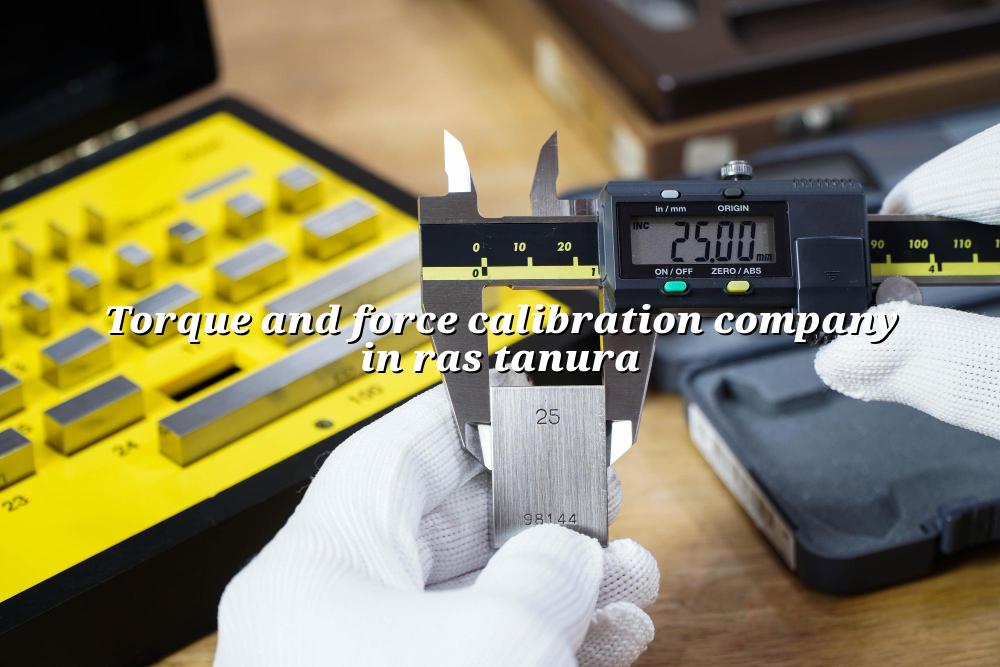
Torque and force calibration company in Ras Tanura teams call us when a bolting job, test rig, or lifting setup can't afford guesswork. We help you keep torque wrenches, hydraulic torque tools, load cells, proving rings, force gauges, and related instruments traceable so your maintenance and QA records hold up under pressure.
Ras Tanura work is usually tied to shutdowns, refinery maintenance, marine assets, or fabrication yards where the margin for error is small. Our Saudi and India teams support that kind of work with ISO/IEC 17025:2017 calibration discipline, mobile-lab access, and practical advice from people who deal with industrial tools every day.
Torque and force calibration company in Ras Tanura for active sites
Most Ras Tanura inquiries are about one of two things: a torque tool that has to be trusted before a flange job starts, or a force device that needs verification before a load test, tensioning activity, or inspection sign-off. We calibrate across the ranges industrial teams actually use, and we keep the process tied to traceability, identification, and usable records rather than paperwork for its own sake.
What we usually see on the floor
We often find tools that have drifted after rough handling, storage in hot rooms, or long gaps between checks. A torque wrench that feels fine in the hand can still be off enough to create inconsistent bolt loading, while a force gauge or load cell can show repeatable readings that are still outside the tolerance your procedure expects. That is why the check method, range selection, and setup matter as much as the certificate.
Why local support matters in Eastern Province work
When you are supporting refinery units, tank farms, utilities, or marine-related maintenance in and around Ras Tanura, downtime is expensive and coordination is tight. We make room for onsite work when the instrument suite is too large to shift, and we can also collect items that need special handling or a controlled lab environment. For torque and force jobs, that flexibility saves a lot of back-and-forth.
- Identify the instrument and range — confirm whether the item is a torque wrench, torque screwdriver, hydraulic torque tool, load cell, force gauge, or related device, then check the operating range and intended use.
- Check condition before calibration — look for worn sockets, bent adapters, damaged connectors, missing labels, or signs of overload, because those details can change the result.
- Select the right setup — use fixtures and standards that suit the tool, the range, and the job, so the reading reflects real service conditions.
- Measure and compare — take readings at suitable points across the scale and compare them against the accepted tolerance or internal procedure.
- Review results and label correctly — issue the record, apply status marking, and decide whether the item can return to service, needs adjustment, or should be repaired.
- Useful for shutdown crews, maintenance teams, and inspection contractors working in Ras Tanura.
- Suitable for torque wrenches, torque multipliers, load cells, force gauges, and related force-measurement devices.
- Supports traceability expected under ISO/IEC 17025:2017 and ISO 9001:2015 quality systems.
- Can be arranged onsite or through our in-house lab and mobile calibration lab model.
- Helps avoid rework on bolting, tensioning, lifting checks, and test-rig verification.
Common instruments we handle for Ras Tanura sites
| Instrument type | Typical use | Why calibration is checked |
|---|---|---|
| Torque wrench | Bolt tightening on flanges, skids, and structural assemblies | Confirms the applied torque matches the procedure |
| Hydraulic torque tool | High-load bolting and controlled tensioning | Helps keep output consistent across repeated cycles |
| Load cell | Lifting checks, test rigs, and force measurement | Verifies load response under known input |
| Force gauge | Push-pull checks, component testing, and QA use | Shows whether readings stay within expected tolerance |
What makes torque and force work reliable
Good calibration is not only about a pass or fail stamp. It starts with the right range, the right adapters, and a clean setup that avoids side load, poor alignment, or operator error. In our experience, many bad readings come from the setup, not the instrument itself.
Records that support QA and maintenance
Your internal teams need something they can file, review, and act on. We keep the output clear enough for maintenance planners, QA engineers, and procurement teams to use without chasing extra explanation. That matters when a job in Ras Tanura has to be closed out quickly and documented properly.
Built for refinery and workshop realities
Torque and force tools are often used in hot, dusty, and stop-start environments. We plan around that reality, not a lab-only ideal, so your instruments come back ready for the conditions they actually face.
How we decide the right calibration path
The right path depends on the tool, the environment, and the urgency of the job. A hand torque wrench going into routine maintenance may be handled differently from a hydraulic force system tied to a lifting or tensioning activity. If the device is sensitive, bulky, or installed in a critical area, onsite support can be the safer option.
We also look at the role of the instrument in your process. A tool used for final bolt-up on a pressure boundary needs a different level of care than a general workshop item. That is where a proper check plan helps you avoid unnecessary repeat work and gives your team confidence during execution.
When onsite service makes sense
Onsite calibration is a strong fit when removing equipment would interrupt production, when the device is fixed in position, or when the surrounding process is easier to verify at the point of use. Our mobile calibration lab supports that model, and our team can coordinate around permit windows, shutdown periods, and plant access rules in Saudi and GCC industrial settings.
When lab service is the better call
Some items benefit from our in-house temperature-controlled environment, especially when accuracy, repeatability, or special handling is more important than speed of movement. If the instrument needs pick-up and delivery, we can arrange that too, which helps when a tool must travel carefully or stay protected between checks.
- Torque values should be checked across the working range, not just at one point.
- Force instruments need alignment and load application that match the intended use.
- Damaged accessories can affect the result, so adapters and fixtures are part of the review.
- Clear identification helps QA teams track status before the next shutdown or job.
How Mayon Industrial Services Can Help
We support torque and force work with ISO/IEC 17025:2017 calibration, practical onsite service, and a lab setup that fits industrial tools rather than delicate showroom samples. If your team in Ras Tanura needs torque tools, load cells, force gauges, or related equipment checked before the next job, we can help you plan the right route and keep the paperwork usable.
Call +91 99447 80844 (India) or +966 59 633 8012 (Saudi Arabia), email services@mayonservices.com, or message us on WhatsApp.
Frequently Asked Questions
That depends on the tool type, the range you need, and whether the work has to happen onsite. We support Ras Tanura sites with traceable calibration for torque and force instruments, plus pickup and delivery for items that need controlled handling. If you're managing refinery maintenance or a shutdown, ask for the setup that fits the job rather than just the instrument name.
Yes, in many cases they can. Onsite service is useful when you have a large set of tools, limited shutdown time, or access restrictions that make transport awkward. We look at the range, condition, and your site needs before deciding if onsite or lab handling is the cleaner choice.
We commonly handle torque wrenches, torque multipliers, hydraulic torque tools, load cells, and force gauges. Those show up in bolting, tensioning, lifting checks, and test rigs across oil and gas, manufacturing, and maintenance work. If the item is unusual, send the details first so we can confirm the right method.
Yes, we provide documentation linked to the service performed and the instrument details recorded during the job. For Saudi industrial projects, teams usually want clear identification, traceability, and a record they can attach to maintenance or QA files. That's the part we keep tidy from the start.
If the device has been dropped, overloaded, stored badly, or used in a job where the result matters for sign-off, it's worth checking again. Changes in reading consistency are another warning sign. In practice, teams often send them in before a critical load test rather than wait for a problem on site.
Ready to get torque and force readings back under control?
Send us the instrument list, the range, and the site location, and we'll help you choose the right calibration route for Ras Tanura or the wider Eastern Province.
Contact MayonFor torque and force work, the safest path is the one that matches the tool, the site, and the job behind it. We help Ras Tanura teams keep that decision simple, traceable, and grounded in real industrial practice.