
Bolt Tensioning Service Company in Abqaiq
Field bolt tensioning support for Abqaiq sites that need controlled preload, safer joints and traceable work records.
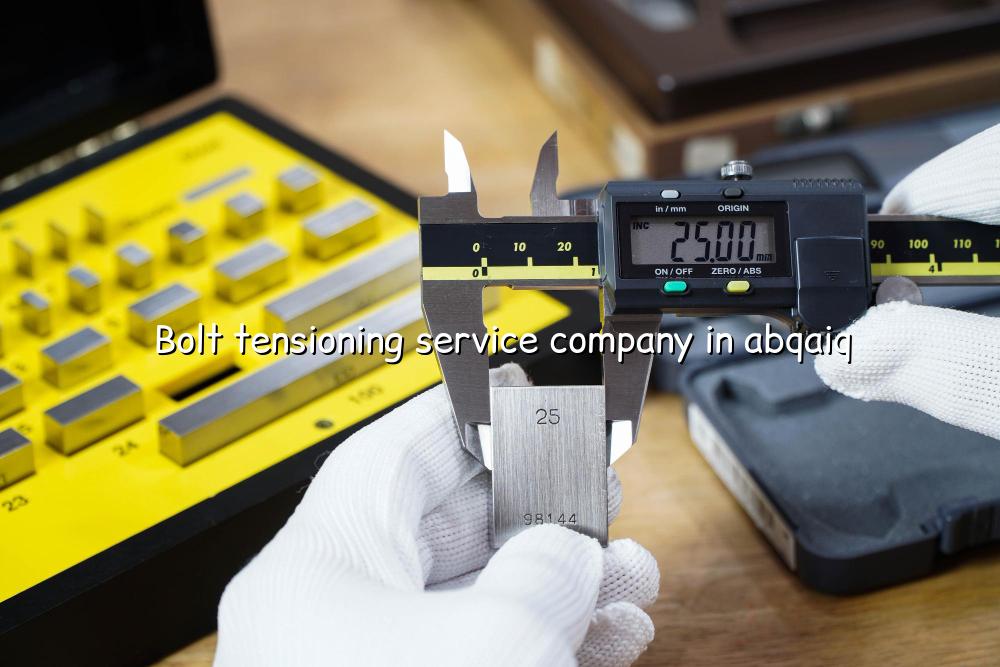
Bolt tensioning service company in Abqaiq searches usually come from one place: a flange joint that has to hold, and hold properly. If that's your situation, we help you control bolt load, protect gasket integrity and keep the job traceable from start to finish.
We work around oil and gas maintenance realities in Saudi Arabia, where access windows are tight and the site team needs clean records, safe methods and a crew that understands plant discipline. Our field work is built for that environment, with hydraulic tensioning support, torque control and documentation that suits shutdowns, turnarounds and routine maintenance in Abqaiq and the wider Eastern Province.
Bolt Tensioning Service Company in Abqaiq for Controlled Joint Integrity
In Abqaiq, flange work often sits inside a larger risk picture. A joint may be on a pump train, process skid, heat exchanger, separator, pipeline spool or utility line, and the mistake people make is treating every bolt the same. We look at the joint as a system: flange condition, gasket type, bolt size, lubrication state, tightening sequence and the access available on site. That approach matters in Saudi oil and gas plants where vibration, thermal cycling and shutdown pressure can turn a rushed tightening job into a leak later.
Why tensioning often beats a quick torque pass
Hydraulic bolt tensioning gives more even load transfer on critical flanged connections, especially when the joint needs repeatability across multiple bolts. Torque still has its place, and we use it where the application fits, but a tensioning method is often preferred when the owner wants better preload control and less scatter between studs. In practice, that means fewer arguments about who tightened what, and a cleaner path for QA records.
What our crew checks before the first bolt move
We don't start by connecting equipment. First we inspect the joint condition, confirm stud thread health, check nut movement, verify that the flange faces are ready and make sure the tightening pattern makes sense for the service. If the site has a shutdown plan, we align our work to it. If the line is part of a turnaround, we coordinate with the permit and isolation steps so the job isn't fighting the rest of the maintenance activity.
- Review the joint data — we confirm bolt size, flange rating, gasket type and service conditions before equipment selection.
- Prepare the assembly — studs, nuts and flange faces are cleaned and checked so the preload isn't affected by avoidable friction or damage.
- Apply the tensioning sequence — the system is loaded in a controlled pattern so the joint sees even clamping force.
- Verify and record — we confirm the final condition, document the work and hand over a traceable record for the maintenance file.
- Suitable for shutdown work, turnaround jobs and planned maintenance in Abqaiq facilities
- Helps reduce uneven loading on critical flanges and long pipe runs
- Works well where site teams need clear handover records for QA and inspection
- Can be paired with flange facing, hydrotesting and testing & commissioning support
- Useful for plants that want one contractor for related mechanical scope
Common Bolt Tightening Methods and Where They Fit
| Method | Best Use | Site Consideration |
|---|---|---|
| Hydraulic tensioning | Critical flanged joints that need more even preload control | Requires access for tensioner placement and a proper tightening plan |
| Torque tightening | General flange work and joints specified by the maintenance procedure | Friction control and sequence discipline matter a lot |
| Hydraulic torque wrench | Heavy fasteners and repeat maintenance jobs with limited manual effort | Needs suitable reaction points and the right hydraulic setup |
| Manual wrenching | Non-critical fasteners or final setting on small items | Least suitable when the joint needs repeatable preload |
Why Abqaiq Maintenance Teams Ask for Controlled Bolt Tensioning
Most plant failures don't begin with a dramatic event. They begin with a small joint issue that was missed, rushed or recorded badly. That is why maintenance managers in Saudi Arabia tend to ask for a contractor who can work cleanly, explain the method and leave behind a record the inspection team can actually use. We follow that style of work because it suits process plants, pressure systems and equipment that can't afford repeat leaks.
Where this service is most useful
We see strong demand on exchangers, pipeline connections, pump packages, compressor skids and utility lines where access is awkward and the plant wants a safer tightening approach than guesswork. In some cases the scope sits beside flange facing or hydrotesting; in others it sits inside a planned shutdown where each craft has to finish its share without delay. Our role is to make the bolted connection one less thing the site has to worry about.
Built for Saudi industrial sites
Our team supports oil and gas, petrochemical, power and manufacturing work across Saudi Arabia and the Middle East. That includes field coordination, mechanical support and the kind of paperwork plant teams expect after a serious maintenance job.
How We Plan a Bolt Tensioning Job on Site
Before we go to the job, we ask for the basic joint details and the site context. That includes the flange specification, bolting arrangement, gasket type, service medium and whether the work sits inside a live plant, a shutdown or a controlled outage. When the site is in Abqaiq, we also pay attention to access limits, permit timing and the practical sequence of nearby maintenance work. The point is simple: a good setup prevents field improvisation.
We then match the method to the joint. Some jobs want full hydraulic tensioning. Others need a mixed approach with torque checks, marking and recheck after reassembly. If a mechanical issue shows up during preparation, we flag it early rather than forcing the job through. That's the difference between a contractor that just turns up and a contractor that protects the joint.
What the client usually gets at handover
At handover, the site receives a clear record of the work performed, the equipment used and the final condition of the joint. That kind of traceability helps when the maintenance file is reviewed later by operations, QA or inspection. It also makes the next shutdown easier because the previous job isn't hidden in someone's notebook.
- Joint review before mobilization helps reduce surprises on site
- Hydraulic equipment is matched to the fastener and flange arrangement
- Site coordination fits turnaround windows and permit requirements
- Final records support inspection, QA and maintenance planning
How Mayon Industrial Services Can Help
We support bolt tensioning with the same field discipline we bring to mechanical services, inspection work and commissioning support. If your Abqaiq site needs controlled preload on critical flanges, our team can help with hydraulic tensioning, related mechanical scope and the documentation your maintenance file needs. We also work across Saudi Arabia, India and the Middle East, so the process stays familiar to plant teams in those regions.
Call +91 99447 80844 (India) or +966 59 633 8012 (Saudi Arabia), email services@mayonservices.com, or message us on WhatsApp.
Frequently Asked Questions
We do, through Mayon Industrial Services and our Saudi support base. The work is suitable for refinery, pipeline, utility and skid applications where controlled preload and traceable handover matter. If your site needs related mechanical support, we can plan that into the same visit.
Not for every joint, but it's often preferred on critical flanges because the load transfer can be more even. Torque tightening still works well in many cases, especially when the procedure is clear and the joint is less sensitive. We choose the method based on the flange, gasket and service conditions.
We usually ask for flange size, bolt details, gasket type, service medium, access conditions and the job window. If you have a shutdown plan or permit sequence, that helps us line up the work properly. The more complete the joint data, the smoother the field execution.
Yes, and that's often how the job is best handled. If a flange needs face correction or the assembly is going to be pressure tested after reassembly, we can align the mechanical sequence around that scope. It saves the site from coordinating separate contractors for closely related tasks.
We support Abqaiq and also other sites across Saudi Arabia, plus India and the wider Middle East. That matters for contractors and plant owners who need one team for repeated maintenance work in more than one location. If your scope is multi-site, we can talk through that structure from the start.
Ready to secure the next flange job properly?
If your plant needs a bolt tensioning partner who understands field constraints, maintenance planning and clean handover records, we're ready to talk.
Contact MayonWhen a joint matters, the tightening method matters too. For Abqaiq and the surrounding Saudi industrial belt, we bring a practical, field-ready approach that keeps the work controlled and the records clear. Mayon Industrial Services is the kind of partner you call when the flange can't be left to chance.