
Bolt Tensioning Service Company in Salwa
Controlled bolt loading for flanges, exchangers and critical joints across Salwa and the wider Saudi industrial belt.
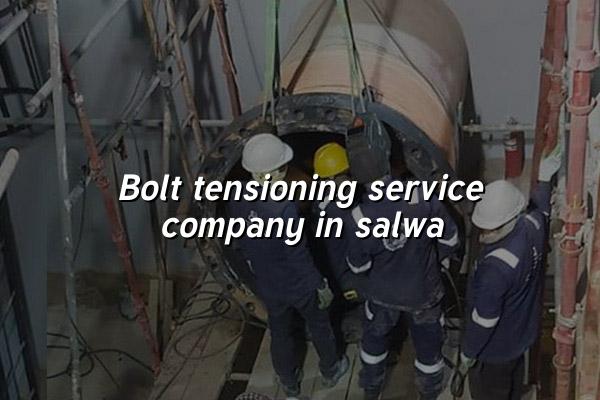
Bolt tensioning service company in Salwa is the search most plant teams make when a flange joint has to be tightened with control, not guesswork. We help you get the load right on critical connections so the joint seals properly, seats evenly, and stays easier to inspect later.
In our work across Saudi industrial sites, the real problem is rarely the bolt itself. It is usually uneven load, poor sequence, or a rushed shutdown window. Our team brings hydraulic bolt tensioning, verification, and practical field discipline to refineries, petrochemical units, utilities, and maintenance turnarounds in Salwa and nearby industrial areas.
Bolt Tensioning Service Company in Salwa for Critical Joints
Bolt tensioning is used where even clamp load matters more than speed. For flange joints on process piping, exchangers, pressure equipment, and large mechanical assemblies, we apply controlled hydraulic force so the fastener stretch and resulting load are more consistent across the bolt circle. That helps reduce gasket distress, joint rotation, and the sort of rework that eats into a shutdown plan.
Where this service helps most
We see the strongest demand on hydrocarbon plants, power sites, and heavy maintenance jobs where bolts are large, access is awkward, or the joint has a history of leakage. In Salwa, that often means pipeline flanges, heat exchanger bundles, compressors, and equipment tied to oil & gas or petrochemical operations. If your maintenance team has to document tightening discipline before recommissioning, hydraulic bolt tensioning gives you a cleaner story than manual tightening alone.
What our team checks before loading bolts
We do not start by touching the pump. First we look at bolt condition, thread engagement, lubrication practice, flange alignment, gasket type, and the tightening pattern needed for the joint. If the flange faces are poor or the hardware selection is wrong, no amount of force will solve the underlying issue. That is why our field crew treats bolt tensioning as part of the full joint assembly process, not a separate box to tick.
- Joint review — we check flange size, bolt grade, gasket type, access, and the service history of the connection.
- Preparation — we clean the stud threads, confirm lubrication practice, and verify that the tools and adapters suit the joint.
- Controlled loading — hydraulic tensioners apply force in a planned sequence so the load is distributed evenly across the bolt circle.
- Verification and release — we confirm the setting, release the tension in a controlled way, and record the work so your maintenance file stays traceable.
- Better suited than impact tightening for critical flange work
- Useful for shutdowns, turnarounds, and recommissioning jobs
- Helps reduce uneven load across multi-bolt joints
- Works well on exchangers, piping spools, and pressure equipment
- Can be paired with flange facing, hydrotesting, and commissioning support
How Bolt Tensioning Compares With Other Tightening Methods
| Method | Best Use | Field Note |
|---|---|---|
| Hydraulic bolt tensioning | Critical flanges and large studs | Applies controlled load with a planned sequence |
| Torque wrench tightening | General mechanical fastening | Depends heavily on friction and lubrication |
| Impact tightening | Non-critical, quick assembly work | Fast, but load consistency is harder to prove |
| Manual tightening | Light maintenance tasks | Useful for access-limited jobs, not ideal for critical joints |
Why plant teams ask for bolt tensioning in Salwa
Most maintenance managers want the same three things: fewer leak paths, cleaner documentation, and less repeat work after start-up. Bolt tensioning supports all three. When the joint is prepared well, the load path is more predictable, which matters in petrochemical and power facilities where a single flange leak can trigger a long inspection cycle. We also see it used as part of a wider flange management plan that includes inspection, testing, and shutdown coordination.
Where standards and traceability matter
For clients who need a strong quality trail, we keep the work aligned with ISO/IEC 17025:2017 competence where calibration is involved, and with the practical traceability expectations seen in Saudi and GCC industrial work. That matters when your team is answering internal QA questions or preparing a handover file for operations. The method itself is mechanical, but the paperwork around it should still make sense.
Built for shutdown work, not showroom talk
We know the kind of job where the night shift is already behind schedule, the scaffold is in place, and the line has to be closed up without drama. That is the setting where a clear bolt tensioning plan earns its keep. It is practical work, and it has to fit the plant reality in front of you.
How Mayon Industrial Services Can Help
Our team supports bolt tensioning alongside flange-facing, hydrotesting, mechanical services, and inspection support, so you are not juggling three different vendors for one maintenance job. If your project in Salwa also needs calibration, electrical testing, or commissioning support, we can align that work with the same site visit or shutdown plan. Call us when you want the job handled with proper preparation and a field team that speaks plant.
Call +91 99447 80844 (India) or +966 59 633 8012 (Saudi Arabia), email services@mayonservices.com, or message us on WhatsApp.
Frequently Asked Questions
We apply controlled hydraulic load to bolts so the flange joint closes in a more even way. That is useful on critical piping and equipment joints where you want a reliable clamp load and a proper work record. It is especially common on shutdown and turnaround jobs.
For many critical flanges, yes, because the hydraulic method gives you more control over the applied load. Torque tightening still has its place, but friction, lubrication, and operator variation can change the result more than people expect. On high-risk joints, that difference matters.
We usually see it in oil & gas, petrochemical, power, and heavy industrial maintenance. It also comes up on exchangers, compressors, process piping, and pressure equipment where joint integrity is a real operational concern. The request often comes in during shutdown planning or pre-commissioning.
Yes, and that is often the better option. We can combine bolt tensioning with flange facing, hydrotesting, testing and commissioning, inspection work, and related mechanical support so the site team has one point of contact. That keeps coordination simpler during a tight shutdown window.
We support Saudi projects through our Dammam Industrial City 2 operation as well as nearby industrial locations. If your work is tied to a plant shutdown, maintenance campaign, or equipment handover, send the scope and we will tell you how we can fit it into the plan. The team works with the industrial realities of the Eastern Province every day.
Need bolt tensioning done with proper field control?
Send us the flange details, site location, and maintenance window, and we will help you plan the job with the right approach.
Contact Mayon