
Bolt Tensioning Service Company in Al Hasa
Onsite flange bolting support for plants, shutdowns and maintenance crews working in Al Hasa and nearby Eastern Province sites.
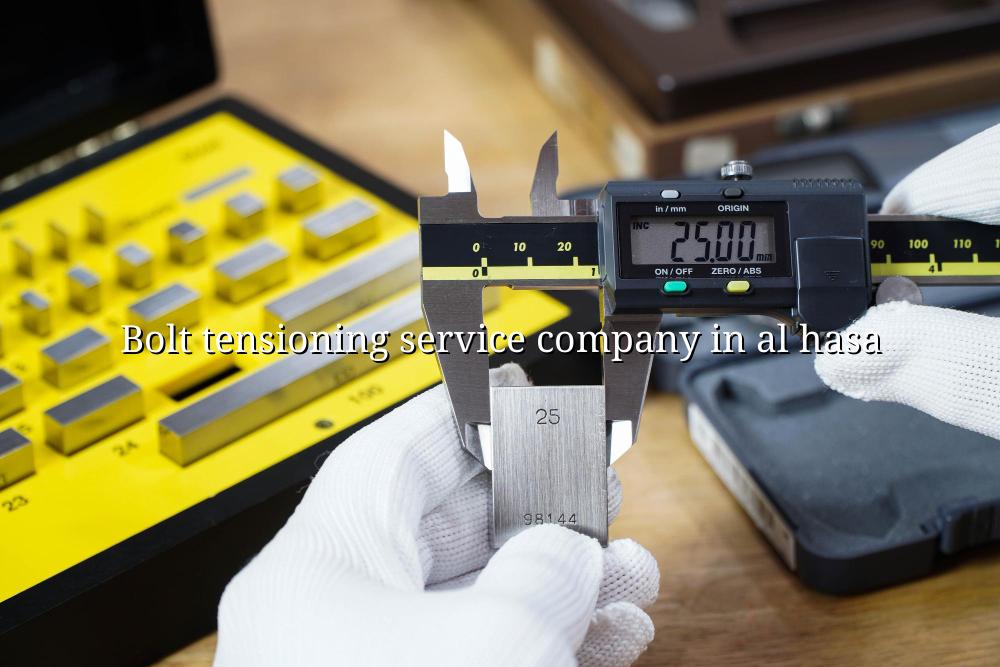
Bolt tensioning service company in Al Hasa support matters when a flange has to seal properly the first time, under real plant pressure, with no guesswork on preload. If you're planning shutdown work, pump skids, heat exchangers or pipeline tie-ins, this page shows how controlled tensioning helps you keep joints uniform and safer to bring back online.
We work with maintenance teams across Saudi Arabia and the Middle East where oil & gas, petrochemical and power projects expect traceable work, clean documentation and practical site discipline. In Al Hasa, that usually means fast coordination, correct tooling and a crew that understands the difference between routine bolting and a critical joint that can't be left to hand torque.
Bolt tensioning service company in Al Hasa for critical joints
Bolt tensioning is about more than tightening fasteners. On a flange joint, you want even load across the bolt circle, a repeatable pattern, and a record that the assembly was brought up correctly for the gasket, service fluid and operating pressure. That matters on cooling water lines, steam circuits, hydrotest arrangements and process lines where uneven loading can leave one side of the joint doing too much work.
Where tensioning helps most
We often see tensioning specified on larger diameter flanges, joints with limited access and equipment skids where a socket wrench just doesn't give the same control from bolt to bolt. It also helps when the client wants a cleaner assembly sequence before hydrotesting or commissioning. In practice, that means fewer surprises at start-up, less rework on the same joint and better confidence for the maintenance supervisor signing off the job.
What our crew checks before starting
Before we tension anything, we look at the flange faces, gasket condition, stud condition and the joint layout. If the studs are damaged, the threads are rough or the flange seating is poor, no amount of force will fix that. Our team works methodically because the joint has to be right as an assembly, not just tight on paper.
- Review the joint — confirm flange size, bolt count, gasket type and access constraints before the tools come out.
- Prepare the hardware — clean threads, check studs and nuts, and make sure the tensioning equipment matches the job.
- Apply load in sequence — tension in a controlled cross pattern so the flange seats evenly across the bolt circle.
- Verify and document — check the final condition, record the work and hand back a joint the site team can trust.
- Use tensioning when bolt load has to be repeatable across every stud.
- Match the method to the flange size and the access available around the joint.
- Treat dirty threads, bent studs and damaged nuts as a quality issue before tightening starts.
- Ask for job records when the joint is part of shutdown, commissioning or hydrotest work.
- Use onsite crews who know how to work around operating plants, not just workshop benches.
How controlled tensioning compares on typical site jobs
| Job type | Why tensioning helps | Typical site concern |
|---|---|---|
| Large process flanges | Helps spread load evenly across many studs | Uneven seating after tightening |
| Pump and skid connections | Works well where access is tight and repeatability matters | Limited room for large tools |
| Pre-hydrotest assembly | Supports a cleaner joint before pressure testing starts | Leak checks after the system is pressurised |
| Shutdown maintenance | Fits planned work where documentation and control are expected | Short maintenance windows and multiple crews on site |
Why plant teams in Al Hasa ask for bolt tensioning
Most maintenance leads don't ask for tensioning because it sounds fancy. They ask for it because the cost of a bad joint is a leak, a repeat shutdown or a late-night call when the line should already be back in service. That pressure is familiar in Eastern Province facilities, especially where process uptime matters and the line may be part of a wider utility network feeding production.
Common site situations
We see the same patterns again and again: a heat exchanger bundle going back in, a pipeline flange that sits awkwardly near adjacent piping, or a skid package that needs steady loading without twisting the assembly. In those moments, a controlled bolt tensioning approach is easier for the site to defend than a hand-tightened assumption. It gives your QA and maintenance teams a clearer basis for sign-off.
Built for shutdown work, not guesswork
Our approach fits plant environments where a joint may be one of many tasks on the punch list. We coordinate with mechanical, hydrotesting and commissioning activities so the bolting work happens in the right order, with the right checks and without unnecessary rework.
How Mayon Industrial Services Can Help
We support bolt tensioning as part of wider mechanical service work, so you can bring one team to the job instead of juggling several vendors. If your project in Al Hasa also needs hydrotesting, flange work, testing and commissioning, or coordination with calibration and inspection tasks, our crew can line up the work in a practical sequence. That makes site planning easier and keeps the handover cleaner.
Call +91 99447 80844 (India) or +966 59 633 8012 (Saudi Arabia), email services@mayonservices.com, or message us on WhatsApp.
Frequently Asked Questions
We bring controlled tensioning equipment and trained technicians to site so flange bolts are loaded in a repeatable sequence. The aim is even preload across the joint, which is especially useful on process lines, skids and larger flanges where hand tightening can leave uneven load.
Use tensioning when the joint is critical, access is limited, or the site wants a more controlled load distribution. In our experience, it comes up often on maintenance shutdowns, hydrotesting preparation and flanges that need careful seating with less risk of uneven tightening.
Yes. We support site work across Saudi Arabia, including Al Hasa and the Eastern Province, alongside other mechanical and industrial service tasks. That helps when the shutdown plan includes flange work, testing and commissioning, or related maintenance activities that need to be completed in sequence.
We can document the work for the site file and handover process. Plant teams usually want that record for QA, maintenance history and commissioning sign-off, especially when the joint sits on a critical line or forms part of a wider turnaround package.
We see it most in oil & gas, petrochemical, power, manufacturing and engineering projects. Those sites often have pipework, skids and pressure systems where a controlled flange assembly is part of safe and orderly maintenance.
Ready to put controlled bolt loading on your next job?
If your Al Hasa site needs careful flange assembly, mechanical support or a coordinated shutdown crew, talk to us and we'll map out the next step.
Contact Mayon