
Bolt Tensioning Service Company in Al Khobar
Controlled bolt load, cleaner flange joints, and field support for Al Khobar shutdowns, maintenance jobs, and new installations.
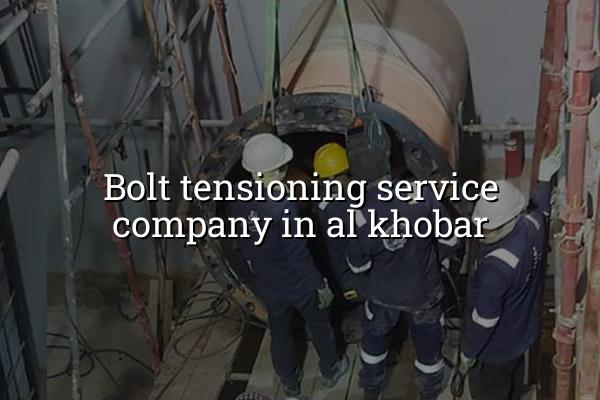
Bolt tensioning service company in Al Khobar searches usually come from teams that need the flange to close right the first time. We help you get controlled bolt load on critical joints, with field support shaped around shutdown work, new hook-up jobs, and maintenance in oil and gas, power, and petrochemical plants.
In Al Khobar and the wider Eastern Province, crews often work under tight permit windows and with joints that can't be left to guesswork. Our approach keeps the job practical: proper planning, the right hydraulic gear, traceable work records, and coordination with the people who know the line best.
Bolt Tensioning Service Company in Al Khobar for Critical Flange Work
When you call a bolt tensioning team, you're usually trying to avoid leaks, uneven gasket compression, or a joint that has already been disturbed during maintenance. We work on flanges tied to piping skids, pumps, exchangers, pressure vessels, and utility lines, and we keep the method aligned with the actual joint condition rather than forcing one fixed routine on every job. That matters in Al Khobar, where refinery support, tank farm work, and marine-linked industrial services often need field discipline more than talk.
Where bolt tensioning helps most
Hydraulic bolt tensioning is a good fit when you need even axial load across a flange and a cleaner way to control assembly on large or highly loaded joints. We see it used on shutdowns, equipment swaps, turnaround work, and initial commissioning where access is tight and the joint has to hold under pressure, heat, or vibration. It also helps on critical services where hand torquing alone can leave too much variation between bolts.
How we prepare the joint before the tool touches it
Preparation decides a lot of the outcome. Before tensioning starts, our team checks bolt condition, thread engagement, lubrication state, gasket fit, flange alignment, and any damage from previous work. If the faces are damaged or the joint is misaligned, tensioning won't fix that by itself, so we call it out early and coordinate the next step with your maintenance lead.
- Joint review — we inspect the flange, verify bolt size and pattern, and confirm the application.
- Tool selection — we match the hydraulic tensioner, pump, and accessories to the joint and access limits.
- Controlled loading — bolts are stretched in sequence so the load is shared evenly across the flange.
- Final verification — we check the closure, record the work, and hand over the job notes for your file.
- Good for critical flanges on process lines, exchangers, and pressure systems.
- Reduces uneven load that often appears with inconsistent hand tightening.
- Works well when access is limited and the joint needs repeatable control.
- Can be paired with flange facing, hydrotesting, and commissioning support.
Choosing the Right Method for the Joint
| Method | Best Fit | Typical Field Consideration |
|---|---|---|
| Bolt tensioning | Large, critical, or highly loaded flanges | Needs proper bolt condition and access for the tensioner |
| Hydraulic torqueing | General flange tightening and controlled assembly | Useful when the joint layout suits torque tools better |
| Manual tightening | Smaller, lower-risk joints | Depends heavily on technique and pattern control |
| Rework before tightening | Misaligned or damaged flanges | Face condition, gasket seating, and stud condition need review first |
Why Al Khobar Sites Ask for Controlled Bolt Load
In this region, a joint often sits inside a bigger operating risk picture. You may have pressure cycles, vibration from rotating equipment, heat changes, or a shutdown schedule that leaves little room for rework. That is why a bolt tensioning service company in Al Khobar needs to think beyond the tool itself and manage the whole joint, from prep through handover.
What you get from a better method
You get a more even load pattern, cleaner documentation, and fewer arguments about what happened on the flange. For procurement and maintenance teams, that means the job is easier to audit. For the field team, it means less second-guessing and better control when the line returns to service.
Built for shutdowns, turnarounds, and hook-up jobs
We support industrial work where the flange can't be treated casually. That includes oil and gas facilities, petrochemical units, power plants, and manufacturing lines across Saudi Arabia and the wider Middle East, with mobile field support when the work needs to happen onsite.
Mechanical Services That Often Sit Beside Bolt Tensioning
Most flange jobs don't exist on their own. A site may need flange facing after a damaged seal surface, hydrotesting after reassembly, or bolt torquing on lower-risk connections nearby. We can coordinate those mechanical services so your team isn't juggling three subcontractors for one maintenance window. That helps in Al Khobar where logistics, permits, and access can all move faster than the paperwork.
Why coordination matters during maintenance
If the joint is out of line or the face is scarred, tensioning alone can only do so much. We often see the best results when the preparation, tightening, and pressure testing are handled as one sequence. That cuts down on repeat mobilization and gives the owner team a cleaner handover package.
Our field mindset
We don't overcomplicate the job. If the flange needs repair before it can be tensioned, we'll say so. If the application calls for a different tightening method, we'll say that too. The point is to protect the joint, not force a tool onto every problem.
- Assess the line condition — confirm whether the issue is tightening, alignment, sealing, or all three.
- Plan the sequence — align mechanical work, bolt loading, and testing with the site permit window.
- Execute with records — document the steps taken and the tools used at the joint.
- Close out cleanly — hand back a job that maintenance, QA, and operations can review without chasing missing details.
- Useful for exchangers, piping spools, pump skids, and utility connections.
- Can be linked with cold cutting, hydrotesting, and flange work.
- Supports shutdown planning where one mobilization should cover several tasks.
- Helps reduce site delays caused by poor coordination between trades.
How Mayon Industrial Services Can Help
We support bolt tensioning jobs with the kind of field discipline industrial teams actually need. If your scope also involves flange inspection, hydrotesting, commissioning, or related mechanical work, our team can line up the service around the same site visit so you don't lose time moving between vendors. For plants in Al Khobar, Dammam, and nearby Eastern Province sites, that kind of practical coordination makes a difference.
Call +91 99447 80844 (India) or +966 59 633 8012 (Saudi Arabia), email services@mayonservices.com, or message us on WhatsApp.
Frequently Asked Questions
Mostly maintenance, turnaround, and construction teams working on critical flanges. We see requests from oil and gas plants, petrochemical sites, power facilities, and industrial contractors who need controlled bolt load with proper records. If the joint is important enough that a leak or rework would hurt production, that's usually the kind of job that fits.
For larger or more critical flanges, yes, it often gives better load consistency than hand tightening. Manual work still has a place on smaller joints, but it depends heavily on the fitter's technique and access. On process equipment where even load matters, hydraulic tensioning is usually the safer choice to review first.
Yes, we support shutdown and maintenance scopes in Saudi Arabia, including Al Khobar and nearby industrial areas. The important part is planning the joint sequence early so the tools, access, and site permits line up with the turnaround window. That helps the work move without last-minute surprises.
We normally check bolt size and condition, thread engagement, flange alignment, gasket seating, and face condition. If the joint has corrosion, damage, or poor fit-up, that needs to be handled before loading begins. Skipping those checks is how people end up with a joint that looks tightened but still gives trouble later.
Yes, we can align bolt tensioning with flange facing, hydrotesting, cold cutting, testing and commissioning, and other mechanical services. That matters when one joint is part of a bigger repair or startup scope. It keeps the job under one plan instead of spreading it across too many vendors.
Need the flange set right the first time?
If your Al Khobar site needs controlled bolt loading, field coordination, or support around other mechanical work, talk to our team and we'll help you plan the next step.
Contact Mayon