
Bolt Tensioning Service Company in Dawadmi
Onsite bolting support for flanges, process equipment and critical joints across Dawadmi and the wider Saudi industrial corridor.
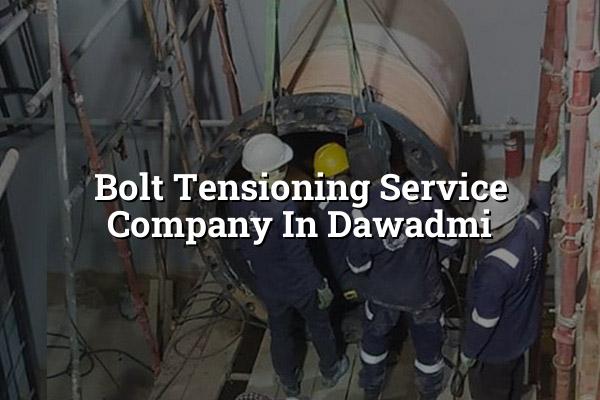
Bolt tensioning service company in Dawadmi support matters when a flange joint has to hold pressure, stay aligned and behave the same way every time you return to it. We help you control bolt load on critical equipment so your shutdown work, commissioning checks and maintenance jobs start with confidence rather than guesswork.
Our team works across Saudi Arabia from Dammam Industrial City 2 and supports oil & gas, petrochemical, power and construction sites that expect proper traceability, safe methods and tidy field execution. In practice, that means the right tooling, the right sequence and a record you can show your QA and maintenance teams.
Bolt tensioning service company in Dawadmi for critical joints
When people call us for bolt tensioning in Dawadmi, the job is usually tied to flanged piping, heat exchangers, skids, pumps, separators or other pressure-connected equipment where uneven load can create leaks, gasket damage or repeat rework. We plan the work around the joint size, access, bolt condition and the service conditions at site, then apply controlled tension so the flange closes evenly instead of pulling one side harder than the other.
Where this service helps most
We see the strongest demand on shutdowns, tie-ins, post-maintenance recommissioning and any job where a joint has already failed once. In Saudi projects, the usual pressure is simple: the plant wants the joint back in service cleanly, with less downtime and fewer surprises during the next inspection round. That is why teams in the field often pair bolt tensioning with flange facing, hydrotesting or bolt torquing on adjacent connections.
What our field team actually checks
Before tensioning starts, we look at bolt grade, thread condition, nut run-down, lubrication state, gasket condition and whether the joint geometry will let the load build evenly. If the joint needs a different approach, we say so. Sometimes torque control is the better fit; sometimes tensioning is the right call because the joint is large, sensitive or difficult to load uniformly with a wrench alone.
- Joint review — we inspect the flange, studs, nuts and gasket face so the job starts on known conditions.
- Tool and sequence setup — the tensioning pattern is arranged to match the bolt circle and access points.
- Controlled load application — bolts are tensioned in passes so the joint closes evenly and predictably.
- Verification and handover — we confirm the final condition, note observations and hand the joint back to your team.
- Better load balance on flanges with limited access
- Useful for shutdown work where repeat leaks have been a problem
- Fits process lines, skids, vessels and rotating equipment interfaces
- Works well alongside hydrotesting and flange work
Torque vs tensioning for Dawadmi field work
| Method | Best use | Typical field note |
|---|---|---|
| Bolt tensioning | Large flanges and joints that need even axial load | Helps reduce uneven pull-up on critical process joints |
| Bolt torquing | General bolting where access and geometry suit wrench control | Often used on smaller assemblies and routine maintenance jobs |
| Hydraulic tensioning | High-load joints or shutdown work with repeat access needs | Good where consistent preload and cleaner loading are required |
| Manual tightening | Light-duty non-critical work | Not the first choice for pressure joints or problem flanges |
Why controlled bolt load matters in Saudi industrial plants
In our experience, the joints that cause the most trouble are not always the biggest ones. They are the joints that were loaded unevenly, assembled in a rush or left without a proper check after maintenance. A controlled bolt load helps the gasket seat properly, which is why plant teams in Dawadmi and nearby project locations care about repeatability, not just getting the bolts tight.
Where standards and records fit in
We work in a way that supports the documentation your site expects, especially on projects linked to ISO 9001:2015 quality systems and inspection-controlled handovers. If the job also touches adjacent instrument work, our calibration and inspection teams can support the wider maintenance scope so your managers are not chasing three vendors for one shutdown.
Common on-site situations
Flange leaks after gasket replacement, reassembly after pump or compressor maintenance, and tie-ins during plant turnaround work are the jobs we hear about most. The practical goal is simple: get the joint back in service with less rework and a clearer record of what was done.
How we plan a bolt tensioning job from first call to handover
Most jobs begin with a short discussion about the equipment, the joint size and the reason the flange needs attention. That helps us decide whether the work should be done alone or bundled with flange facing, bolt torquing, hydrotesting or commissioning checks. We then schedule the visit around site access, permit conditions and the shutdown window you are working to.
For Dawadmi and the wider Saudi industrial belt, that kind of planning matters because field access, hot weather, safety controls and equipment availability can change quickly. We keep the scope practical. No extra noise, no overpromising, just a methodical service that fits the job in front of you.
- Joint size and access reviewed first
- Tooling selected for the bolt pattern
- Work sequenced around your shutdown plan
- Handover notes shared with your team
How Mayon Industrial Services Can Help
We support Dawadmi projects with bolt tensioning, mechanical maintenance, hydrotesting, flange work and commissioning support, and we can also bring in calibration or inspection teams when the wider job needs them. If your site wants one group that understands plant maintenance and field discipline, we can help you plan the work in a way that fits Saudi industrial reality. Share the scope with us and we will talk through the right method.
Call +91 99447 80844 (India) or +966 59 633 8012 (Saudi Arabia), email services@mayonservices.com, or message us on WhatsApp.
Frequently Asked Questions
For plant and maintenance work, you want a team that understands flange joints, access limits and shutdown discipline, not just the tools. We handle industrial bolting as part of a wider mechanical service scope, so the job is planned around the equipment and the site conditions you actually have.
Honestly, it comes down to the joint. If the flange is large, sensitive or hard to load evenly, tensioning often makes more sense. If the joint is simpler and access is good, torquing can be the cleaner option, so we look at the assembly before recommending anything.
Yes. We regularly support maintenance shutdown scopes where bolting, flange work and verification have to happen in a fixed sequence. That helps your team keep the reassembly clean and avoid unnecessary rework before restart.
We do. That is one of the main environments where controlled bolting matters, especially on pressure lines, skids, pumps, separators and related piping. Those sites usually want proper field discipline and clear handover notes, which is how we work.
Yes, and that is often the cleaner way to handle a maintenance scope. If the flange face needs attention or the joint will be tested after assembly, we can line up the work so the sequence makes sense and the team is not waiting around between steps.
Send us the equipment details, the location in Saudi Arabia or India, and the issue you are dealing with. We will review the scope, suggest the right service mix and move from there through our contact page, quote request form or WhatsApp line.
Ready for controlled bolting on your Dawadmi site?
Send us the joint details and we will help you choose the right field method for a cleaner handover.
Contact Mayon