
Bolt Tensioning Service Company in Riyadh
Controlled bolt load for flanges, critical joints and shutdown work in Riyadh and the wider Saudi industrial belt.
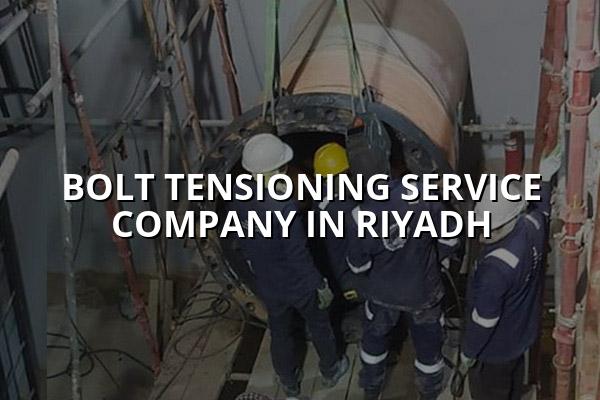
Bolt tensioning service company in Riyadh is the phrase many maintenance teams use when a flange joint has to be tightened with more control than a torque wrench can give. If you're working on pressure equipment, piping spools or shutdown scopes, the real goal is simple: even bolt load, reliable sealing and less risk of rework.
We support plants that need that level of control in Saudi Arabia, from oil and gas facilities to power, petrochemical and water systems. Our team works with hydraulic bolt tensioning methods that suit critical flanges, planned turnarounds and new installations where the joint has to behave the first time.
Bolt Tensioning Service Company in Riyadh for Critical Joints
When a flange leaks, the issue is often uneven load, poor sequencing or a joint that was tightened without a proper pattern. Bolt tensioning solves that by stretching the stud to a calculated load before the nut is run down, so the clamp force is more consistent across the flange face. That's why it shows up so often in refinery maintenance, compressor trains, heat exchangers and high-integrity piping around Riyadh and the Eastern Province.
Where bolt tensioning makes the most sense
We normally recommend it for large-diameter flanges, high-pressure service, limited-access joints and jobs where you need repeatable results across multiple bolts. In practice, that includes steam lines, process skids, exchangers, separator packages and shutdown work where the client wants controlled tightening rather than guesswork. If you're dealing with gasket-sensitive joints, the method helps reduce the kind of uneven loading that can distort the sealing face.
What our team checks before starting
Before any tensioning job, we look at bolt condition, thread engagement, flange rating, gasket type and access around the joint. We also check whether the sequence needs to follow a star pattern, a multi-pass approach or a staged load plan. In our experience, the prep matters as much as the hydraulics. If the studs are damaged or the flange faces are not ready, no amount of force will fix the joint properly.
- Review the joint data — we confirm flange size, bolt grade, service conditions and the target loading method before equipment is brought in.
- Inspect the hardware — studs, nuts, washers and flange faces are checked for wear, corrosion, thread damage and fit-up issues.
- Set up the hydraulic tensioners — the tool selection and pressure setting follow the required bolt load and the available access around the joint.
- Load in stages — the bolts are tensioned in the agreed sequence so the load stays even and the gasket settles correctly.
- Record and verify — we document the work, recheck the joint and hand over the result for the maintenance file or shutdown report.
- Use tensioning on flanges where even clamp force matters more than simple rotation torque.
- Replace damaged studs before the job starts; stretched threads can ruin the load path.
- Confirm gasket type and flange condition before selecting the sequence.
- Keep the tightening record with the turnaround pack for later inspection.
- Plan access early, because tool clearance around large process lines can be tight in plant skids.
How Bolt Tensioning Compares With Other Flange Tightening Methods
| Method | Best Use | Typical Benefit |
|---|---|---|
| Bolt tensioning | Critical flanges, limited-access joints, shutdown scopes | More even bolt load and better repeatability |
| Hydraulic torque wrench | General plant bolting where socket access is available | Good control when the joint design suits torque |
| Manual torque wrench | Smaller maintenance jobs and non-critical joints | Simple setup for lower-risk applications |
| Heat-assisted tightening | Special cases with defined procedure and engineering approval | Can help on certain legacy joints, but needs close control |
Why Riyadh Plants Ask for Controlled Bolt Loading
Riyadh sites often run tight maintenance windows, and nobody wants a flange reopened because the load was uneven. Controlled bolt loading helps reduce that risk on process lines, utility systems and packaged equipment, especially where vibration or thermal cycling can disturb a weak joint. For clients in oil and gas, petrochemical and power, the practical value is straightforward: better sealing, cleaner handover and fewer repeat interventions.
What good execution looks like
A clean bolt tensioning job doesn't look dramatic. The setup is tidy, the sequence is clear, the record is complete and the joint is left ready for service without drama. That calm finish is usually the sign that the work was planned properly, not rushed at the last minute.
Built for shutdowns and turnarounds
We help maintenance teams, EPC contractors and plant owners in Saudi Arabia keep critical flange work under control, from pre-job inspection through final verification. If your scope includes packed schedules, multiple joints or hard-to-reach process lines, the method choice matters.
What a Proper Bolt Tensioning Scope Should Include
Pre-job assessment
Joint review, equipment check and access planning before the first bolt is touched. That step prevents wasted time on site.
Execution and control
Hydraulic tensioners are applied in the right pattern so the load is distributed evenly and the flange stays aligned.
Post-job handover
We close out with verification and documentation so your maintenance team has a clear record for the work pack.
How Mayon Industrial Services Can Help
We support bolt tensioning work with the same field discipline we bring to mechanical services, inspection and commissioning jobs. If your scope in Riyadh also needs flange work, hydrotesting, cold cutting, or related shutdown support, our team can line up the work so the joint, the test and the handover all fit together. That makes life easier for maintenance managers who need one accountable team on site.
Call +91 99447 80844 (India) or +966 59 633 8012 (Saudi Arabia), email services@mayonservices.com, or message us on WhatsApp.
Frequently Asked Questions
We apply controlled hydraulic load to studs so the flange clamp force is even and repeatable. That matters on critical piping, exchangers and pressure joints where uneven tightening can cause leaks or gasket damage. The job usually starts with joint checks and ends with verification and handover.
Use tensioning when the joint needs tighter control over bolt load, especially on larger flanges, critical services or jobs with restricted access. Torque tightening can still work for many plant joints, but it depends more on friction and tool condition. For sensitive service, tensioning gives you a cleaner loading method.
Yes, we support shutdown and turnaround scopes in Saudi Arabia, including Riyadh and industrial sites connected to the Eastern Province. We often work alongside mechanical and commissioning teams, so the bolt work fits the wider maintenance schedule. That helps keep the plant moving without unnecessary hold-ups.
Send the flange size, bolt count, service medium, joint condition and any drawings or maintenance notes you already have. If you know the location inside the plant, that helps us plan access and equipment. The more accurate the starting data, the smoother the site planning will be.
Yes, our mechanical team can support related flange work and hydrotesting where the project scope needs it. That's useful on shutdown packages because the same team can stay aligned from preparation through test and closeout. It cuts down on coordination between multiple contractors.
Ready to control the next flange job properly?
If you need a Riyadh team that understands critical joints, shutdown pressure and real site constraints, talk to Mayon Industrial Services.
Contact Mayon