
Calibration Labs Setup Consulting in Petro Rabigh
Plan, build and commission a calibration lab that fits Petro Rabigh industrial demands and ISO/IEC 17025 expectations.
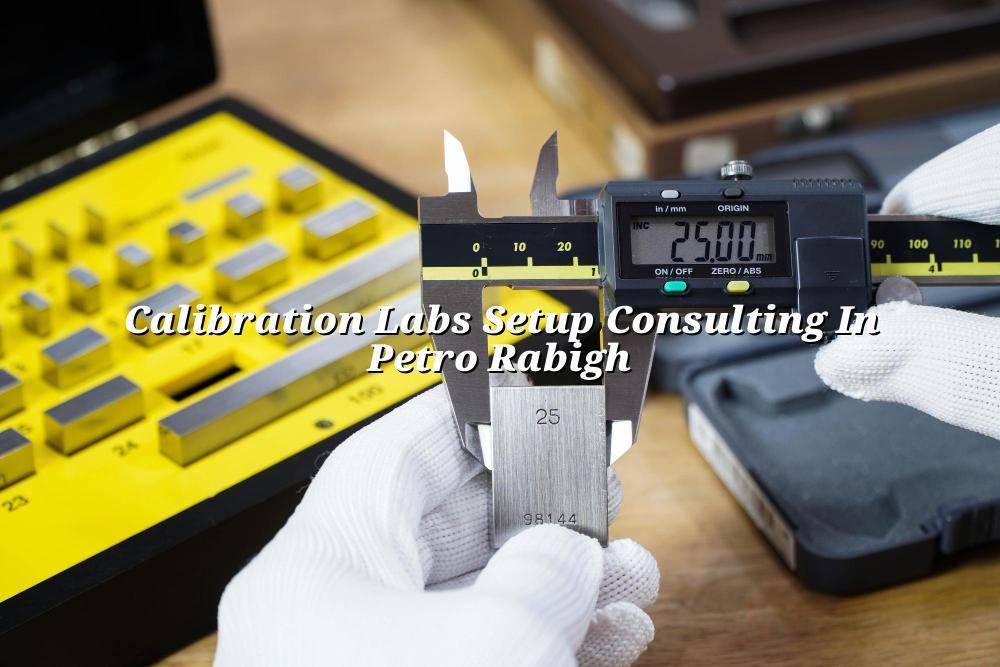
Calibration labs setup consulting in Petro Rabigh helps you turn a blank room, warehouse bay or repurposed technical space into a lab that can actually support traceable work. If you're planning a new calibration facility, the value is in getting the layout, utilities, equipment list and workflow right before civil work starts.
We build this around the way Petro Rabigh projects run on the ground: tight shutdown windows, demanding QA expectations and a mix of oil & gas, petrochemical, power and maintenance clients who want reliable records from day one. Our team also works across India, Saudi Arabia and the Middle East, so we’re used to the practical side of lab setup, mobile calibration support and ISO/IEC 17025 discipline.
How calibration lab setup consulting works at Petro Rabigh
A good lab is more than a room with benches. For Petro Rabigh sites, the design has to account for temperature stability, power quality, vibration, dust control, access for instrument intake and a clean path from receipt to calibration to dispatch. If those basics are missed, you spend more time correcting workflow than calibrating instruments. That’s a problem we see often when companies grow fast and try to fit a lab into leftover space.
Site survey and requirement mapping
We start with the instruments you plan to handle, the disciplines you need, and the conditions your client base expects. A pressure and temperature lab needs a different utility plan from a dimensional or electrical room. In Petro Rabigh, where clients may ask for traceability under ISO/IEC 17025:2017 or electrical work aligned to EURAMET CG-15, the scope has to be written clearly before equipment is ordered.
Design around workflow, not just walls
The best labs keep receiving, cleaning, calibration, quarantine, storage and dispatch separated in a way that makes sense to the technicians. We also look at controlled areas for sensitive instruments, secure storage for standards and the practical movement of heavy equipment. If the room is meant to serve both in-house work and customer drop-offs, the flow has to stay simple. Otherwise the lab feels busy but performs badly.
- Define the service scope — list the disciplines, instrument ranges and industries the lab must support.
- Survey the site — check floor condition, power supply, lighting, HVAC, access and space for standards and benches.
- Build the layout — place receiving, work zones, storage and dispatch so technicians can move without cross-traffic.
- Select utilities and equipment — match benches, racks, sinks, compressors, reference standards and environmental controls to the scope.
- Commission and validate — install, test, label and document the setup so the lab is ready for real work.
- Keep temperature-sensitive standards away from doors, direct sunlight and vibration sources.
- Use clear zones for incoming instruments, active calibration and finished items.
- Plan for utility interruptions with backup checks and realistic test sequencing.
- Leave space for expansion if your Petro Rabigh workload grows into new disciplines later.
Reference points for a calibration lab in Petro Rabigh
| Lab Area | What We Check | Why It Matters |
|---|---|---|
| Utilities | Power quality, grounding, compressed air, water and HVAC | Stable utilities protect standards and reduce measurement drift |
| Layout | Receiving, work benches, storage, quarantine and dispatch | Prevents mix-ups and keeps the workflow traceable |
| Environment | Temperature control, dust control and vibration exposure | Supports repeatable calibration results and equipment life |
| Documentation | SOPs, labels, calibration records and asset control | Makes the lab easier to audit and manage day to day |
What your lab needs before instruments arrive
Before the first dead weight tester, bath or reference meter comes through the door, the room has to be ready for controlled work. That means deciding where calibration benches go, how standards will be stored, who can access them and how instruments are identified from intake to release. We also consider practical details like cleaning points, packing space and enough room for a mobile calibration lab to load and unload safely if onsite support is part of your service model.
Why this matters for Petro Rabigh projects
Petro Rabigh contractors and plant teams usually want a setup that can support routine maintenance as well as formal customer work. A tidy room is nice. A lab that supports records, traceability and clear ownership is better. That’s where early consulting saves time, because changing a lab after installation usually costs more than getting the layout right on paper first.
Typical setup decisions we help with
We help you choose the right balance of in-house calibration, pickup and delivery, and onsite work. For many clients in Saudi Arabia, that mix matters because some instruments need controlled conditions while others are easier to verify where they are installed.
Equipment selection, commissioning and practical lab readiness
Choosing equipment is where many projects go off track. A long list looks impressive, but the real question is whether each item supports the scope you want to deliver. For a calibration lab in Petro Rabigh, that may include temperature baths, pressure comparators, dead weight testers, balances, gauges, calibrators, reference meters or supporting products such as hydrotest manifolds and custom fixtures. Each one has to fit the intended workload, not just a brochure.
Commissioning that matches real work
We don’t treat commissioning as a paperwork step. We check that the equipment is installed correctly, labelled clearly and placed where technicians can use it without creating bottlenecks. If the lab will support mass, pressure, temperature or electrical disciplines, we also look at calibration interval planning and routine checks so the team can keep work moving without losing control.
Documents your team will actually use
Lab manuals, asset registers, SOPs, intake logs and environmental records should be simple enough that your technicians keep using them. If they’re too complicated, people stop following them. That’s true in Dammam, Chennai and anywhere else we’ve seen a busy industrial lab. The document set should help the shift, not slow it down.
- Confirm the scope — match instrument types to the work you plan to win or support.
- Specify the room — lock in space, utilities and environmental control before purchase orders go out.
- Install and label — place equipment, standards and storage in a way that technicians can follow easily.
- Test the workflow — run sample intake and release steps to see where delays or confusion appear.
- Ask for a layout that separates active calibration from clean storage.
- Choose utility points based on the equipment list, not the other way around.
- Keep standards and master instruments in a controlled, documented location.
- Leave room for future disciplines like electrical, thermal or mechanical calibration.
What usually causes rework in new lab projects
The biggest problems are rarely dramatic. More often it’s a bench in the wrong place, a missing utility line, no clear intake process or a layout that doesn’t separate dirty and clean items. We also see teams forget about future expansion and end up with a lab that looks finished on paper but has no spare capacity. In a Petro Rabigh environment, that kind of rework can slow down maintenance support and customer response at the worst moment.
How we reduce those headaches
Our approach is to ask the questions people often skip: which instruments move daily, which ones stay in controlled storage, what needs pickup and delivery, and what must happen onsite. Once the answers are clear, the lab can be designed around real work instead of assumptions.
Project reality check
If your team handles both customer calibration and internal maintenance support, the lab should be planned for both loads from the start. That’s a practical detail, but it changes everything from bench count to storage space.
How Mayon Industrial Services Can Help
We help you plan the lab, choose the right disciplines, and set up the space so it works for technicians on day one. If your Petro Rabigh project needs calibration support, lab design, onsite verification, or a mobile calibration option for instruments that shouldn’t be moved too far, we can build the setup around that need. We also support related mechanical, inspection and testing work, so the lab doesn’t sit in a vacuum. Start with a conversation and we’ll help you shape the scope.
Call +91 99447 80844 (India) or +966 59 633 8012 (Saudi Arabia), email services@mayonservices.com, or message us on WhatsApp.
Frequently Asked Questions
We usually cover scope planning, site review, layout advice, utility planning, equipment selection and commissioning support. If you already have a room, we can assess whether it suits the instruments you plan to handle. If you’re starting from scratch, we can help you avoid the common mistakes that show up after purchase orders are already placed.
Yes. That’s a common request from teams building new capability in Saudi Arabia and the GCC. We can help define the disciplines, the room flow, the reference equipment and the document set so the lab is ready for controlled work, not just fitted out with benches.
We do. Some instruments are better handled onsite, while others need controlled lab conditions or special care during transport. We can help you design the setup so the lab and the field workflow fit each other instead of competing for the same resources.
That depends on the space, utilities and equipment you choose. Many projects start with pressure, temperature, electrical or mass disciplines, then add more areas once the workflow is stable. We help you decide what makes sense now and what can wait until the lab grows.
We look at the actual path a technician follows, from receiving an instrument to releasing it after calibration. If the person has to cross the room three times or hunt for storage, the layout needs work. Simple movement usually beats clever-looking drawings.
Yes, and that is one of the most common industrial settings we work around. Those sites usually want traceable calibration support, safe handling of instruments and a lab that can keep pace with maintenance schedules. We plan for that reality, not an ideal lab that only works on paper.
Ready to plan a lab that actually works?
If your Petro Rabigh project needs a calibration room, equipment list or full setup plan, talk to us before you buy the wrong items.
Contact Mayon