
Cold Cutting Service Company in Tabuk
Safe, spark-free cutting for pipework, structures and maintenance shutdowns in Tabuk and nearby industrial sites.
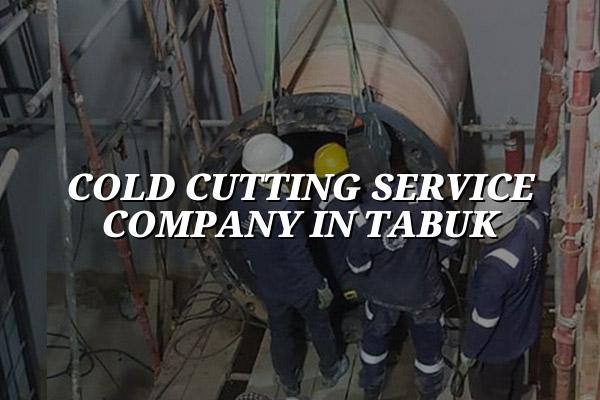
Cold cutting service company in Tabuk searches usually come from a plant team that needs clean cuts without heat, sparks or a long stop. That’s the real job here: cut pipe, plates, flange sections or structural members safely while protecting nearby equipment, coatings and personnel.
We work the way industrial sites in Tabuk, the wider Northern Borders and Saudi project yards expect. That means practical site planning, mechanical support when the cut ties into maintenance, and the kind of traceable working style that fits shutdown work, retrofit jobs and utility upgrades.
Cold Cutting Service Company in Tabuk for controlled site work
In Tabuk, cold cutting is often chosen when hot work permits are awkward, the line still needs to stay protected, or the environment can’t tolerate heat, sparks or excessive vibration. We see this on maintenance jobs, plant tie-ins, structural modifications and equipment replacement work where the cut has to be accurate the first time. The method matters because the wrong approach can distort mating faces, damage adjacent components or create cleaning work that drags the schedule out.
Where the method fits best
We use cold cutting on pipe sections, skids, steel supports, tanks and selected fabrications where a clean, square cut helps the next stage go smoothly. On brownfield sites, that often means less rework during flange replacement, spool changeouts, shutdown repairs and prefabrication adjustments. If the work is part of a larger maintenance scope, we can line it up with flange facing, bolt torquing, hydrotesting and commissioning support.
Why site teams ask for it
Most requests are about control. Engineers want a cut that doesn’t throw sparks into insulation, cable trays or process residues, and they want dimensional accuracy that makes fit-up faster. In our experience, the best results come when the cutting method is matched to the material, wall thickness and access conditions, then checked against the surrounding job plan before a single tool starts moving.
- Inspect the work zone — confirm access, isolation points, nearby services and any permit limits before equipment is set up.
- Measure and mark the cut line — use clear references so the final cut supports alignment, reassembly and dimensional control.
- Select the right cutting method — match the tool and setup to the material, thickness and finish required for the next trade.
- Carry out the cut under control — keep the process stable, monitor the result and protect adjacent surfaces from damage.
- Check the finished edge — verify squareness, cleanliness and fit-up readiness before the part moves to welding, installation or testing.
- Works well where heat input must stay low near process lines or coatings.
- Helps reduce sparks around cable routes, insulation and sensitive plant areas.
- Supports cleaner fit-up for flange work, spool replacement and fabrication changes.
- Fits maintenance shutdowns, retrofit work and controlled plant modifications.
- Can be combined with hydrotesting, testing and commissioning on the same job.
Cold cutting methods and common site uses
| Typical method | Best for | What site teams care about |
|---|---|---|
| Mechanical pipe cutting | Pipework, spools and maintenance replacements | Accurate cut lines and reduced heat near operating systems |
| Cold saw or controlled abrasive cutting | Fabrication and structural sections | Cleaner edges and better fit-up for the next trade |
| Hydraulic or powered cutting setup | Heavier components and awkward access points | Stability, safety controls and consistent results on site |
| Prepared cut with follow-on finishing | Flange work and repair scopes | Edge quality that supports welding, inspection and assembly |
How we control risk during cold cutting service in Tabuk
Good cold cutting is not just about making a clean separation. It’s about controlling vibration, protecting the line, keeping nearby equipment safe and leaving a finish that helps the next step happen without drama. That matters on oil and gas packages, utilities, warehouses, workshops and construction sites where one bad cut can slow several teams at once.
What we check before starting
We look at material condition, access, isolation, nearby hot surfaces, debris control and the effect on what comes after the cut. If the job is tied to mechanical repair, we can coordinate the cut with bolt torquing, flange facing, equipment removal or commissioning support so the work stays joined up rather than scattered across separate visits.
Built for live industrial sites
Tabuk projects often need work around occupied plant, ongoing construction or utility corridors. That’s where a controlled setup, clear marking and practical supervision make the difference between a neat intervention and a cleanup job no one wanted.
How Mayon Industrial Services Can Help
We support cold cutting as part of a wider mechanical and industrial scope, so you’re not juggling separate contractors for each stage of the job. Our team can pair cutting with flange work, hydrotesting, testing and commissioning, repair work and inspection support, which is handy when a shutdown window is tight and the handover has to be clean.
For Tabuk jobs and other Saudi or Middle East sites, we keep the work practical and traceable, with the same attention we give to calibration, laboratory setup and field engineering work. If you need a safe cut on pipe, steel or structural sections, talk to us and we’ll help you plan it properly.
Call +91 99447 80844 (India) or +966 59 633 8012 (Saudi Arabia), email services@mayonservices.com, or message us on WhatsApp.
Frequently Asked Questions
It’s used when you need to cut pipe, steel or structural parts without open flame and without adding heat to the area. On industrial jobs, that usually means safer maintenance work, less disturbance to nearby equipment and a cleaner handover for the next trade.
Yes, it can, if the site conditions, permits and isolation plan support the work. We usually see it on maintenance shutdowns, retrofit scopes and controlled modifications where sparks, heat and vibration need to stay low.
It’s commonly used on pipework, structural steel, skids and selected fabrication items. The exact method depends on thickness, access and what the edge needs to look like for reassembly or welding.
Yes. That’s often the better way to do it, because the cut is usually only one stage in a bigger scope that may include flange work, hydrotesting, repair, commissioning or inspection before handover.
Send us the job location, the material details, any drawings you have and the kind of finish you need after the cut. You can call, email or use WhatsApp, and we’ll help you work out the practical scope before anything starts on site.
Need a clean, controlled cut on site?
If your Tabuk project needs spark-free cutting that fits neatly into a larger maintenance or installation scope, we’re ready to help.
Contact Mayon