
Condition Monitoring Company in Diriyah
Keep rotating assets, electrical systems and critical plant equipment under control with onsite diagnostics and practical maintenance support.
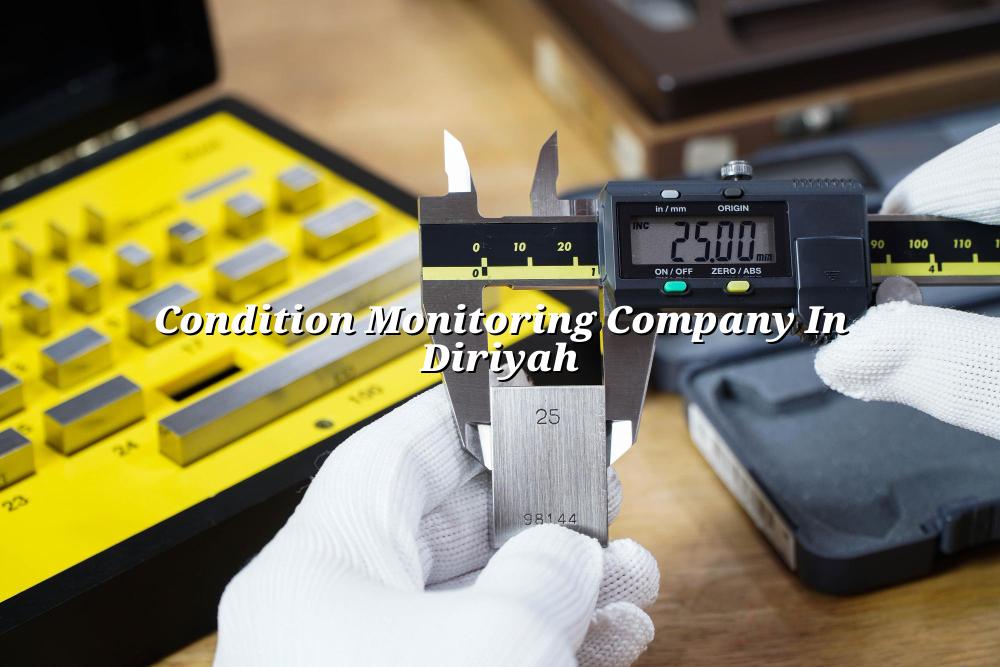
Condition monitoring company in Diriyah searches usually come from teams that already feel the warning signs: rising vibration, hot bearings, noisy drives or a machine that has started to drift out of spec. We help you catch those signals early, so you can plan maintenance instead of reacting after a stoppage.
In Diriyah and the wider Riyadh area, that matters in plants, utilities, facilities and support workshops that can’t afford surprise breakdowns. We work with the kind of equipment that keeps production, cooling and infrastructure moving, using onsite diagnostics and traceable methods that fit industrial expectations in Saudi Arabia.
What a condition monitoring company in Diriyah actually checks
A proper condition monitoring visit is not just a quick visual look. We check how the asset is behaving under real operating conditions, then compare the readings with what healthy equipment should look like. That usually means vibration analysis, laser shaft alignment, infrared thermography and ultrasound checks, with fault patterns mapped against common issues such as imbalance, misalignment, looseness, bearing wear and electrical hotspots.
Why the readings matter on site
For a maintenance manager, the value is in the decision-making. A vibration trend that climbs week after week tells a different story from one bad reading on a single day. When our team visits a site in Diriyah, we look for repeatable evidence, not guesswork, and we explain what the numbers mean in plain language your technicians can act on.
Where these checks fit in daily operations
Condition monitoring works best on assets that run often or sit in a critical part of the process. Pumps, compressors, fans, motors, gearboxes, chillers, generators and rotating drives are common candidates. In our experience, most teams want two things: fewer breakdown calls at odd hours and a maintenance plan they can defend internally. That’s exactly where periodic monitoring helps.
- Start with the asset list — we identify the machines that carry the highest operational risk, not just the loudest ones.
- Capture the baseline — initial vibration, thermal and alignment data gives you a reference for future comparisons.
- Check for fault patterns — we look for signatures linked to imbalance, misalignment, bearing deterioration and electrical heating.
- Prioritise corrective work — your team gets a practical order of action so the most urgent issue is addressed first.
- Track the trend — repeat visits show whether the asset is stabilising or heading the wrong way.
- Use vibration data to spot mechanical faults before they become full failures.
- Use infrared thermography to find hot electrical joints, overloaded components and uneven heat patterns.
- Use laser shaft alignment to reduce coupling stress and premature bearing wear.
- Use ultrasound monitoring to listen for friction, leakage and early bearing distress.
Condition monitoring tools and what they help you see
| Method | What it detects | Typical use |
|---|---|---|
| Vibration analysis | Imbalance, misalignment, looseness, bearing issues | Motors, pumps, fans, gearboxes and rotating trains |
| Infrared thermography | Hot spots, overloaded connections, uneven heating | Panels, switchgear, terminals and electrical rooms |
| Laser shaft alignment | Coupling offset and angular misalignment | After installation, overhaul or movement of aligned machines |
| Ultrasound monitoring | Leakage, friction, arcing and early bearing noise | Compressed-air systems, rotating equipment and electrical inspections |
Why Diriyah sites use condition monitoring before failure
Unplanned stoppages rarely begin with a dramatic collapse. They usually start as a change in sound, temperature, vibration or operating load. That’s why condition monitoring is useful across commercial facilities, industrial support areas and utility systems in Saudi Arabia: it gives you a chance to act while the machine is still running and the repair can be planned.
What this means for your maintenance team
You get evidence, not assumptions. A maintenance planner can line up parts, labour and access windows with fewer surprises. A QA or reliability engineer can justify the work using readings from a repeatable inspection method. And a plant manager gets a clearer picture of which asset needs attention now, which can wait, and which only needs to be watched a little longer.
Built for real industrial work
We support clients who want onsite checks, mobile-lab capability and practical reporting for rotating machines, electrical systems and process equipment. For Diriyah-based operations and nearby Riyadh projects, that usually means fewer emergency calls and better control over maintenance timing.
How onsite diagnostics change the maintenance plan
Onsite work matters because equipment doesn’t fail in a lab. It fails in heat, dust, vibration and load. Our field team can inspect equipment where it stands, which helps when the asset is difficult to move, tied to process piping or part of a live production line. If the item needs special handling, we can also arrange pick-up and delivery for instruments that need controlled conditions.
For clients in oil and gas, petrochemical, power, construction, healthcare, cold chain and manufacturing, the goal is similar: keep the critical path under control. That may mean checking a motor train before a shutdown, mapping a freezer room after a complaint, or confirming that a thermal pattern on a panel is stable and safe to leave in service for the moment.
The traceability clients expect in Saudi Arabia and the GCC
Industrial teams in Diriyah usually want more than a verbal opinion. They want a method that makes sense for audits, internal reviews and maintenance records. For calibration-linked checks, that means ISO/IEC 17025:2017 competence, with reporting that supports traceability and a clear technical trail. Where applicable, we also work within ISO 9001:2015 quality systems, BS EN standards for lifting and inspection, and EURAMET CG-15 for electrical calibration.
What we record
We document the condition found, the readings taken, the faults suspected and the action recommended. That gives your team a usable record when the same machine is reviewed next month or during the next shutdown window. It also helps avoid the old habit of repeating the same repair without knowing why the fault came back.
Data your team can work with
We keep the output practical: clear findings, sensible priorities and notes that support maintenance decisions. That’s what most supervisors ask for, especially when several assets are competing for the same shutdown window.
How Mayon Industrial Services Can Help
We support Diriyah clients with condition monitoring, vibration analysis, laser shaft alignment, infrared thermography and related mechanical checks for rotating equipment and electrical systems. Our wider team also covers calibration, mechanical services, inspection, orbital welding, lab setup and maintenance support, so you can work with one partner instead of chasing several vendors.
Call +91 99447 80844 (India) or +966 59 633 8012 (Saudi Arabia), email services@mayonservices.com, or message us on WhatsApp.
Frequently Asked Questions
We usually start with the assets that can stop a process or create safety risk if they fail. That includes motors, pumps, fans, compressors, gearboxes and electrical panels. The first visit is often about building a baseline, so later readings can be compared properly.
Vibration tells you how a machine is behaving while it runs. A change in pattern can point to imbalance, misalignment, looseness or a bearing problem long before the unit breaks down. That gives your team time to plan the fix instead of reacting to a failure at the worst possible moment.
Yes, and that’s often the best way to work. A single site visit can combine infrared thermography, vibration checks and visual inspection, which saves your team from coordinating several separate callouts. It also gives you a broader view of what’s driving the problem.
We support clients across Saudi Arabia and the wider Middle East, and we also serve India from our Chennai head office. Many teams in Riyadh, Dammam and surrounding industrial areas ask for the same mix of onsite diagnostics and maintenance planning support.
You get a practical summary of the condition found, the readings taken and the likely fault areas. We keep it technical enough for engineers and clear enough for managers who need to approve maintenance work. The aim is simple: help you decide what to do next.
Ready to keep your assets under control?
If you need a condition monitoring company in Diriyah that speaks the language of maintenance, inspection and calibration, our team is ready to help.
Contact Mayon