
Condition Monitoring Company in Khafji
Practical condition monitoring support for rotating equipment, electrical systems and critical assets across Khafji and the Eastern Province.
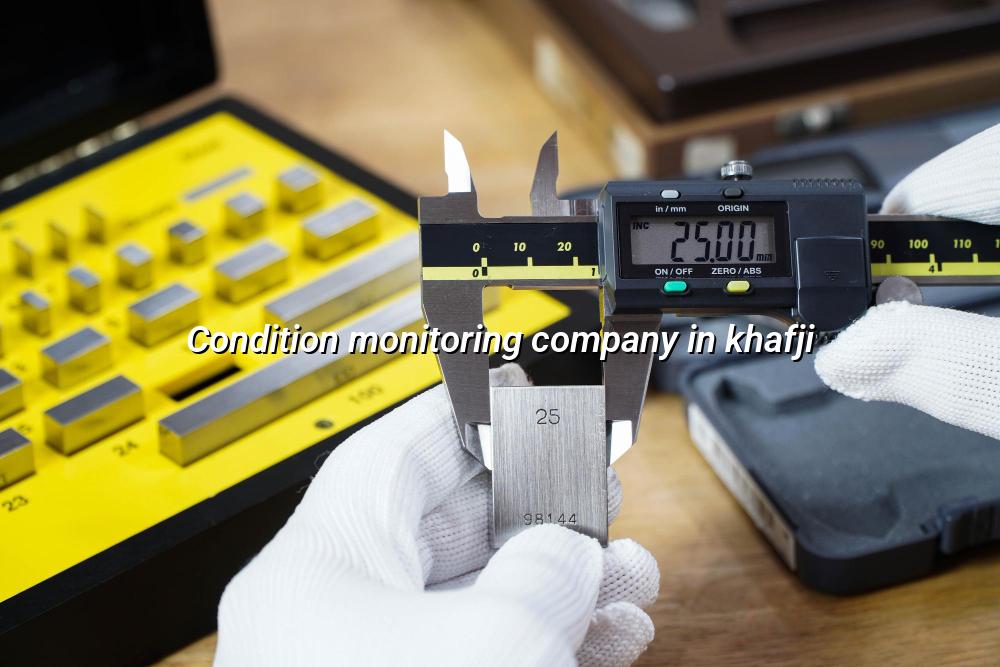
Condition monitoring company in Khafji services help you catch machine problems before they turn into shutdowns, missed production, or a midnight call to maintenance. If you're running pumps, motors, compressors, gearboxes or electrical assets in Khafji, this page shows how we spot early warning signs and keep the work practical.
We support plants and industrial teams that want real evidence, not guesswork. That means vibration data, alignment checks, thermography, ultrasound checks and fault diagnostics shaped around the kind of equipment used in Khafji, the Eastern Province and nearby Saudi industrial sites.
Condition monitoring company in Khafji for equipment you can’t afford to lose
Most requests we get from industrial teams start with the same feeling: something sounds wrong, temperatures are rising, or a bearing has started to vibrate more than it used to. A condition monitoring company in Khafji should help you turn that feeling into a clear maintenance decision. We look at how the asset behaves, compare it with a known baseline and tell you what needs attention now, what can wait, and what should be scheduled before the next outage window.
What we check on site
For rotating equipment, vibration analysis is usually the first stop. From there, we can check shaft alignment with laser tools, inspect hot spots with infrared thermography, and use ultrasound monitoring to pick up leaks or early-stage bearing issues. In Khafji and the wider Eastern Province, that mix matters because many facilities run hard, deal with dust and heat, and depend on equipment that can’t drift for long before it starts affecting output.
How the findings are used
We do not just hand over a graph and walk away. The point is to help your maintenance team make a better call. You may need balancing, alignment correction, a bearing change, lubrication work, electrical follow-up or a deeper inspection. In some cases, a pattern points to poor installation or recurring process vibration, and that changes the maintenance plan entirely.
- Baseline the machine — we record normal vibration, temperature or sound levels before calling anything a fault.
- Inspect the asset in operating condition — readings taken while the equipment is running are usually the ones that matter.
- Compare against fault patterns — imbalance, looseness, misalignment, bearing wear and electrical anomalies each leave different signs.
- Report the next action — we point to the fix, the urgency and the likely maintenance window.
- Useful for pumps, motors, compressors, fans and gear-driven assets
- Helps teams plan work before the failure reaches production
- Supports predictive maintenance programs in Saudi industrial environments
- Gives maintenance leaders evidence they can share with operations and procurement
Which method fits which fault?
| Method | Best for | What it helps you see |
|---|---|---|
| Vibration analysis | Rotating machinery | Imbalance, misalignment, looseness and bearing problems |
| Laser shaft alignment | Coupled machines | Offset and angular misalignment after installation or repair |
| Infrared thermography | Electrical and mechanical assets | Hot spots, overloaded parts and loose connections |
| Ultrasound monitoring | Bearings, leaks and compressed air systems | High-frequency signatures that often appear before visible failure |
Monitoring support that suits Khafji plants and nearby industrial sites
Industrial teams in Khafji often need more than one visit. They need a partner who can check a machine, explain the result in plain words, and come back after the repair to confirm the fix. That is where our mobile capability helps. We can support onsite work, coordinate with your shutdown plan and handle instruments that need controlled handling through our temperature-controlled in-house laboratory.
Better data starts with the right conditions
Dirty measurement conditions, rushed readings and poor access can ruin a condition monitoring job. We take the time to get proper operating data, and for instruments that need special conditions, we can arrange pick-up and delivery. For Saudi Arabia and the Middle East, that matters because plant environments are rarely gentle, and the work has to hold up when maintenance reviews the report.
Built for maintenance teams
We work with engineers, reliability leads, QA teams and planners who need clean findings they can act on. If the issue sits in a pump room, utility block, compressor skid or substation area, we keep the recommendation focused on the asset in front of you.
What a good monitoring program looks like in practice
A workable program is not complicated. The first visit establishes a reference condition. The next visits track trends against that reference, which is where the value starts to show. We often see the biggest improvement when teams move from reacting to alarms to tracking the slow changes that happen over weeks or months. That is especially useful in oil and gas, petrochemical, power and manufacturing sites where downtime has a long ripple effect.
Trend data beats a one-time reading
A single reading can tell you something is wrong. A trend tells you whether the problem is growing, stable or tied to a specific operating condition. If a fan vibrates only at certain speeds, or a motor heats up only under load, the pattern matters as much as the number itself.
Real maintenance decisions come from context
Two machines can show similar readings and still need different actions. One might be safe to monitor, while the other needs immediate intervention because the load is critical or the spares are long lead items. That is why our team keeps the report practical and writes it for people who actually schedule the work.
- Set the asset list — pick the machines whose failure would hit production, safety or quality hardest.
- Record the normal condition — capture vibration, temperature or ultrasonic readings while the machine is healthy.
- Trend the changes — compare new readings with the baseline and look for repeatable patterns.
- Act on the recommendation — repair, align, inspect or monitor again depending on the severity and operating risk.
- Combine monitoring with planned shutdowns to reduce lost production time
- Use trending to support spares planning for critical rotating assets
- Include electrical thermography where heat is part of the failure pattern
- Keep reports simple enough for operations and maintenance to use together
How Mayon Industrial Services Can Help
We support condition monitoring with vibration analysis, laser shaft alignment, infrared thermography and ultrasound checks, then we tie the results back to the maintenance action you actually need. If the job calls for broader support, our team can also help with electrical testing, mechanical services, calibration and repair work. For Khafji and nearby Saudi sites, that means one point of contact for practical industrial support.
Call +91 99447 80844 (India) or +966 59 633 8012 (Saudi Arabia), email services@mayonservices.com, or message us on WhatsApp.
Frequently Asked Questions
We check how your equipment is behaving before it fails. That usually means vibration analysis, thermal checks, alignment work and fault diagnosis on rotating or electrical assets. The goal is to give your maintenance team a clear next step, not a pile of raw readings.
Start with assets that would hurt production, safety or quality if they stopped. In practice, that often means pumps, motors, compressors, fans, gearboxes and critical electrical equipment. If a machine is hard to replace or hard to stop, it belongs near the top of the list.
Yes. We support onsite industrial work in Saudi Arabia, including Khafji and the Eastern Province. Our mobile capability helps when the machine is too large, too critical or too awkward to move, and we can also support items that need special handling through our in-house laboratory.
Sometimes it is enough to point to a fault, but not always. Some issues show up better through laser alignment, thermography or ultrasound, especially when the root cause involves heat, wiring, lubrication or air leaks. Using more than one method usually gives a cleaner picture.
We write the findings in maintenance language. That means we explain what we saw, what it usually points to, how urgent it looks and what action makes sense next. The idea is to help your planner, reliability engineer or supervisor decide without having to guess.
Ready to get a clearer picture of your equipment health?
If you need a condition monitoring company in Khafji that speaks plainly, works onsite and understands industrial assets, contact our team and we’ll help you plan the next step.
Contact Mayon