
Condition Monitoring Company in Shedgum
Condition-based maintenance support for plants in Shedgum and the wider Saudi industrial belt.
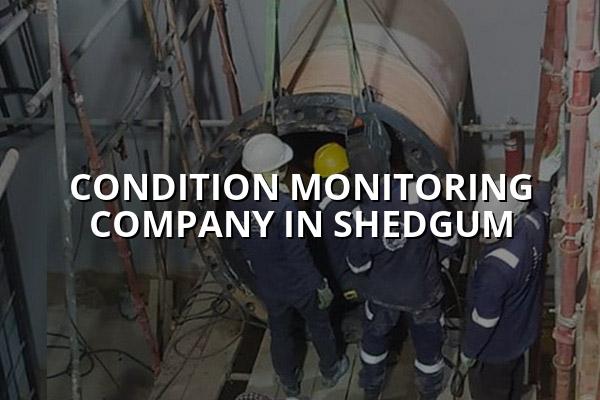
Condition monitoring company in Shedgum searches usually mean one thing: a plant has started hearing, feeling or seeing a problem before a breakdown turns the day upside down. We help maintenance teams catch that early, using vibration analysis, laser alignment, infrared thermography and ultrasound-based checks that point to the real fault instead of guesswork.
For operators around Shedgum, Jubail and the Saudi industrial corridor, that matters because rotating equipment rarely fails in a neat way. Bearings loosen, couplings drift, panels heat up and small imbalances build into bigger losses. Our job is to give you clear evidence so you can plan work around production, not the other way around.
What a Condition Monitoring Company in Shedgum Actually Does
A proper condition monitoring program is not a one-off inspection. It is a repeatable way to watch machines trend over time, compare the present reading with the last reading, and spot where the change is heading. In practice, that can mean vibration baselines on pumps and compressors, shaft alignment checks after maintenance, thermal scans on switchboards, and ultrasound checks on steam lines, bearings and compressed air systems.
Why plants in Shedgum ask for more than a checklist
Most teams already know the obvious faults. The hard part is the one that hides between inspections. A motor that starts drawing more current, a gearbox with a growing vibration peak at a specific frequency, or a hot terminal inside an LV panel may look fine during a quick walk-through. Our readings help turn those hints into maintenance actions, especially where shutdown windows are tight and production planning matters.
Where the data becomes useful
Data only helps when it can be read by people who need to act. We keep the language practical. If a pump shows rising overall vibration and a coupling offset is present, you get that context. If thermography finds a hot breaker or loose termination, we call it plainly. That style works well for oil and gas, petrochemical, power, construction and cold-chain operations across Saudi Arabia and the Middle East.
- Start with the asset list — we identify critical rotating and electrical equipment, usually the machines that can stop a line, a utility system or a process area.
- Capture a clean baseline — we record the first readings after equipment is stable, so future changes can be judged against something real.
- Trend the findings — repeated checks show whether vibration, temperature or alignment is drifting in the wrong direction.
- Turn findings into action — we share what needs attention now, what can wait, and what should be watched on the next visit.
- Vibration data is best when the same points are checked each visit.
- Thermal scans are useful for switchboards, MCCs, breakers and tight electrical joints.
- Laser shaft alignment helps after motor, pump or gearbox replacement.
- Ultrasound can expose leakage, bearing noise and early mechanical wear.
- A written trend is more useful than a single good reading on a bad day.
Typical Condition Monitoring Methods Used on Site
| Method | What it helps find | Best fit |
|---|---|---|
| Vibration analysis | Imbalance, looseness, misalignment, bearing defects | Pumps, fans, blowers, compressors, motors |
| Laser shaft alignment | Offset and angular misalignment after installation or overhaul | Coupled rotating equipment |
| Infrared thermography | Hot spots, overloaded joints, loose terminations, abnormal heating | Panels, breakers, MCCs, electrical rooms |
| Ultrasound monitoring | Leakage, bearing noise, steam trap issues, electrical discharge indicators | Utility systems and rotating assets |
Why Trend-Based Monitoring Beats Guesswork
When teams rely only on periodic shutdown inspections, problems can sit between visits for weeks. Trend-based monitoring gives a wider view. A bearing may still run today, but a rising frequency pattern or heat change tells you the component is moving in the wrong direction. That lets you line up spares, manpower and permits before the fault becomes a stoppage.
Good for production, useful for safety
We see this often in Saudi facilities where a few hours of unplanned downtime creates a long chain of work. A hot breaker, a weak motor bearing or a drifting pump alignment can affect both output and safety. The same is true in Indian plants where utilities, cold rooms and process lines all need stable equipment. Reliable readings help teams decide what to fix first.
What you can expect from a site visit
We arrive with the right tools for the asset type, take readings in a structured way and explain the result in plain engineering language. If the job needs follow-up mechanical work, calibration support, electrical testing or commissioning help, our team can cover that too. That saves you from coordinating multiple vendors for one maintenance issue.
How We Build a Monitoring Program That Fits the Site
Every plant has its own rhythm. A packaged skid in Shedgum does not need the same attention pattern as a warehouse refrigeration system or a utility compressor house. We start by understanding the machine duty, the operating hours, the shutdown window and the failure history. That lets us set a monitoring plan that feels practical, not academic.
Simple enough for the maintenance room
Our reports are written so the maintenance supervisor, electrical engineer and reliability lead can all use them. If we find a loose connection in a panel, you get the location and the likely risk. If vibration on a pump is trending up, we say what that trend usually points to and what to check next. If the asset needs a detailed follow-up, we can support calibration, mechanical correction, inspection or commissioning from the same team.
- Critical rotating equipment is checked with the same reference points every time.
- Electrical thermography helps spot hidden heat before it becomes a trip or failure.
- Alignment checks are useful after motor replacement, seal work or coupling change.
- Monitoring can support shutdown planning for Saudi, Indian and GCC site teams.
How Mayon Industrial Services Can Help
If you're looking for a condition monitoring company in Shedgum, we can support the job with vibration analysis, laser shaft alignment, thermography and ultrasound-based checks, backed by our ISO/IEC 17025:2017 approach to precision work. We also handle the related jobs that usually come next, including mechanical services, electrical testing and commissioning, inspection, calibration and training. That means less vendor coordination and a clearer maintenance plan.
Call +91 99447 80844 (India) or +966 59 633 8012 (Saudi Arabia), email services@mayonservices.com, or message us on WhatsApp.
Frequently Asked Questions
We inspect equipment in service and look for signs that it is changing before failure happens. That usually includes vibration analysis, thermal scanning, alignment checks and ultrasound monitoring. The goal is simple: help you spot the fault early enough to plan the repair.
It depends on how critical the asset is and how fast it changes. Some machines are checked during each planned visit, while critical units may need a tighter review cycle. We usually recommend a frequency based on duty, history and the risk of downtime.
Yes. Thermal scans often reveal loose connections, overloaded parts and abnormal heating in panels, breakers and MCCs before they trip. That gives your team time to isolate the problem, tighten the connection or replace the weak part during a planned stop.
Yes, we support sites in Saudi Arabia from Dammam Industrial City 2 and also serve the wider Middle East. Our work is built around industrial sites that need practical monitoring, clear reporting and on-site capability.
We see strong demand from oil and gas, petrochemical, power, construction, manufacturing, healthcare, food and beverage, and cold-chain operations. Any site with pumps, motors, compressors, panels or temperature-sensitive assets can benefit from a structured program.
Yes, and that is often the best way to work. If the monitoring finds a mechanical issue, electrical problem or instrument that needs calibration, we can coordinate the follow-up work through our team. It keeps the maintenance process cleaner for you.
Ready to put real data behind your maintenance calls?
If you need a dependable condition monitoring company in Shedgum, talk to our team and let's map the assets that matter most.
Contact MayonFor plants that run hard, the right condition monitoring partner makes maintenance calmer and more predictable. Mayon Industrial Services brings the measurement discipline, site experience and industrial support to keep that process moving in the right direction.