
Flange Facing Service Company in Al Hasa
Onsite flange restoration for pressure joints, shutdown work and maintenance teams across Al Hasa and Eastern Saudi Arabia.
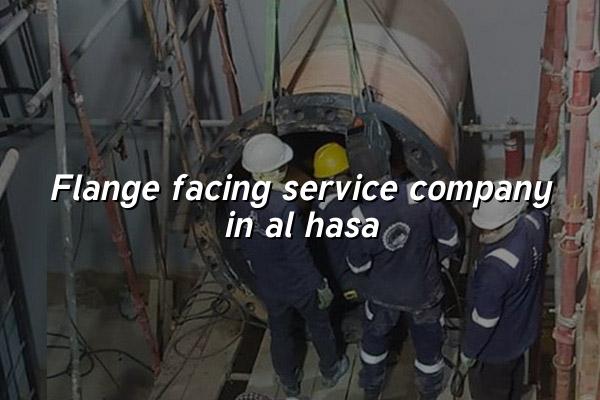
Flange facing service company in Al Hasa support matters when a joint has to seal properly and the job cannot wait for a full workshop strip-down. We help you restore flange faces, remove damage and get plant hardware ready for safe reassembly with less guesswork.
In Al Hasa, that usually means field work around oil and gas assets, utilities, maintenance shutdowns and package skids where fit-up quality decides the next step. Our team works with the same practical mindset we bring across Saudi Arabia and the Middle East: inspect first, machine carefully, verify the surface and keep the flange ready for pressure service.
What a Flange Facing Service Company in Al Hasa Actually Does
When a flange is scarred, pitted, out of plane or simply left with poor machining marks, gasket life drops quickly. That shows up as leaks, repeat tightening and avoidable downtime. Our flange facing work is meant to correct the sealing surface itself, not just make it look better, so the joint can go back together with the right contact pattern and a cleaner chance of holding under service conditions.
Where the damage usually starts
Most jobs begin with corrosion, gasket blow-by, tool marks or rough handling during maintenance. We also see issues after shutdowns where a flange has been exposed for too long, or where previous repair work left the face uneven. On site in Al Hasa, this often comes up around pumps, heat exchangers, vessels, piping spools and skid-mounted equipment that still has to fit back into a live system.
Why onsite machining saves time
Bringing the job to the flange avoids pulling large sections of pipe or equipment out for workshop work. That matters on industrial sites where lift plans, transport and reinstallation take more effort than the machining itself. With our portable approach, we can set up, machine the face and check the result in place, which is usually the cleaner path for maintenance teams working to a tight shutdown window.
- Inspect the flange and joint — we check the face condition, bolt holes, corrosion, gasket marks and alignment before any cutting starts.
- Set up the facing machine — the tool is mounted and aligned to the flange so the cut stays true to the sealing surface.
- Machine the damaged face — we remove only what is needed to restore a consistent finish and proper geometry.
- Verify the surface — we confirm the face is ready for reassembly, then hand it back to your team for gasket installation and bolt-up.
- Check whether the leak source is the face, the gasket, or the bolt load before you call for rework.
- Keep the flange protected from dirt and impact after machining; one careless hit can undo the job.
- Use facing on raised-face, flat-face or other sealing surfaces when the face condition is the real problem.
- Plan bolt-up only after the face is clean, dry and verified by the maintenance lead.
- Ask for onsite support early during shutdown planning if the flange is part of a critical line.
Common flange facing cases and what we look for
| Condition | Typical site sign | Facing response |
|---|---|---|
| Corroded sealing face | Rust, scale and uneven contact marks | Clean, machine and restore a consistent sealing surface |
| Gasket imprint damage | Deep tracks or compressed spots around the face | Remove the damaged layer and re-establish flatness |
| Tool-marked flange | Visible grooves from earlier work | Refinish the face so the gasket can seat more evenly |
| Out-of-plane face | Repeated leak history or poor fit during assembly | Set up accurately and cut the face back to a usable sealing condition |
Why face quality matters for pressure joints
A flange face is not just a metal ring. It is the surface that lets the gasket do its job under load. If the contact area is poor, you can end up chasing leaks, retorquing bolts and disturbing a joint that should have stayed stable from the start. In oil and gas, petrochemical and power sites around Eastern Saudi Arabia, that can mean lost operating time and extra risk around hot, pressurised or process-critical lines.
Practical signs the face needs work
If you see uneven gasket seating, obvious scoring, corrosion rings or repeat leak marks in the same location, the face deserves a proper inspection before reassembly. We treat those signs seriously because they usually point to a surface problem, not just a bolt-up problem. For maintenance teams, that distinction saves time and avoids replacing parts that are still serviceable.
Built for shutdowns, repairs and new fit-up
We often get called during planned shutdowns when a line is already open and the crew needs a reliable way to recover the flange before restart. That may be on a process skid, a pump connection, a heat exchanger bundle or a field pipe joint. The goal is simple: make the face usable again without turning a maintenance task into a bigger strip-and-replace job.
How Mayon Industrial Services Can Help
We support flange facing with the same field discipline we bring to mechanical services, inspection and commissioning work. If your Al Hasa site needs onsite flange restoration, our team can mobilise with the right setup, confirm the sealing surface condition and coordinate the next step with your maintenance crew. We also back that work with calibration and engineering support where the wider job needs it.
Call +91 99447 80844 (India) or +966 59 633 8012 (Saudi Arabia), email services@mayonservices.com, or message us on WhatsApp.
Frequently Asked Questions
Teams handling oil, gas, utilities, process piping and shutdown maintenance usually need it most. If a flange face is damaged, leaking or uneven, facing can restore the sealing surface without replacing the whole component. We see this often on pumps, exchangers, skids and line connections that have to go back into service cleanly.
Yes, and that is usually the practical choice when the equipment is too large or too tied into the plant to move. Onsite work keeps the flange where it is, which reduces handling and reinstallation effort. That is especially useful during shutdowns and maintenance windows in and around Al Hasa.
Facing is commonly used for corrosion, scoring, gasket imprint damage and poor surface finish. It can also help when the face needs to be cleaned up after previous maintenance work. If the flange is cracked or structurally unsafe, facing is not the answer, so we inspect first and speak plainly about what the job needs.
A repeat leak in the same joint does not always mean the gasket was at fault. We look at the face, the bolt load pattern, visible damage and the way the gasket seated after the last assembly. In many plant jobs, the face condition is the part that gets missed first.
Yes, we do. Our work also covers mechanical services, inspection, calibration, electrical testing and commissioning, so a flange facing call can be part of a wider maintenance package. That helps when your site needs one team that understands both the repair and the quality checks around it.
Ready to put the flange back in service?
If the face is damaged, uneven or leaking, talk to us and we’ll help you decide the safest repair path.
Contact Mayon