
Flange Weld Testing Service Company in Hawiyah
Onsite flange weld checks for shutdown work, new piping and maintenance jobs in Hawiyah.
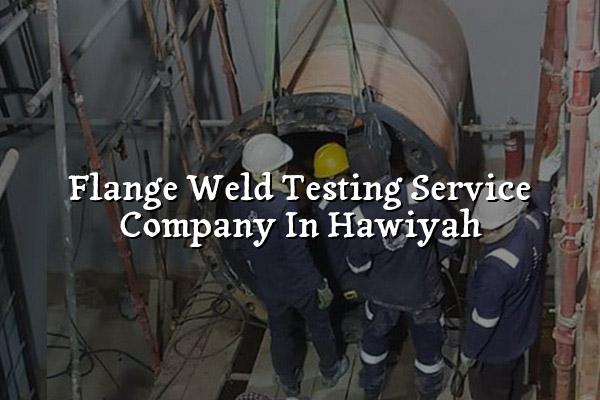
Flange weld testing service company in Hawiyah is the kind of search that usually comes from a live job, not a desk exercise. A weld has to be checked before pressure is introduced, before insulation goes back on, or before the client signs off a shutdown package. That is the work we handle day after day.
Our team supports piping and mechanical crews in Hawiyah with practical inspection, testing and commissioning help for oil and gas projects, plant maintenance and tie-in work. We keep the process clear, document the findings properly, and work to the site conditions you actually face in Saudi Arabia.
What a flange weld testing service company in Hawiyah should cover
For Hawiyah and the wider Eastern Province, flange weld work often sits inside a larger maintenance window. You may be dealing with line replacements, vessel connections, skids, pump hookups or utility piping where a single bad weld can hold up the whole turn-around. We approach the job with that reality in mind. We look at the weld condition, the flange alignment, the fit-up, the pressure boundary and the record trail that the client or main contractor will ask for later.
Where the testing usually starts
The first check is rarely fancy. We confirm the joint identification, the drawing reference, the material information available on site and the test requirement for that line. After that, we decide which method fits the scope. Some joints need visual examination and dimensional checks. Others need NDT before hydrotesting or before the system is handed over to operations.
Why crews in Hawiyah call for outside support
Most site teams know the pipework, but they still need an independent pair of eyes when the job is tied to a client hold point. That is common in oil and gas work around Hawiyah, especially when a shutdown is short and the paperwork has to match the field condition. Our role is to help you prove the weld is acceptable, not to complicate the job.
- Review the weld package — we check the drawings, weld map and test requirement so the site team knows what is being verified.
- Inspect the joint in place — we look at weld appearance, fit-up, flange orientation and any visible defect that could affect integrity.
- Apply the right test method — visual checks, NDT, leak testing or hydrotesting are selected based on the line and service.
- Document the result — the findings are recorded for the file, the client and the close-out package.
- Useful for shutdowns, tie-ins and maintenance welds in Hawiyah
- Supports oil and gas piping, utility lines and process equipment connections
- Helps the client get a clean inspection record before pressure testing
- Works well when field conditions change and the job needs practical decisions
Common flange weld checks and where they fit
| Method | What we look for | Typical use in Hawiyah jobs |
|---|---|---|
| Visual inspection | Surface condition, bead profile, fit-up and obvious discontinuities | First-pass check before any deeper test |
| Dye penetrant or magnetic particle testing | Surface-breaking indications on accessible weld areas | Useful on repair welds and critical small-bore work |
| Hydrotesting | Leak tightness under pressure using the approved medium | Common before system handover or recommissioning |
| Dimensional and alignment check | Flange face orientation, bolt-hole match and joint fit | Helps avoid gasket damage and rework during assembly |
Why the inspection step matters so much
Most weld problems do not show up as a dramatic failure. They show up as a slow leak, a gasket issue, a hold point that keeps the line out of service, or a repeat job after the scaffolding has already gone. A careful flange weld inspection saves that kind of headache. It also gives maintenance managers a record they can stand behind when the system is reviewed by the client or the operator.
How we keep the job practical
We focus on the pieces that matter on site: weld access, cleanliness, documentation, and the sequence of testing. If a joint needs preparation before inspection, we say so. If the flange face or bolt alignment needs attention first, we call it out early. That straight answer is often what keeps a shutdown moving.
Built for oil and gas sites
Hawiyah work often sits inside gas processing, utility piping or maintenance support for plant equipment. We understand the pace, the permit structure and the need for records that can survive a client review. That is why our testing approach stays simple, traceable and site-friendly.
How flange weld testing usually moves on a live site
Every site has its own permit flow, but the inspection logic stays fairly steady. We keep the steps visible so the piping supervisor, QA/QC engineer and client rep can track what happened and why. That helps when the work is happening in a tight shutdown window or when several welds are being closed out at once.
Sequence we follow
First, we confirm the test scope and the joint list. Then we inspect the welds and surrounding assembly. After that, we move to the selected verification method and record the result. If something fails, we isolate that point and advise on the next action, which may be repair, re-test or further examination.
What the site team gets from it
You get fewer surprises at handover. You also get a cleaner close-out file, which matters when the work is tied to a client release or a turn-around report. In our experience, the teams that save the most time are the ones that ask for inspection early, not after the line is already buried under insulation or other systems.
- Early inspection helps catch fit-up issues before final tightening
- Clean records make client sign-off easier
- Rework is cheaper before the line is put back into service
- A clear test sequence helps the team plan manpower and access
Frequently Asked Questions
We do, and we handle it as a field service rather than a paperwork exercise. The job can include weld checks, NDT, hydrotesting support and close-out documentation for maintenance or shutdown work. That mix is what most Hawiyah sites need when they want one team to keep the job moving.
That depends on the service and the hold points in the work pack. In many jobs we start with visual inspection, then use dye penetrant or magnetic particle testing where the joint design allows it, and move to hydrotesting when the system is ready. The site condition and client requirement decide the exact sequence.
Yes, and that is usually the better time to do it. A pre-pressure inspection catches fit-up, alignment and weld surface issues before the line is put under load. That saves time, avoids repeat filling, and keeps the project safer for everyone on site.
Yes, we support shutdown-style work where the schedule is tight and the inspection package has to be clear. Our mechanical and inspection teams can work around the site sequence, which helps when multiple welds, flange joints and test points are being closed out together.
Most requests come from oil and gas, petrochemical, power and heavy maintenance work. We also see it on utility piping, compressor stations and equipment tie-ins where the client wants a clean record before handover. Those are the jobs where traceable inspection matters most.
How Mayon Industrial Services Can Help
If you need flange weld testing in Hawiyah, we can support the job with inspection, hydrotesting, mechanical services and commissioning help that fits site conditions. We also back related work such as pressure systems, testing records and repair support, so you're not chasing multiple vendors for the same package.
Call +91 99447 80844 (India) or +966 59 633 8012 (Saudi Arabia), email services@mayonservices.com, or message us on WhatsApp.
Ready to get the flange welds checked properly?
Send the scope, the line list or the shutdown package and we'll help you decide the right inspection path for the job.
Contact Mayon