
Hydrotest Pressure Gauges Supplier in Najran
Traceable gauges, practical field support and calibration-minded supply for hydrotesting work in Najran and nearby Saudi industrial sites.
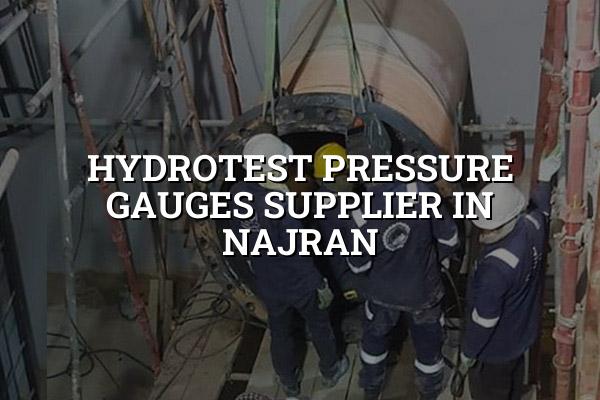
Hydrotest pressure gauges supplier in Najran support starts with one simple need: you want a gauge that reads correctly when the test crew is under pressure and the client is watching. We help buyers who need pressure gauges for hydrostatic testing, manifold setups and field verification without guesswork.
In Najran, site teams often work on piping packages, tanks, pumps and utility systems where a bad gauge can throw off the whole test. We keep the focus on traceability, practical use on Saudi project sites, and supply support that fits hydrotest work rather than general store-room purchasing.
Hydrotest Pressure Gauges Supplier in Najran for Field-Ready Projects
For hydrotesting, the gauge is not a spare part. It is the reference everyone trusts while the line is being pressurised, held and inspected. That’s why the right hydrotest pressure gauges supplier in Najran should understand working ranges, readability, mounting style and the environment on site, not just the part number on a purchase request.
What buyers in Najran usually need
Most requests come from contractors, maintenance teams and commissioning crews who need gauges that can handle pump skids, hose assemblies, manifolds and temporary test rigs. In Saudi industrial work, people usually want clear dials, stable needles and a gauge face that makes sense in poor lighting, dusty yards and tight access points.
Why calibration-minded supply matters
A gauge that looks fine on the bench can still mislead a crew if it has drifted, been damaged in transport or was selected with the wrong range. We keep the conversation grounded in use case: test pressure, safety margin, connection type and whether the gauge needs to travel between sites in Najran, Jazan, Abha or other Saudi locations.
- Confirm the test pressure — match the gauge range to the planned hydrotest so the working point sits in a readable part of the dial.
- Check the connection and face size — make sure the fitting, case style and diameter suit the manifold or test header.
- Review the environment — decide if the gauge will stay in a controlled workshop or move around an outdoor site with dust and vibration.
- Verify calibration status — ask for traceable calibration support so the gauge can be used with more confidence on client-held jobs.
- Plan spares and replacements — keep a small buffer for field damage, since hydrotest work can be rough on instruments.
- Use a gauge range that keeps normal test pressure away from the top end of the scale.
- Ask for gauges that suit hydrotest manifolds, pumps and temporary test rigs.
- Keep one reference gauge aside for comparison during job setup.
- Replace gauges that show sticking, fogging, bent pointers or damage after transport.
- Pair gauge supply with calibration and commissioning support when the project needs it.
Quick Reference for Hydrotest Gauge Selection
| Site Need | What to Check | Practical Buyer Note |
|---|---|---|
| Pipe hydrotest | Range and dial readability | Choose a scale that lets the crew see small changes without running near the limit. |
| Manifold use | Connection and mounting style | Confirm the gauge fits the test setup before dispatch to site. |
| Commissioning work | Traceability and condition | Use a gauge with calibration support so the record is easier to defend in front of the client. |
| Repeated field transfer | Case durability | Protect the dial face and packing, because transport damage is common in job-site use. |
Why Saudi Buyers Care About Traceable Pressure Instruments
On industrial projects in Saudi Arabia, pressure testing is rarely a casual task. It sits inside QA packs, handover files and client inspections, so the gauge used on the job should be selected with the same care as the pump or test hose. When a gauge is easy to read and properly supported, the team spends less time arguing over the reading and more time finishing the test.
What this means on site
We often see a good project slowed down by small things: the wrong thread, a gauge that was stored badly, or one that cannot be checked against a reliable reference. A sensible supply plan avoids those headaches and keeps the hydrotest crew moving.
Built for field use
Hydrotest gauges work best when they’re chosen as part of the test system, not as an afterthought. That means the pump, manifold, fittings and calibration support should all line up before the crew arrives at the line.
What Goes Wrong When the Gauge Spec Is Too Vague
Many purchase orders simply ask for a pressure gauge, then leave the rest to the supplier. That sounds easy until the gauge arrives with the wrong range, a connection that doesn’t match the manifold, or a dial that’s hard to read on a night shift. A better request includes the hydrotest pressure, the thread type, the diameter you prefer and whether you need calibration support.
Another common issue is mixing general-purpose gauges with hydrotest work. If the range is badly chosen, the crew ends up working too close to the end of the scale, and small pressure changes become difficult to see. That’s not a minor detail when someone is checking for pressure stability on a live job.
We also tell buyers to think about storage and transport. Gauges that move between stores, scaffolds and work fronts need protection, because dropped cases and loose packing can affect the reading long before the next test starts.
Four checks we use before dispatch
Before sending gauges out, we look at the range, the connection, the overall condition and whether the application needs a supporting calibration record. That basic review saves time later, especially when the test package is tied to a client inspection or a commissioning file.
- Define the application — note if the gauge is for hydrotest, flushing support or a temporary manifold.
- Match the range — keep the normal working point in the middle part of the dial.
- Confirm fittings — verify the connection type and any adapter needs before the item leaves the store.
- Inspect and record — check condition, pointer movement and serial identification before issue.
- Put the hydrotest pressure in writing before asking for a quotation.
- Share photos of the manifold or test panel when the fitting style is unclear.
- Keep a spare gauge in the project kit for critical tests.
- Ask for calibration and verification support together when the gauge is part of a handover pack.
How Mayon Industrial Services Can Help
We support hydrotest work with calibration services, pressure-related instrument handling, and practical field advice that fits real jobs in Saudi Arabia. If your Najran team needs pressure gauges, a matching calibration record, or help with manifolds and related test equipment, our people can guide you without overcomplicating the process. We also help across mechanical services and onsite industrial work when the test package needs more than just a gauge supply.
Call +91 99447 80844 (India) or +966 59 633 8012 (Saudi Arabia), email services@mayonservices.com, or message us on WhatsApp.
Frequently Asked Questions
Yes — you can source them through a supplier that understands hydrotest applications, not just general pressure gauge sales. The key is to confirm the pressure range, connection type and whether the gauge will be used on a manifold, pump skid or temporary test rig. That keeps the order aligned with the job before anything ships.
The range should be high enough for the planned test, but not so high that the working pressure sits near the top of the dial. In practice, that makes the reading easier to see and helps the crew judge pressure changes more confidently. If you share the test pressure, a supplier can usually help you narrow it down.
Often, yes, especially when the gauge is part of a QA file or client witness package. A traceable record makes the reading easier to defend during inspection. For industrial work in Saudi Arabia, that simple paper trail saves a lot of back-and-forth later.
Yes, that’s a normal request in field testing work. The important part is checking the thread, mounting style and whether the gauge needs any adapter or support hardware. When those details are clear, the gauge fits the setup without extra site modifications.
Send the test pressure, expected quantity, fitting type, face size if you care about readability, and whether you need calibration support. If you have photos of the manifold or the old gauge, include them too. That makes the quote far more accurate and reduces follow-up questions.
Ready to specify the right gauge for your hydrotest?
Send the test pressure, fitting details and site location, and we’ll help you choose a gauge setup that suits the work in Najran or elsewhere in Saudi Arabia.
Contact Mayon