
Hydrotesting Service Company in Qassim
Hydrotest planning, rigging and reporting for pipework, vessels and utility lines in Qassim and nearby industrial sites.
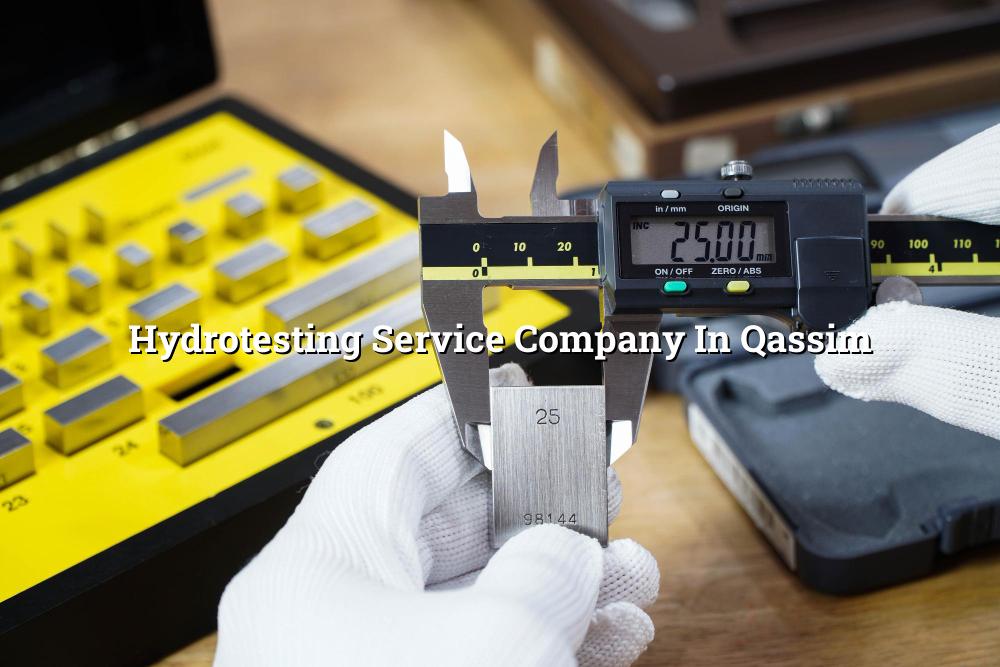
Hydrotesting service company in Qassim is the phrase project teams use when they need a pressure test that stands up to site reality, not just a checklist. If you're preparing piping, tanks, manifolds or utility lines for handover, this page explains how we approach the job, what gets checked and what you should ask before anyone brings a pump to site.
Our work in Saudi Arabia sits around the same things your team worries about every day: leak risk, incomplete commissioning records, poor isolation, and equipment that has to perform in heat, dust and long operating cycles. We support industrial sites from Dammam Industrial City 2 and work with clients across Qassim and the wider Middle East using ISO/IEC 17025 traceable methods where the scope calls for it.
Hydrotesting service company in Qassim for safer handover
Hydrotesting is the controlled filling of a system with liquid, usually water, so pressure can be raised and held while joints, welds, flanges and fittings are observed for loss, seepage or deformation. In practice, that means we help you prove integrity before startup on pipework, pressure vessels, valves, hose assemblies and associated utility circuits. For Qassim projects, this often comes after fabrication, repair, shutdown work or before final commissioning on plant equipment.
Where teams usually need it most
We see the same pattern across oil and gas, manufacturing, cold-chain facilities and construction packages: a line is finished, the schedule is tight, and the site manager wants evidence that the system is ready. That evidence has to be useful to QA, maintenance and client representatives. A clean test record, proper isolation, calibrated gauges and clear acceptance notes matter more than a rushed pump-up that nobody can defend later.
What makes the test credible
The result depends on preparation as much as pressure. We check the system boundaries, select the right gauge range, verify that vents and drains are arranged properly, and confirm that temporary blanks, hoses and fittings are suitable for the test load. When the job needs traceable measurement support, our calibration capability helps keep the instrumentation side aligned with ISO/IEC 17025 expectations and the documentation your inspectors want to see.
- Review the system scope — we confirm the line list, test pack or drawing set, then separate the section to be tested from equipment that shouldn't see pressure.
- Prepare and isolate — the team installs blanks, closes vents correctly, checks drains and makes sure no sensitive instruments are left connected.
- Fill and vent — the system is filled gradually so trapped air is removed, which keeps the pressure reading stable and the test meaningful.
- Pressurize and observe — pressure is raised in a controlled way, held for the agreed period and inspected for visible leakage, loss of pressure or distortion.
- Record and close out — we document readings, observations and any punch items so the site team has a clear file for handover or re-test.
- Use calibrated gauges and record the serial numbers on the test sheet.
- Confirm the test medium is suitable for the equipment and the site conditions.
- Keep isolation, blanking and venting under one responsible supervisor.
- Photograph visible setup points when the client wants a stronger handover file.
- Plan for re-torque or rework if a flange, weld or gasket shows movement.
Hydrotesting checkpoints for Qassim industrial sites
| Checkpoint | What we verify | Why it matters |
|---|---|---|
| Test boundary | Which section is included, isolated and ready for pressure | Prevents accidental pressurizing of the wrong equipment |
| Instrumentation | Gauge range, calibration status and readable scale | Supports trustworthy readings during the hold period |
| Venting and draining | Air release points, drain path and safe water removal | Reduces false readings and messy close-out on site |
| Documentation | Test sheet, observations, serial numbers and punch items | Helps QA sign off and keeps the commissioning file complete |
What a good hydrotest report should show
A proper report is more than a signature. It should show the test medium, the section tested, the applied pressure, the start and end readings, the duration of the hold and any leakage notes. If a client in Qassim is reviewing the file after shutdown work, that clarity saves time because everyone can see what passed, what was corrected and what needs attention before startup.
Why technicians ask for traceability
In our experience, the second question from a QA manager is usually about the gauge and the third is about calibration. That's fair. If the instrument used to judge the test can't be traced back properly, the result loses weight. We keep our calibration services, mobile lab support and field procedures aligned so the pressure side of the job doesn't become the weak link.
Built for real shutdown schedules
Qassim sites often need testing around fabrication completion, tie-ins, repairs or pre-commissioning milestones. We plan the work around the site sequence, then support follow-up mechanical checks, bolt torquing, flange work or commissioning tasks if the system needs more than a pressure hold to be ready.
How Mayon Industrial Services Can Help
We handle hydrotesting as part of a wider industrial service package, so you're not left coordinating separate vendors for pressure checks, mechanical support and final documentation. Our team can also help with calibration, condition monitoring, inspection, orbital welding, repair and maintenance, and lab setup when the project needs more than a single test visit. If your Qassim job needs onsite work, field-ready equipment and proper close-out records, talk to us and we'll map the next step with you.
Call +91 99447 80844 (India) or +966 59 633 8012 (Saudi Arabia), email services@mayonservices.com, or message us on WhatsApp.
Frequently Asked Questions
We inspect the test scope, isolate the section, arrange the pressure test setup and record the results. That can cover pipework, tanks, vessels and utility lines on industrial sites. The real goal is simple: give your team a clear result they can use for handover or corrective work.
Yes, we support hydrotesting work in Saudi Arabia, including Qassim and industrial zones where pressure integrity matters before commissioning. We also coordinate around related services like bolt torquing, flange work and mechanical preparation when the system needs more than a test alone.
Usually we ask for the drawing, test pack or line list, the system size, the test pressure and any site restrictions. If the client already has a QA format, we work to that too. A few clear details at the start saves a lot of back-and-forth later.
Yes. We work with calibrated measurement tools and can align the documentation with ISO/IEC 17025 traceability where the job requires it. That's one reason clients call us for both the pressure test and the paperwork side of the job.
We see requests from oil and gas, petrochemical, power, construction, manufacturing and cold-chain facilities. The common thread is the same: pressure integrity has to be proven before the plant or utility system is put back in service.
No, Qassim is one of the places we support, but our work also covers India, Saudi Arabia and the wider Middle East. We operate from Chennai in India and Dammam Industrial City 2 in Saudi Arabia, so we can plan field work around the location that makes sense for the project.
Ready to book hydrotesting for your Qassim project?
Send us the scope, and we'll help you plan the test, the records and the follow-up work without wasting site time.
Contact Mayon