
Inspection Lab Setup Consulting in Khurais
Plan an inspection lab that supports fieldwork, traceable records and practical day-to-day use in Khurais.
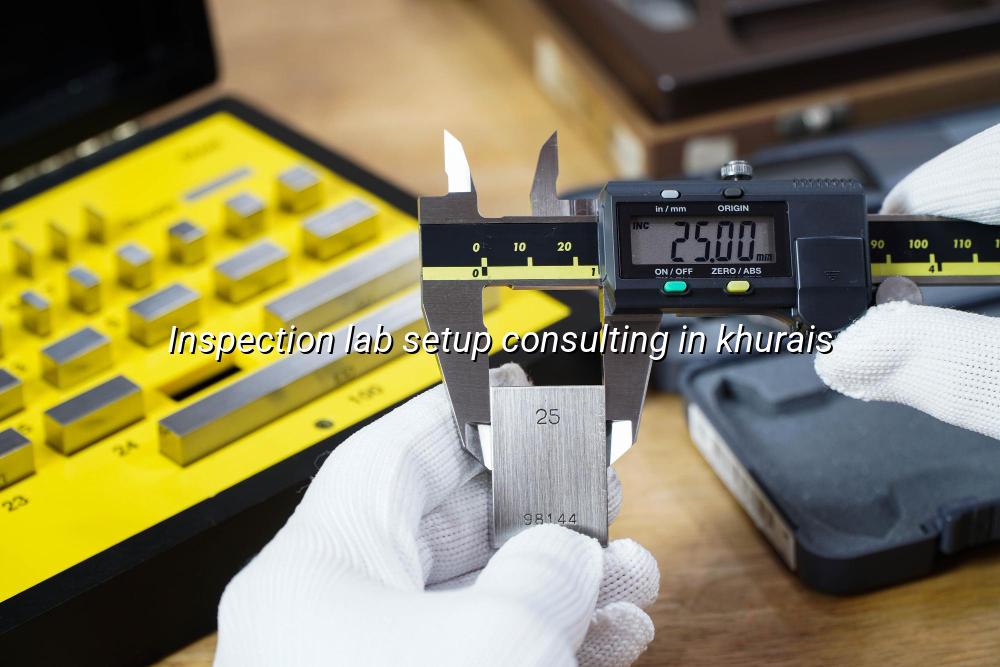
Inspection lab setup consulting in Khurais helps you turn a blank room, a modular site office or an underused workshop area into a lab that inspectors can actually work in. We focus on what matters on the ground: layout, workflow, bench space, storage, traceability and the right equipment list from day one.
In Khurais and nearby oilfield operations, teams usually need a lab that supports lifting gear checks, PPE inspection, NDT coordination and record control without wasting time on rework. Our planning approach fits Saudi industrial conditions, ISO/IEC 17025 expectations where applicable, and the practical reality of field visits, mobile support and tighter site access.
What inspection lab setup consulting in Khurais should cover
A proper inspection lab is more than furniture and a few instruments. You need a controlled space, a sensible document flow, a calibration plan for reference tools, safe storage for sensitive items and enough room for incoming, in-process and released equipment to stay separate. If those pieces are missing, the lab becomes a storage room with paperwork, and that hurts audit readiness fast.
Start with the work you’ll actually do
We usually begin by mapping the inspections you expect to run in Khurais. That may include lifting equipment checks under BS EN requirements, PPE inspection, dimensional checks, light metrology, receiving inspection support or coordination with NDT and calibration teams. Once the real tasks are clear, the room size, bench layout and equipment list become much easier to define.
Design for field conditions, not showroom conditions
Saudi site teams often need a lab that can cope with dust control, ambient heat, irregular material arrivals and urgent field holds. A good plan keeps clean and dirty work apart, protects records, and gives technicians a place to prepare items before they go back into the field. That’s where mobile calibration support and pickup-and-delivery also help, especially when instruments need special handling.
- Define the inspection scope — list the assets, standards and report types the lab must support.
- Review the room and utilities — check power, lighting, cooling, storage and access routes before you buy equipment.
- Build the workflow — set entry, quarantine, inspection, approval and dispatch zones so items move in one direction.
- Choose reference equipment — select tools that match the inspection tasks and can be tracked under a calibration plan.
- Commission and train — verify the setup, write the procedures and train the team before live work starts.
- Separate incoming items from cleared items so there’s no mix-up during busy shifts.
- Keep reference tools and consumables in labelled storage with a simple sign-out system.
- Use controlled templates for inspection logs, NCR notes and release records from the start.
- Plan a calibration link for gauges, torque tools and dimensional checks that the lab depends on.
- Give the team a clear route for special-condition items that need pickup, delivery or mobile support.
Key decisions for an inspection lab in Khurais
| Setup area | What to decide | Why it matters |
|---|---|---|
| Layout | Entry, quarantine, inspection and release zones | Keeps items moving in one direction and reduces mix-ups |
| Equipment | Reference tools, benches, storage and documentation station | Supports repeatable inspection work and cleaner records |
| Compliance | ISO/IEC 17025 alignment where calibration competence is needed | Helps build traceability into the lab process |
| Operations | Pickup, delivery and mobile-lab support for special items | Useful when site access, handling or space is limited |
Why good lab planning lowers inspection risk
Most problems in a new inspection lab start before the first job is logged. The room is too small, the counters are wrong height, storage is short, or the document trail is split across paper folders and chat messages. Once work volume picks up, that becomes a control issue. A better layout makes audits easier, helps technicians stay consistent and gives managers a clearer view of what is waiting, what is under review and what has been released.
Build records that stand up later
For industrial clients, especially in oil and gas and power work, inspection records need to be easy to trace. That means clean serial numbers, readable tags, controlled forms and a procedure for exceptions. If you’re tying the lab to lifting equipment inspection, PPE inspection or NDT coordination, the paperwork path needs to be simple enough for a busy supervisor to follow without guessing.
Common site pain points we see
Overflow storage, unclear acceptance rules, missing calibration links and poor separation between incoming and cleared items are the usual troublemakers. A practical plan fixes those points early, so the lab can support Khurais operations instead of slowing them down.
What a usable inspection lab layout looks like
A usable lab layout keeps people from crossing paths with equipment that hasn’t been checked yet. In practice, that means a clear front desk or receiving point, a prep area, a test or inspection bench, controlled storage, and a small space for documentation and sign-off. If you’re supporting large industrial jobs, the layout also needs a simple place for crates, lifting gear accessories and returnable containers.
For Khurais projects, we usually think in terms of workflow first and furniture second. That way the plan fits the work, not the other way around. It also makes it easier to expand later if the client adds more inspection categories or starts bundling the lab with calibration support, repair work or temperature-controlled handling.
Lighting, ventilation and power points sound basic, but they affect the daily pace more than a lot of managers expect. Bad lighting slows down visual inspection. Poor storage leads to damaged labels and lost items. Weak power planning can stall instruments, printers and laptops in the middle of a job. You want the lab to feel orderly when three technicians are busy and a supervisor walks in with a time-sensitive file.
That’s why our lab design work often links back to calibration, inspection and testing services together. A lab that is built with the wider maintenance workflow in mind usually serves the site better than one designed in isolation.
Equipment and documentation choices that save headaches
The right equipment list depends on the inspection scope, but the same rule keeps coming up: buy what you can control, maintain and trace. For many labs, that includes basic dimensional tools, weighing or force-related devices, torque verification tools, calibrated measuring instruments and a documented system for checking their status. If a tool can’t be tracked properly, it shouldn’t become a cornerstone of the lab.
Make the paperwork simple enough to use
Inspection teams in Saudi Arabia often work under time pressure. If forms are too long or file names are too vague, people work around them. We recommend short forms with obvious fields, clear numbering and a fixed release process. That helps supervisors, QA teams and maintenance crews read the same record without arguing about what it means.
Connect the lab to the field team
The best setups do not sit apart from the operation. They support field inspections, mobile verification, returns handling and exceptions like damaged labels or instruments that need special care. In our experience, labs that stay closely linked to the maintenance team get used more consistently and generate fewer surprises during review.
- Use visible status labels for accepted, under review and released items.
- Keep one master register for tools, records and pending actions.
- Add a simple file naming rule before the first project goes live.
- Tie instrument control to a calibration schedule, not to memory.
How Mayon Industrial Services Can Help
We help clients plan inspection labs, set up calibration-linked workflows, and prepare the room for real industrial use. If your Khurais project also needs inspection support, condition monitoring, mechanical services, lab design or training, our team can shape the setup around the work you actually do. That keeps the lab practical from the first day and easier to expand later.
Call +91 99447 80844 (India) or +966 59 633 8012 (Saudi Arabia), email services@mayonservices.com, or message us on WhatsApp.
Frequently Asked Questions
It usually covers the room layout, workflow, storage, utilities, reference equipment selection and the paperwork structure needed to run the lab. For industrial sites, we also look at how the lab connects to field inspections, equipment returns and any calibration or repair support around it. The goal is to keep the setup practical for day-to-day use, not just audit day.
Yes. We plan labs for oil and gas, petrochemical and power environments, where traceability, clear status control and practical handling matter a lot. We can shape the layout and documentation to support lifting equipment inspection, PPE inspection, NDT coordination and related field work.
We can align the setup with ISO/IEC 17025 expectations where calibration competence and traceability are part of the lab scope. That includes control of reference tools, document flow and a clean process for equipment status. We won’t claim certification for you, but we can help build the setup the right way.
Small spaces can work well if the workflow is planned properly. We focus on clear zones, compact storage, sensible bench placement and a simple movement path for items entering and leaving the lab. In tight rooms, this kind of planning usually makes the biggest difference.
Yes, we can support lab design, setup and commissioning so the final space works the way it was intended. That usually includes equipment placement, process flow, document control and a practical handover for the team. If needed, we can also connect the setup with training and maintenance support.
Ready to plan a lab that your inspectors can actually use?
If you need inspection lab setup consulting in Khurais, we can help you shape the space, the process and the support around your real workload.
Contact Mayon