
Lifting Equipment Inspection Company in Arar
Third-party lifting checks for cranes, slings, shackles and rigging gear used on Arar projects and nearby industrial sites.
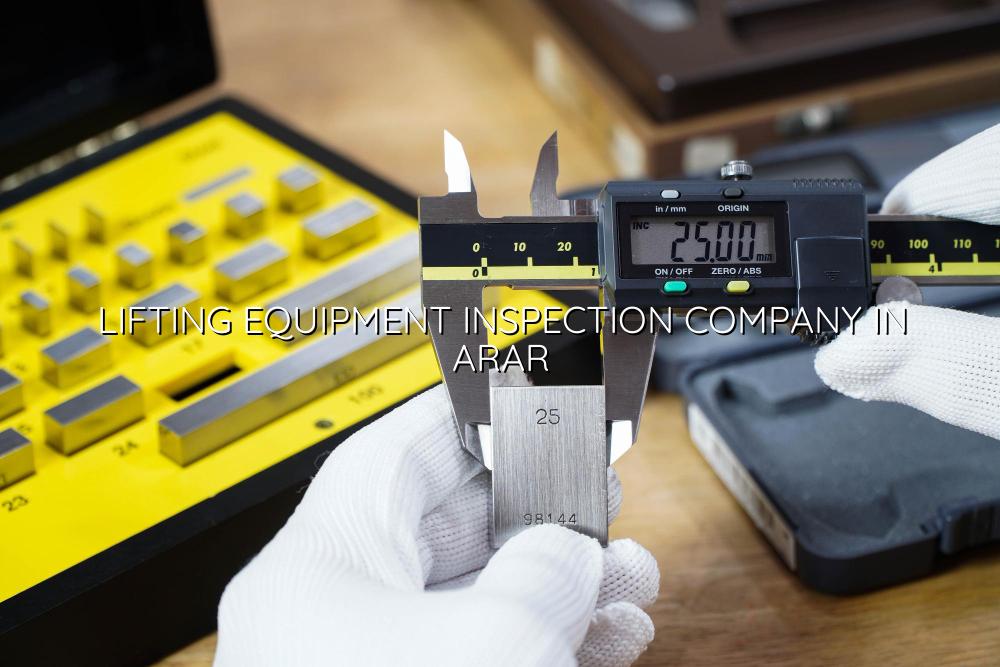
A lifting equipment inspection company in Arar should do more than tick a box. You need checks that help your team spot worn gear, weak points, missing tags and unsafe lifting setups before the next lift starts.
We support industrial crews working in Arar, from project yards and maintenance shutdowns to plant sites serving Saudi Arabia's northern corridor. Our lifting inspection work fits real site pressure: cranes, slings, shackles, hooks, eyebolts, winches and other lifting accessories that have to stay fit for use.
What a lifting equipment inspection company in Arar should cover
A proper lifting inspection isn't just visual. It should cover identification, load history where available, obvious mechanical damage, signs of deformation, corrosion, cracked welds, missing safety latches, illegible markings and any condition that could make a lift unsafe. In practice, that means checking the actual tool in your hands, not relying on old paperwork alone.
Where the risk usually shows up
Most problems we see on lifting gear are familiar: worn wire rope, bent shackles, stretched chains, damaged hooks and slings that have been dragged across rough ground. These issues build up slowly on busy sites. A rigging set can look fine from ten metres away and still fail a closer check at the point of use.
Why records matter as much as the hardware
For Arar projects, traceability matters. Managers often want inspection status, unique IDs, tag condition, service notes and a clear pass or fail outcome that can stand up during audits. If your site works to BS EN expectations for lifting and inspection, the report has to be readable, direct and easy to file.
- Identify the gear — confirm asset marks, serials, safe working load data and any site ID tags before the inspection starts.
- Check the condition — look for wear, corrosion, bending, missing pins, damaged threads and heat or impact marks.
- Test the function — where relevant, verify latches, moving parts, locking devices and the way the component sits in service.
- Record the result — list pass, fail or hold points with photos and notes so your maintenance team knows what to remove, repair or replace.
- Keep lifting accessories tagged by asset number, not by storage location.
- Pull damaged items out of circulation immediately. Don't leave them in the rigging basket.
- Ask for inspection records that mention the exact item inspected, not just the category.
- Recheck gear after overload events, dropped loads or rough transport between jobs.
Common lifting items and what we look for
| Item | Typical check | What can stop use |
|---|---|---|
| Wire rope sling | Broken strands, kinks, corrosion, crushed sections | Visible damage, deformation or reduced integrity |
| Chain sling | Wear, elongation, cracked links, leg mismatch | Stretch, cracks or illegible identification |
| Shackle | Pin fit, bow distortion, thread condition, markings | Bent body, damaged pin or missing WLL data |
| Hook and latch | Throat opening, twist, latch function, surface wear | Opened throat, latch failure or hook distortion |
How inspection helps your shutdown and lifting plan
On live sites, lifting gear gets passed between supervisors, riggers and subcontractors. That handover is where mistakes happen. A clean inspection process helps your team separate serviceable equipment from items that need repair, re-tagging or scrap, before a crane is booked and the crew is waiting.
Arar sites need practical reporting
Our clients usually want a report they can hand to QA, maintenance and site management without extra rewriting. That means straight language, clear statuses and notes that make sense during toolbox talks and permit reviews. No fluff. Just the facts that matter when a load is about to move.
What the report should give you
A useful report helps you see what passed, what failed and what needs action now. It should support internal controls, third-party audits and equipment traceability on oil & gas, petrochemical, power and construction jobs in Saudi Arabia.
When to call an inspector for lifting gear
You don't need to wait for a failure. Call for inspection after major maintenance work, after an incident, before first use of newly received gear, or when you inherit equipment from another contractor and the history isn't clear. That simple discipline saves time later, especially on fast-moving maintenance jobs.
We also see a lot of requests before mobilization to remote or high-pressure sites. That's the right time. If gear is already sorted, tagged and documented before arrival, your lifting plan is easier to manage and your crew spends less time hunting through mixed equipment.
How we approach field checks
Our team looks at the condition of the gear in front of us, the way it's being used and the site context around it. If the item is part of a more complex lift, we pay attention to the whole setup, because a safe lift depends on the full system, not one shiny component.
What industrial buyers usually ask for
Procurement and maintenance teams often want consistency. They want a single point of contact, clear documentation and a provider who understands Saudi site requirements, including the practical expectations around lifting safety in industrial cities like Arar and the wider Kingdom.
- Pre-use checks for cranes, slings, shackles and lifting accessories.
- Third-party support for shutdowns, turnarounds and project mobilization.
- Identification of damaged or out-of-service items before they reach the workfront.
- Clear records that help QA, HSE and maintenance teams act quickly.
How Mayon Industrial Services Can Help
We handle lifting equipment inspection alongside the wider work many sites need at the same time: calibration, mechanical services, inspection support, testing and commissioning, and engineering help for plant shutdowns. If your Arar site also needs verification on related instruments or a clearer inspection trail for rigging gear, we can keep the paperwork and the site work aligned. Talk to us when you want a practical inspection partner, not just a stamp.
Call +91 99447 80844 (India) or +966 59 633 8012 (Saudi Arabia), email services@mayonservices.com, or message us on WhatsApp.
Frequently Asked Questions
Any site that uses cranes, slings, shackles, hooks or other lifting accessories should have a proper inspection route. In Arar, that's especially relevant for maintenance contractors, industrial yards and project teams that move equipment every day. If your crew depends on the gear to keep lifts controlled, inspection isn't optional work.
We normally check identification, visible condition, markings, wear, distortion, corrosion and basic function where the item has moving parts. The point is to confirm the gear is still fit for the job it is being used for. If something looks doubtful, it should be held out of service until it is reviewed.
Yes. We support onsite work in Saudi Arabia, including industrial locations such as Arar, when the job calls for field inspection and practical reporting. That works well for contractors who need the gear checked where it is already being used, rather than moving everything around first.
Yes, and that's usually what the site team needs most. A clear record helps QA, HSE and maintenance teams show what was inspected, what passed and what needs action. For many clients, the value is in having the information written in a way that can be used during internal reviews and third-party checks.
For this service, we keep to the standards and references that fit our work, including BS EN standards for lifting and inspection. We don't pad reports with extra claims. The aim is to keep the scope honest and the documentation useful for the site team.
Ready to sort your lifting inspection plan?
If your Arar project needs clear inspection results and straightforward reporting, get in touch and we'll help you plan the next step.
Contact MayonWhen lifting gear is checked properly, site work gets easier. You spend less time chasing uncertain equipment, and your team gets a cleaner path from inspection to execution. That's the kind of support we aim to give every Arar client who calls us for lifting inspection work.