
Lifting Equipment Inspection Company in NEOM
Onsite inspection, testing and certification support for cranes, lifting gear and handling equipment in NEOM and the wider Saudi industrial corridor.
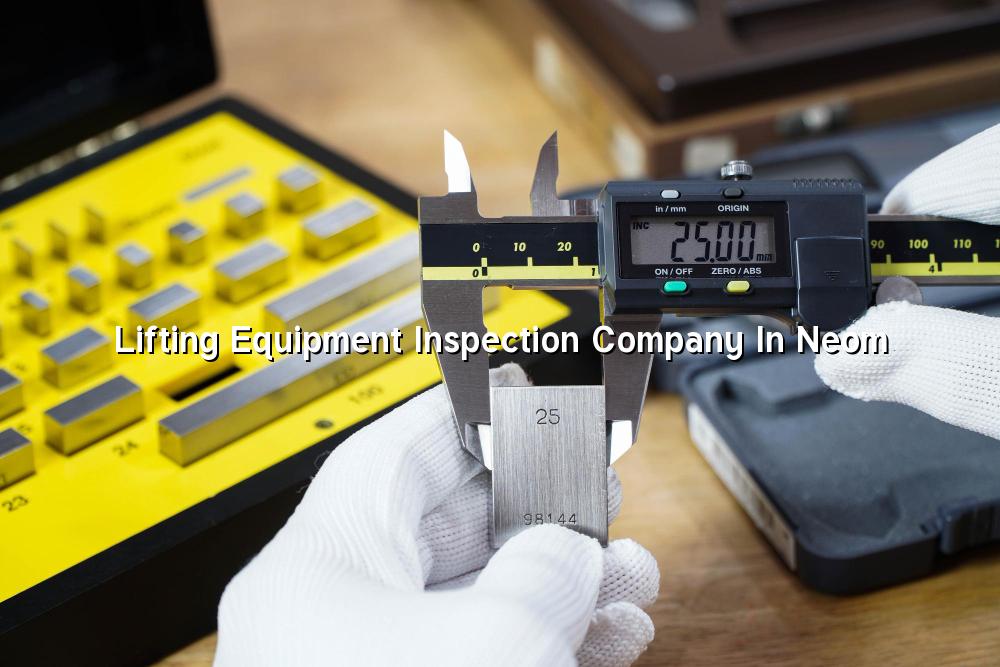
Lifting equipment inspection company in Neom searches usually come from teams that need a clear answer fast: who can inspect cranes, slings, shackles, hooks and lifting accessories on site, and do it to the standard the job actually needs. We help you get that inspection plan in place without guesswork.
For NEOM contractors, port logistics teams, fabrication yards and maintenance crews, the real challenge is keeping lifting gear ready while work keeps moving. Our inspection and testing support is built for that environment, with BS EN-based checks, NDT where needed, and mobile capability for industrial sites across Saudi Arabia and the wider Middle East.
What a lifting equipment inspection company in Neom should cover
A proper lifting equipment inspection is more than a visual walkaround. The inspector should check identification, condition, load path, wear, distortion, markings and any sign that the equipment has been overloaded, damaged or used in the wrong application. In NEOM, where project schedules are tight and lifting plans change often, that discipline matters on every shift.
We see the same pattern on industrial sites: lifting accessories get mixed between crews, certificates go missing, and equipment that should have been segregated keeps circulating. A structured inspection process helps you catch that early, keep records clean, and avoid the kind of stoppage nobody wants during erection, maintenance or shutdown work.
Why the scope has to match the site
Not every lift is the same. A tower crane in a construction zone, a chain sling in a workshop, and a spreader beam used for rotating equipment each need a different level of attention. Our team looks at the equipment category, the service history, and the actual duty the item is being asked to perform before we recommend the inspection path.
What NEOM teams usually ask for
Most calls are practical. They want onsite inspection, clear pass or fail status, and support for lifting accessories used in warehouses, fabrication areas, utility plants and installation work. When needed, we also coordinate related services such as NDT, calibration, and mechanical support so the same job doesn’t end up split between three vendors.
- Register the gear — confirm serial numbers, asset tags, safe working load markings and the equipment list that will be inspected.
- Inspect visually — look for wear, cracked welds, bent hooks, stretched links, damaged pins, corrosion and missing identification.
- Test and verify — apply the relevant checks, including dimensional review, functional checks and NDT where the item or duty requires it.
- Record the result — issue a clear inspection outcome, separate rejected items, and keep traceable records for the site file.
- Keep lifting gear tagged by asset number, not by color or location.
- Remove any sling, shackle or hook with unreadable markings from service until it is checked.
- Separate equipment used for routine handling from gear used for critical lifts.
- Match the inspection interval to duty, environment and usage, not just calendar habit.
Common lifting items and the checks they usually need
| Equipment | Typical inspection focus | Why it matters |
|---|---|---|
| Wire rope slings | Broken wires, kinks, corrosion, end fitting condition | Failure can start at damaged strands or worn terminations |
| Chain slings | Elongation, wear, cracks, latch condition, grade markings | Wear and stretch reduce load margin very quickly |
| Shackles and hooks | Deformation, pin fit, throat opening, locking devices | Small shape changes can point to overload or misuse |
| Eyebolts and lifting points | Thread condition, seating, corrosion, installation orientation | Wrong fit-up can damage both the point and the lifted load |
How inspection helps keep NEOM lifting work under control
Good lifting control starts with traceability. When a site has clean records, marked equipment and a clear reject process, supervisors spend less time arguing over what can be used and more time getting the job done. That is especially useful on Saudi projects where multiple contractors may be sharing the same laydown yard, workshop or lifting bay.
BS EN-based checks for lifting equipment
We work to BS EN standards for lifting and inspection, with the inspection set-up shaped by the item type and the site risk. If a lift involves equipment that has been abused, exposed to harsh weather or dragged through a fabrication area, we treat it accordingly and recommend the right next step instead of issuing a quick tick-box sign-off.
Built for live industrial sites
Our mobile calibration lab and field team let us support onsite work without forcing you to pull every item away from the job. For equipment that needs special handling, we can arrange pick-up and delivery through our established service flow, which is useful when instruments or accessories need controlled conditions before return.
Lifting equipment inspection, NDT and related support in one visit
On a busy project, the inspection job often becomes clearer once the gear is in front of us. A lifting set might need simple condition checks, but it may also need NDT on welds, dimensional verification of a fabricated item, or advice on whether a repair is sensible at all. That is where having one team with inspection, calibration and mechanical experience saves time.
When we recommend a deeper check
If the equipment shows evidence of impact, heat damage, corrosion, missing certification data or repeated overload, we look closer. That can mean magnetic particle testing, visual testing, or other non-destructive methods depending on the asset and the duty. We keep the conversation practical: use it, repair it, or remove it.
Where this is used in the field
NEOM contractors, Saudi maintenance teams and Middle East fabrication yards often use the same lifting accessories across assembly, installation and shutdown work. Inspection has to fit that reality. We support cranes, slings, shackles, spreader beams, lifting tackles and associated equipment used in construction, power, oil and gas, petrochemical and manufacturing environments.
- Identify rejected items before they get back into the lifting cage.
- Keep site records ready for audits and client reviews.
- Reduce rework by checking the item once, properly.
- Use one vendor for inspection, NDT and follow-up support.
How Mayon Industrial Services Can Help
We support lifting equipment inspection with a field team that understands industrial work, not just paperwork. Alongside inspection, we can help with calibration, mechanical services, NDT, testing and commissioning, and related engineering support when your site needs the job done by one responsible crew. If you're preparing equipment for NEOM or another Saudi project, start with a conversation and we'll help you plan the next step.
Call +91 99447 80844 (India) or +966 59 633 8012 (Saudi Arabia), email services@mayonservices.com, or message us on WhatsApp.
Frequently Asked Questions
The best fit is usually a company that can inspect on site, understand lifting risk, and give you clear records without slowing the job. For NEOM projects, that means a team that can handle industrial access, mixed equipment types and fast-moving work areas.
It normally includes identification checks, visual condition review, marking verification, wear and deformation checks, and any extra testing needed for the item. If the gear shows signs of damage or heavy duty use, the inspection can also include NDT or a more detailed engineering review.
Yes, we inspect common lifting accessories such as slings, shackles, hooks and other lifting tackle used on industrial sites. We also look at the site context, because a set used in a clean workshop is not the same as one used near fabrication, corrosion or outdoor storage.
Yes. That is often the cleanest way to handle a site issue because the lifting gear, the welds and the surrounding equipment can be reviewed together. It keeps the handover simple for the client and avoids repeating access arrangements.
We refer only to the standards we actually work with on the site: BS EN standards for lifting and inspection. For calibration-related work that supports the wider inspection and testing flow, we also operate within ISO/IEC 17025:2017 and ISO 9001:2015 where applicable.
Ready to get lifting gear checked the right way?
If you need inspection support for NEOM, Saudi Arabia or another Middle East industrial site, send us the scope and we'll help you plan the inspection visit.
Contact MayonFor lifting equipment inspection in NEOM, you need a team that understands the equipment, the site and the pressure of live project work. Mayon Industrial Services gives you that support with practical inspection, traceable records and a clear way forward when an item needs more than a quick look.