
Mass Instruments Calibration Company in Ras Al Khair
Traceable mass calibration support for industrial sites, warehouses, and project teams in Ras Al Khair.
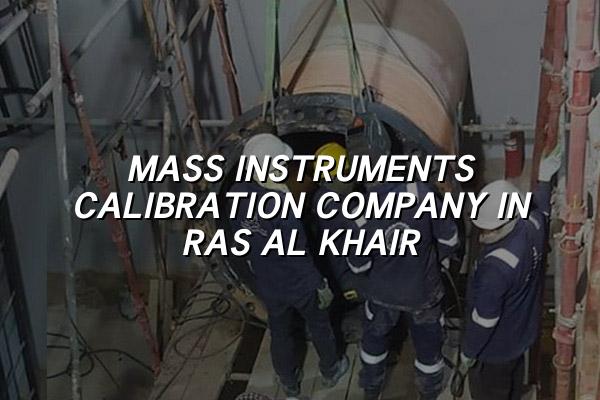
Mass instruments calibration company in Ras Al Khair is what most procurement and maintenance teams look for when their scales, weights, load-based tools, or batch-related instruments need traceable verification without wasting time moving equipment around. We help you keep measurements defensible, records tidy, and operations moving.
In Ras Al Khair, that usually means support for port-linked industry, fabrication yards, plant maintenance teams, and cold-chain operations that need mass values they can trust. We work with the same practical mindset we bring across Saudi Arabia and the wider Middle East: onsite when it makes sense, in-lab when the instrument needs controlled conditions, and always with ISO/IEC 17025:2017 discipline in the background.
What a mass instruments calibration company in Ras Al Khair should cover
For industrial users, mass calibration is not just about a certificate. You want usable results for balances, platform scales, checkweighers, test weights, weighing indicators and related equipment used in receiving, batching, dispatch and quality control. If a weight trace is off, the effect can show up in stock control, recipe control, shipping records or acceptance checks, so the service has to be careful, documented and repeatable.
Onsite support where the instrument lives
Many mass instruments in Ras Al Khair are easier to verify on site, especially larger scales, fixed weighing systems and equipment that is hard to disconnect. Our mobile calibration lab helps us work at plant locations while keeping the process organised. That matters when the instrument is tied to production, because every extra move creates risk, dust exposure, or avoidable downtime.
Controlled in-house work for special cases
Some instruments need a temperature-controlled environment, closer handling, or pick-up and delivery to avoid damage and preserve measurement conditions. That is where our in-house laboratory fits. We handle the instrument carefully, calibrate against suitable reference standards, and return records that help your QA team stay audit-ready.
- Identify the instrument class — confirm whether you need balance calibration, platform scale verification, test weight checks, or a related mass service.
- Check the site conditions — look at floor vibration, airflow, temperature drift, and whether the unit can be isolated safely.
- Select the right setup — decide between onsite calibration, mobile lab support, or pick-up and delivery for sensitive equipment.
- Record and compare — compare indicated mass with reference values, then review error, repeatability and any adjustment notes.
- Use traceable references that suit the measurement range, not a one-size-fits-all approach.
- Keep the instrument clean and level before the team starts.
- Plan calibration around receiving, packing or dispatch windows so the work doesn't block operations.
- Ask for a certificate that clearly links the result to the instrument ID and serial number.
- If the unit is in a dusty or outdoor yard, expect more preparation before readings begin.
Typical mass calibration needs and where they fit best
| Instrument type | Typical use | Best service setup |
|---|---|---|
| Bench balance | Lab sampling, QC checks, packing verification | In-house or controlled onsite setup |
| Platform scale | Warehouse receiving, dispatch and batch checks | Onsite calibration at the plant |
| Checkweigher | Food, pharma and packaged goods lines | Onsite verification with production coordination |
| Test weights | Routine validation of weighing equipment | In-house verification and documentation |
Why traceability matters in Saudi industrial work
In Saudi projects, especially around oil and gas, petrochemical, power and logistics, mass measurements often sit inside a larger quality chain. If the scale reading is weak, the problem can spread into inventory, production yield, invoice checks or customer acceptance. That is why teams usually ask for proper identification, reference details and a clear result summary rather than a loose “tested okay” note.
What your QA team usually wants to see
We keep the paperwork practical. Serial numbers, instrument condition, result values, and the identity of the reference equipment all matter. If you work under ISO/IEC 17025:2017 expectations or a quality system aligned with ISO 9001:2015, that level of clarity makes reviews easier and helps when auditors ask how a reading was confirmed.
Built for active sites, not just quiet labs
Ras Al Khair teams rarely have spare time for avoidable removals or repeated checks. We plan around production realities, and we keep the service focused on what the instrument needs: proper setup, stable conditions, careful comparison and readable records.
How to choose the right mass calibration route
Choose onsite when the plant can’t stop
Fixed scales, large platforms and process-linked weighing units are usually best handled where they sit. That keeps handling down and lets the operator see the checks happen.
Use in-house work for sensitive equipment
Small balances and instruments affected by dust, vibration or unstable surroundings often do better in a controlled lab. We also handle cases where pick-up and delivery is the cleaner option.
Match the report to your process
If you need records for internal QA, vendor approval or project handover, tell us upfront. The right document format saves back-and-forth later.
How Mayon Industrial Services Can Help
We support mass calibration with the same mix of lab discipline and field practicality that our clients expect from a serious industrial partner. That includes calibration services under ISO/IEC 17025:2017, onsite work through our mobile calibration lab, and careful handling for instruments that need controlled conditions. If your site in Ras Al Khair also needs mechanical support, inspection, or related engineering help, we can keep the conversation in one place.
Call +91 99447 80844 (India) or +966 59 633 8012 (Saudi Arabia), email services@mayonservices.com, or message us on WhatsApp.
Frequently Asked Questions
Honestly, the right choice is the one that can handle both onsite and controlled-lab work, because mass instruments aren't all the same. If your site runs large platforms, checkweighers or fixed weighing systems, you want a team that understands industrial conditions and can give traceable records without disrupting the plant.
Yes, for many industrial scales and fixed weighing systems, onsite work is the practical option. It reduces handling risk and lets the team verify the instrument in its normal operating position. For sensitive units or special environmental needs, we may recommend in-house calibration instead.
You should expect a certificate or report that identifies the instrument, the result values, and the reference basis used during the work. In industrial settings, serial number, location, condition and any adjustment notes matter because QA teams often need that information for audits and internal reviews.
We usually see demand from port operations, fabrication yards, logistics, oil and gas support facilities, and maintenance teams tied to power or process plants. Cold-chain and food-related users also need it when weighing affects stock, batching or dispatch checks.
Yes, that's part of how we structure our calibration work. The point is traceability and discipline, so the result can stand up to internal QA checks and customer requirements. If your site also works to ISO 9001:2015 practices, we can align the documentation style with that process.
Ready to keep your weighing results under control?
If your Ras Al Khair site needs mass calibration with clear records and practical field support, talk to Mayon Industrial Services and we'll help you plan the right route.
Contact Mayon