
Onsite Flow Meter Calibration Company in Marjan
Field calibration in Marjan with traceable results for custody, process and utility flow applications.
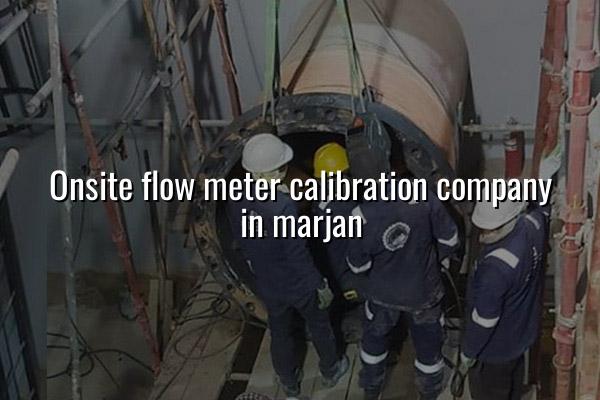
Onsite flow meter calibration company in Marjan work should do one thing well: give you readings you can trust before the next batch, transfer, or production run. If your team is chasing drift, disputed totals, or a meter that no longer matches process conditions, this page shows how we handle the job on site and what you should expect.
We support oil and gas, petrochemical, power, utilities and industrial plants across Saudi Arabia with field-ready calibration, traceable documentation and practical advice from people who work in real maintenance windows. In our experience, the best jobs are the ones where the plant gets clear data, the instrument stays in service safely, and no one has to guess at the result.
Why Marjan sites choose onsite flow meter calibration
Flow meters are often installed where removing them costs more than the calibration itself. That is common in Marjan, especially where lines feed process units, transfer skids, chemical dosing circuits, water systems or utility networks. Onsite work lets us check the meter in place, look at installation conditions, verify signal health and compare the reading against a known method or reference suitable for the application.
What we check before we touch the reading
We start with the basics because that is where most problems hide. Straight pipe runs, upstream disturbance, grounding, impulse lines for differential pressure systems, transmitter output, display scaling and totalizer settings all matter. A meter can look fine on the HMI and still be wrong if the installation, wiring or process condition has shifted.
What good field calibration looks like
Good calibration is not only about generating a certificate. It means the instrument is checked against traceable references, the as-found condition is recorded, adjustments are made only when agreed, and the final as-left result makes sense for the process. For Marjan plants, that usually means planning around live operations, isolations, work permits and the safety rules already in place on site.
- Review the tag and service — we confirm the meter type, line size, fluid or utility, range and access needs before mobilization.
- Inspect the installation — we look at mounting, flow direction, wiring, nearby disturbances and the condition of the associated transmitter or display.
- Connect the reference method — we use a suitable field setup for the meter and application, then compare actual performance to expected values.
- Record as-found and as-left data — you get a clear record for maintenance, QA and internal traceability.
- Hand over practical findings — if the meter needs repair, rework or revalidation, we say so plainly and help you plan the next step.
- Keeps critical meters in service where removal would disrupt production.
- Helps maintenance teams spot drift, scaling errors and wiring faults early.
- Supports traceability for ISO/IEC 17025:2017-driven quality systems.
- Works well for custody, process and utility flow applications in Saudi industrial sites.
- Reduces the chance of bad decisions based on a noisy or misconfigured signal.
Common flow meter checks for onsite calibration jobs
| Meter type | Typical onsite check | What it helps confirm |
|---|---|---|
| Electromagnetic flow meter | Signal stability, zero check, grounding review | Clean output and correct installation conditions |
| Ultrasonic flow meter | Transducer condition, spacing, path signal review | Good clamp-on or inline signal quality |
| Turbine flow meter | Pickup signal, rotor response, mechanical wear check | Repeatable movement and stable pulse output |
| Differential pressure flow meter | Impulse line condition, transmitter span, piping review | Correct pressure-based flow measurement |
| Positive displacement meter | Leakage, pulse output, mechanical condition | Volumetric integrity and meter health |
What your QA and maintenance team should ask for
Ask for the as-found condition first. That tells you whether the meter was already drifting before any adjustment. You should also expect a clear statement of the reference used, the environmental or process limitations during the job, and any factors that may affect the result, such as vibration, aeration, temperature swing or line instability.
Why this matters in Marjan plants
Marjan facilities often run with tight coordination between operations, inspection and maintenance. A calibration visit that ignores permit timing, process isolation or alarm management can cause more trouble than it solves. We keep the work practical and respectful of site rules, which is exactly what engineers and supervisors want when they are trying to protect uptime.
Field notes that people can use
We give you the facts you need to decide whether the meter stays in service, needs adjustment, or should come back for bench evaluation. That includes installation observations, result notes and the kind of plain-language summary that makes sense to both technicians and managers.
How we plan a site calibration without slowing the plant
Most onsite jobs start with a quick review of the asset list and the service conditions. From there, we plan the tools, references and access needs around the meter type. If the instrument sits in a hard-to-reach rack, on a skid, or inside a restricted process area, we prepare for that before we arrive. That keeps the job controlled and avoids repeated call-backs.
For industrial users in Saudi Arabia and the wider Middle East, the value is simple: less downtime, fewer removals, and a calibration record that fits your maintenance system. For some meters, we can also advise when onsite verification is enough and when a full lab calibration is the safer choice. That distinction saves time and avoids unnecessary handling.
- Suitable for process loops, transfer lines and utility services.
- Useful when shutdown windows are tight or access is restricted.
- Helps verify whether the meter needs adjustment or replacement.
- Can be paired with electrical testing, inspection or commissioning support.
How Mayon Industrial Services Can Help
We support Marjan clients with onsite flow meter calibration, calibration services, mechanical checks, electrical testing and commissioning, and inspection work when the job needs more than one discipline. If your meter issue is tied to installation, process instability or a broader maintenance plan, our team can look at the full picture instead of only the instrument tag. That usually makes the decision easier for your operations and QA teams.
Call +91 99447 80844 (India) or +966 59 633 8012 (Saudi Arabia), email services@mayonservices.com, or message us on WhatsApp.
Frequently Asked Questions
We do, through Mayon Industrial Services. Our team handles field calibration for flow meters in industrial settings where removal is difficult or risky. We plan the visit around your site conditions and work with the reference method that suits the meter and application.
Yes, in many cases we can verify or calibrate the meter onsite. That depends on the meter type, access, process condition and the method needed for the job. If an in-place check is not suitable, we’ll tell you plainly and suggest the safer option.
We usually ask for the meter tag, type, line size, service medium, installation location and any site rules that affect access. A photo of the meter and its surrounding piping or panel often helps too. The more accurate the information, the better we can plan the job.
Yes. Our calibration work is aligned with ISO/IEC 17025:2017 expectations for traceability and technical control. The record shows the condition we found, the work we completed and the final result, so your internal maintenance and QA teams have something useful to keep on file.
Then we document what failed and why it matters. Sometimes the issue is installation-related, like grounding or pipe disturbance. In other cases the meter needs bench service, repair or replacement, and we help you make that call without jargon.
Yes, we often combine work when it makes sense for the site. That can include calibration, mechanical services, electrical testing and commissioning, inspection or lab-related support. It saves your team from coordinating several contractors for related tasks.
Ready to put your flow meter back on a sound footing?
If you need onsite flow meter calibration in Marjan, talk to us and we’ll help you choose the right field approach for your process and site rules.
Contact Mayon