
Onsite Pipeline Hydrotesting Service Company in Haradh
Field hydrotesting for pipelines in Haradh with controlled procedures, calibrated instruments and clear reporting for shutdowns and commissioning.
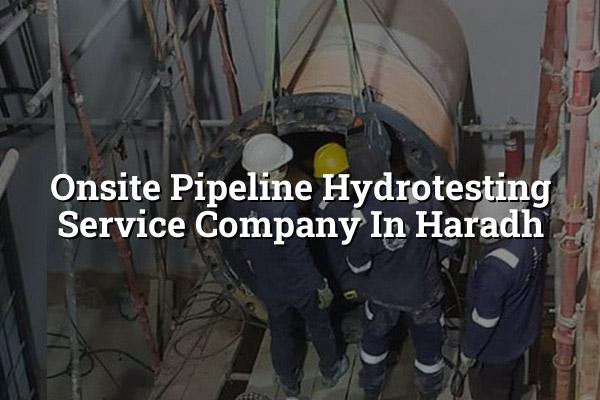
Onsite pipeline hydrotesting service company in Haradh support starts with one simple aim: prove the line holds pressure before it goes live. If you're preparing for commissioning, shutdown work or a repair tie-in, we help you test the system safely, document the results and keep the job moving.
Haradh and the wider Saudi oil and gas belt need practical field work, not guesswork. Our team brings calibrated pressure equipment, mobile lab capability and disciplined procedures to pipeline projects, process skids and associated mechanical systems across Saudi Arabia and the Middle East.
What an onsite pipeline hydrotesting service company in Haradh actually does
When a line is fabricated, repaired or modified, hydrotesting gives the project team a direct answer about containment. We pressurise the pipeline with water, hold it under the required test condition, inspect joints and fittings for visible leakage, and record the behaviour of the system against the agreed procedure. That matters in Haradh, where shutdown windows can be tight and the cost of rework rises quickly if the test setup is rushed.
Why field execution matters
Shop testing sounds tidy on paper, but many systems still need onsite work because the installed line has to be tested in its final position. Supports, valves, flanges, branch points and temporary blinds all change the picture. Our field approach is built for that reality. We come to the asset, set up the test manifold, isolate the section and carry out the work with the same discipline you expect in a controlled facility.
Hydrotesting for pipeline integrity
Hydrotesting is useful because it checks more than a single weld. It shows whether the line, the joints, the connected spools and the temporary arrangements can withstand pressure as a system. For oil and gas facilities in Saudi Arabia, that is especially useful before commissioning, after repair work and during major maintenance where the piping network has to be returned to service with confidence.
- Confirm the scope — we review the test pack, line list, boundaries and any isolation points before equipment reaches site.
- Prepare the test section — the line is isolated, drained, vented and fitted with the needed temporary hardware.
- Fill and pressurise — water is introduced carefully, then pressure is raised in a controlled way using calibrated instruments.
- Hold and inspect — the test condition is maintained while joints, flanges and visible interfaces are checked for signs of leakage or abnormal behaviour.
- Suitable for pipelines, skids and associated piping systems in Haradh and nearby industrial areas.
- Uses calibrated pressure gauges and supporting instruments for traceable field records.
- Helps commissioning teams verify integrity before start-up.
- Works well after maintenance, replacement spools or flange repairs.
Typical pipeline hydrotesting planning points for Haradh jobs
| Planning point | What we look at | Field impact |
|---|---|---|
| Test boundaries | Line limits, blinds, valves and isolation points | Defines what can be tested safely on site |
| Test medium | Water quality, fill path and drainage route | Affects cleanliness, venting and post-test recovery |
| Instrumentation | Pressure gauges, calibration status and charting needs | Supports traceable readings during the hold period |
| Site access | Equipment layout, lifting access and work area control | Influences setup time and crew movement |
How we keep hydrotesting controlled and traceable
Pressure testing deserves respect. A pipeline section stores energy once it's pressurised, so the setup has to be planned with care. We focus on isolation, proper venting, secure hose routing and clear communication with the site team. In our experience, most issues come from shortcuts around preparation, not from the pressure test itself.
What the site team should expect
You should expect a crew that checks the line condition before the pump starts, watches for weak points during pressurisation and records the result without drama. If the job needs pickup and delivery for instruments or special handling because of environmental conditions, our temperature-controlled lab and mobile calibration support help keep the process under control.
Field-ready support for plant teams
We work with maintenance managers, QA teams and commissioning leads who need clean documentation and practical execution. That includes hydrotesting manifolds, pressure comparators, dead weight testers and related products when the job calls for a more complete setup.
Where onsite hydrotesting fits best
Not every test belongs in a workshop. Large installed pipelines, package skids, field piping in oil and gas plants, and repaired sections with restricted removal all point toward onsite execution. Haradh projects often need that flexibility because the equipment is already tied into the plant, and pulling it out would create more delay than value.
We also see demand from projects where the buyer wants the same team to handle adjacent tasks such as flange work, bolt torquing, testing and commissioning, or inspection support. That reduces handoffs. It also keeps responsibility clearer, which maintenance planners usually prefer.
Before the crew arrives
Good hydrotesting starts before the truck rolls in. Clear line drawings, boundary confirmation, access permissions and a decision on how the line will be drained afterwards all save time onsite. If your project team already has those items ready, the test run is usually much smoother.
- New pipeline sections before commissioning.
- Repair and replacement work after maintenance shutdowns.
- Piping tied into operating systems where removal is not practical.
- Projects that need documentation for client handover and internal QA files.
Records clients usually ask for after a pressure test
Most project teams don't ask for a fancy report. They want a clear record they can file with the turnover pack, and they want it to stand up when the owner reviews the job later. That is why we keep the paperwork practical: job details, equipment identification, calibration references, test observations and final results are all handled in a way that suits industrial handover.
Standards we work within
For calibration and testing competence, ISO/IEC 17025:2017 is central to how we work. We also support ISO 9001:2015 quality management practices, use BS EN standards where lifting and inspection work needs them, and follow EURAMET CG-15 for electrical calibration where applicable. Those references matter because clients in Saudi Arabia and across the Middle East expect traceable, defensible records.
Useful file set for handover
Think line identification, test boundaries, equipment details, observation notes and the final acceptance record. When a client asks six months later why a line was held at a certain pressure, the answer has to be easy to find.
How Mayon Industrial Services Can Help
We support pipeline hydrotesting with field crews, calibrated equipment and the practical know-how needed for Saudi industrial sites. If your job also needs mechanical services, inspection support, lab calibration or related commissioning work, we can plan the package so the site team isn't juggling too many vendors.
Call +91 99447 80844 (India) or +966 59 633 8012 (Saudi Arabia), email services@mayonservices.com, or message us on WhatsApp.
Frequently Asked Questions
We come to the site, isolate the pipeline section, set up the test equipment and carry out the pressure test where the line is installed. That saves you from dismantling the system just to prove integrity. It also makes sense for tied-in piping and field repairs where removal isn't practical.
Yes. We regularly work around maintenance windows, modified lines and commissioning packs in Saudi industrial settings. The key is proper boundary control and a test plan that fits the actual site conditions, not a generic checklist.
We usually need the line drawing or test pack, the test boundaries, the isolation points and any site permit details. If the job includes owner QA requirements, we review those too so the record matches what the client expects at handover.
Yes, we do. Our calibration background matters here because field readings only help if the instruments are under control and the records are traceable. That's one of the reasons clients call us instead of using a general contractor with no lab support.
Yes. We often support related mechanical tasks such as flange facing, bolt torquing, hydrotesting support and testing and commissioning. That reduces coordination gaps and helps the site team keep the sequence moving in the right order.
Ready to plan your next hydrotest?
If your pipeline in Haradh needs onsite pressure testing, talk to us early so the boundaries, equipment and site access are sorted before the crew arrives.
Contact Mayon
For pipeline projects in Haradh, the safest result usually comes from careful setup, traceable instruments and a team that understands the site. That's how we work, and it's why clients across Saudi Arabia and the Middle East call Mayon when they need pressure testing done properly.