
Pneumatic Testing Service Company in Dammam Industrial City 2
Certified pressure and leak testing support for industrial systems in Dammam Industrial City 2 and nearby Saudi industrial zones.
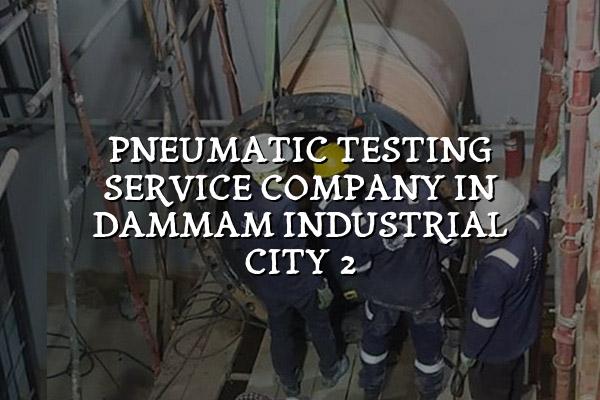
Pneumatic testing service company in Dammam Industrial City 2 is the phrase people use when they need controlled pressure checks, clean reporting and a team that can work around live project schedules. If you're dealing with piping, vessels or skids that can't be hydrotested, this page shows how we help you test safely and keep the job moving.
We support industrial clients across Dammam Industrial City 2, the wider Eastern Province and nearby GCC facilities with in-house engineering knowledge, mobile-lab support and practical field execution. That matters when your site needs traceable results, careful isolation and a crew that understands oil and gas, petrochemical, power and fabrication work.
Pneumatic Testing Service Company in Dammam Industrial City 2 for Field Work
Pneumatic testing is usually chosen when water is a problem, when drying would cost time, or when a component needs a gas-based pressure trial before handover. In our experience, the jobs that need it most are skids, instrument lines, headers, small-bore piping and packaged systems where cleanliness and dryness matter just as much as the pressure itself. We plan the setup around the job, the line class and the site permit conditions, then we work with your team to keep the test controlled.
Where pneumatic testing fits best
For projects in Dammam Industrial City 2, pneumatic testing often comes up during fabrication completion, pre-commissioning and turnaround windows. It is especially useful when you need a pressure test without introducing moisture into the system, or when downstream equipment and process requirements make hydrotesting the wrong choice. We also see it used on compressor-related piping, utility lines and certain skid-mounted assemblies before dispatch or final installation.
What we check before pressurizing
We do not rush a gas test. The line must be isolated, the fittings confirmed, the exclusion zone set and the test media selected with care. A proper pneumatic test also needs calibrated gauges, relief provisions and a clear sequence for pressurizing, holding and releasing. That is where a disciplined crew matters. One loose coupling or one missed valve position can ruin a day's work, so our technicians verify the basics before pressure goes in.
- Review the test pack — we check drawings, line lists, pressure limits and any site-specific permit rules before we touch the system.
- Prepare and isolate the circuit — blinds, caps, temporary spools and test fittings are arranged so the section under test is clearly defined.
- Fit calibrated instruments — gauges and monitoring tools are selected to suit the required range and recorded for traceability.
- Pressurize in stages — the circuit is brought up carefully, then held at the agreed test pressure while the team watches for drops or leaks.
- Record results and restore safely — once the hold period is complete, the system is depressurized in a controlled way and the records are handed over.
- Suits dry systems where water removal would be a headache
- Supports oil and gas, petrochemical and power projects in Saudi Arabia
- Uses calibrated gauges and controlled pressurization steps
- Works well for skid packages, instrument air lines and small-bore piping
- Can be paired with leak checks, flange work and commissioning support
Choosing the Right Pressure Test Approach
| Test type | Best use | Key site point |
|---|---|---|
| Pneumatic testing | Dry systems, sensitive equipment, lines that cannot take water | Needs careful isolation, exclusion zones and controlled pressurization |
| Hydrotesting | Systems that can be filled and dried without trouble | Useful where water removal is manageable after the test |
| Leak testing | Finding small leaks in joints, valves and skids | Often done with supporting checks before final handover |
| Commissioning checks | Pre-startup verification of assembled systems | Works best when testing is linked to mechanical completion records |
Why Pneumatic Testing Needs a Disciplined Team
Gas pressure behaves differently from water. A pneumatic test stores much more energy, so the setup, access control and operator discipline must be tighter from the first fitting to the final release. That is why plant owners in Saudi Arabia usually ask for a team that can document the process, work neatly with the permit system and keep the test area safe for everyone nearby.
Records your QA team can use
We keep the paperwork practical: equipment identification, gauge details, line references, test pressure notes and results. QA and maintenance teams often need that record later for punch-list closure, handover files or internal audits. When the test is linked to mechanical completion, the record trail becomes easier to use and easier to trust.
Built for industrial sites, not a lab bench
Most of our pneumatic test calls come from sites where timing, access and safety briefings matter as much as the final result. We bring that field mindset with us. If your package needs cold cutting, flange work, bolt torquing or commissioning support alongside the test, we can coordinate the work in one plan instead of splitting it across different contractors.
How Mayon Industrial Services Can Help
We support pneumatic testing with the same field discipline we use for mechanical services, inspection and electrical commissioning. That means your job can be handled by people who understand isolation, calibrated instruments, testing records and the realities of industrial sites in Dammam Industrial City 2. If you also need flange facing, hydrotesting support, NDT coordination or lab-grade calibration for your gauges, we can line it up with the test plan.
Call +91 99447 80844 (India) or +966 59 633 8012 (Saudi Arabia), email services@mayonservices.com, or message us on WhatsApp.
Frequently Asked Questions
It is used when you need to pressure check a system with gas instead of water. That's common for dry piping, sensitive assemblies and packaged equipment where moisture would create extra work later. We see it often on industrial projects in the Eastern Province before commissioning or handover.
We start with isolation, a clear test boundary and the right permit arrangement. The team then pressurizes in stages and keeps the area controlled while instruments are watched closely. That slower approach is the only sensible way to handle stored gas energy on an active site.
Yes, that is one of the common use cases. Skids, instrument lines and small-bore runs often need dry testing before dispatch or site integration. We can also coordinate related work such as flange work, bolt torquing and final leak checks when the package needs more than one contractor role.
Yes. We run an ISO/IEC 17025:2017 compliant calibration service, so the pressure instruments used in the job can be checked with proper traceability. That helps QA teams and site supervisors rely on the readings during the pressure hold and documentation stage.
Oil and gas, petrochemical, power, fabrication and some manufacturing projects ask for it most often. We also get calls from teams handling utility systems and packaged equipment where a dry pressure test makes better sense than a water-filled one. The exact method depends on the system and the site rules.
Ready to plan your pressure test?
If your system needs controlled pneumatic testing in Dammam Industrial City 2, we can help you line up the site work, instruments and records.
Contact Mayon