
Pressure Gauge Calibration Company in Buqayq
Traceable pressure gauge calibration for plants in Buqayq, with onsite support and mobile lab capability across Eastern Province operations.
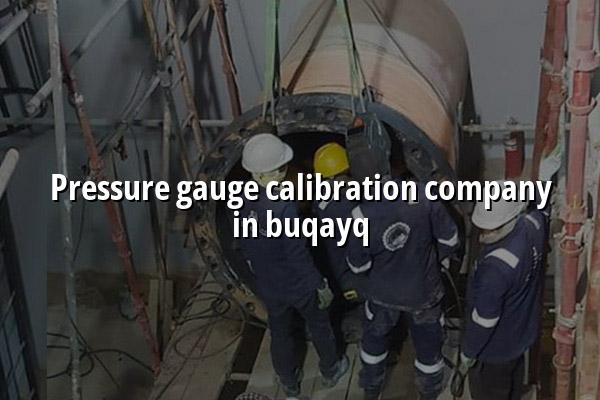
Pressure gauge calibration company in Buqayq is exactly what you need when a process line, test skid, or maintenance checklist depends on a gauge you can trust. We help you keep readings traceable, readable, and ready for audits, without turning a plant shutdown into a guessing game.
From Buqayq and the wider Eastern Province, we support industrial teams that work with pressure vessels, compressors, pumps, manifolds, and hydraulic systems every day. Our work fits real plant conditions: onsite visits, a temperature-controlled in-house laboratory, and a mobile calibration lab for instruments that should not leave site unless they have to.
Pressure gauge calibration company in Buqayq for plant reliability
For many buyers, the search starts with one simple problem: a gauge looks fine, but no one wants to rely on “looks fine” when a compressor header, hydrotest setup, or steam line is involved. We calibrate pressure gauges with the same practical aim you have on site, which is to reduce uncertainty and keep the instrument record clean enough for quality checks, maintenance reviews, and ISO/IEC 17025:2017 traceability expectations.
What we check on the gauge
We assess the gauge across the range that matters to your process, not just at a single point. That means looking at indication, repeatability, zero error, and whether the instrument still behaves sensibly after transport, vibration, or long service in a dusty plant environment. In Buqayq, where equipment can sit near pumps, skids, and outdoor pipe racks, that last point matters more than people think.
Onsite work or lab work?
Some gauges are best calibrated right where they are installed. Others need controlled conditions, especially when you want better handling, safer packing, or a tighter check on environmental influence. We use onsite tools for practical field work and our in-house lab when the instrument, condition, or application calls for a cleaner setup. If a gauge is fragile, critical, or fitted in a hard-to-remove panel, we can plan the job around your shutdown window.
- Identify the gauge and its use — we first confirm the range, connection type, application, and whether it serves process control, maintenance, or safety checks.
- Inspect condition before calibration — we look for damaged lenses, bent pointers, leaks, thread wear, and signs of overpressure.
- Compare against a traceable reference — the gauge is checked point by point against suitable standards for the range in service.
- Document the results clearly — you receive the findings in a format your team can use for maintenance records and internal review.
- Use calibration intervals based on service severity, not habit.
- Keep critical gauges tagged so the right asset gets the right check.
- Separate process gauges from safety-related indicators during planning.
- Ask for traceability details when a gauge supports QA or audit files.
- Replace cracked or sticky gauges before they become a recurring issue.
Typical pressure gauge checks by use case
| Use case | What we look at | Why it matters |
|---|---|---|
| Process line gauges | Range fit, pointer movement, leakage, and reading consistency | Helps operators avoid wrong setpoints and unstable control |
| Hydrotest gauges | Accuracy through the working range and condition after transport | Supports safer pressure testing before sign-off |
| Compressor and pump gauges | Vibration effects, zero error, and repeatability | Useful where pulsation can distort the reading |
| Panel-mounted gauges | Dial condition, mounting stress, and connection fit | Reduces false readings from damaged fittings or worn seals |
Why pressure gauge calibration supports safe operations
A drifting gauge can create two problems at once: it can hide a real pressure issue or make a healthy line look worse than it is. In oil and gas, petrochemical, power, manufacturing, healthcare, and cold-chain support work, that can turn into needless downtime, rejected test records, or a maintenance decision made on bad data. We keep the process grounded in ISO/IEC 17025:2017 competence, with ISO 9001:2015 quality systems behind the paperwork.
Buqayq teams often need this most
We see the strongest demand around compressor houses, utility systems, hydraulic equipment, and project commissioning work. The same is true for service teams working around Dammam Industrial City and broader GCC sites. If your gauge is part of a pressure test, a maintenance permit, or a commissioning pack, the record has to make sense to the next person who opens it.
Field-ready support for real sites
Our mobile calibration lab helps when you need the instrument checked on location and the process team doesn't want unnecessary removal. For special handling cases, we can arrange pick-up and delivery for instruments that need controlled conditions. That keeps the work practical for plant teams and easier for maintenance planners.
How Mayon Industrial Services Can Help
We support Buqayq clients with pressure gauge calibration as part of a wider industrial service range that includes calibration, mechanical work, inspection, testing and commissioning, and lab setup. If your project needs onsite support, we can plan around the instrument and the site. If it needs lab handling, our controlled environment is ready. For teams managing assets across Eastern Province, that mix saves time and keeps the work orderly.
Call +91 99447 80844 (India) or +966 59 633 8012 (Saudi Arabia), email services@mayonservices.com, or message us on WhatsApp.
Frequently Asked Questions
Any plant team that depends on pressure readings for operation, testing, or safety should keep gauges calibrated. In Buqayq, that usually includes oil and gas facilities, utility systems, maintenance contractors, and commissioning teams. If a gauge affects a decision, it should be checked on a defined interval.
Yes, we can support onsite calibration where the instrument and site conditions allow it. That helps when the gauge is installed on a live system, part of a panel, or difficult to remove. We also use our mobile calibration lab for field work that needs controlled equipment without sending everything back to the workshop.
We work within ISO/IEC 17025:2017 for calibration competence and ISO 9001:2015 for quality management. Where the application requires electrical calibration references, we also align with EURAMET CG-15. We do not guess at traceability; we document what was used and how the result was obtained.
Common signs include a pointer that doesn't return cleanly to zero, visible damage, leaks at the connection, or readings that drift when the same pressure is applied more than once. In service, vibration and overpressure are frequent causes. If your maintenance team is unsure, send the gauge for a check before relying on it again.
Yes, we serve clients across Saudi Arabia, India, and the wider Middle East. That includes industrial locations in the Eastern Province, along with project and maintenance work in other GCC and regional sites. We plan the service model around the job, not the other way around.
Ready to get your gauges checked properly?
If pressure readings matter to your plant, don't leave them to chance. Send us the details and we'll help you plan the right calibration route.
Contact Mayon