
Pressure Gauge Calibration Company in Fadhili
Traceable pressure calibration for plants, utilities, and maintenance teams working in Fadhili and nearby industrial zones.
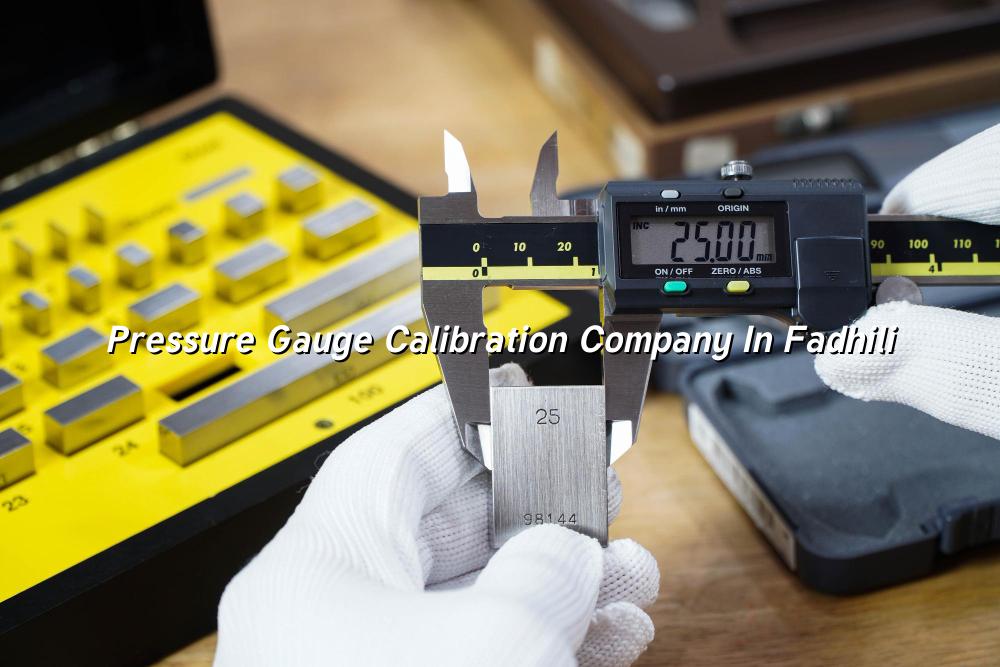
Pressure gauge calibration company in Fadhili services matter when your maintenance crew needs readings they can trust before a shutdown, startup, or routine inspection. We help you keep gauges aligned with traceable reference standards so your operators aren't guessing on line pressure, vessel pressure, or test bench values.
In and around Fadhili, pressure gauges turn up everywhere: utility skids, compressor packages, process headers, hydrotest setups, and workshop benches. Our team works with the same practical goal every time — reduce uncertainty, document the result properly, and keep production teams moving with confidence.
What you should expect from a pressure gauge calibration company in Fadhili
A proper pressure gauge calibration company in Fadhili should do more than compare a dial against a master. You want controlled test conditions, the right pressure range, clear before-and-after readings, and certificates that your QA team can file without chasing missing details later. For plant rooms, workshop gauges, transmitters on test benches, and field gauges used during commissioning, the process has to be clean and traceable.
Where pressure gauges usually go out of spec
We see the same causes again and again: vibration, rough handling, overpressure, moisture ingress, and plain old wear on the movement. A gauge that lived on a pump skid in hot Saudi weather won't behave like a fresh one from the store room, even if it still points to zero. That is why periodic checks matter, especially for oil and gas, petrochemical, power, and manufacturing sites that depend on tight pressure control.
Why traceability matters in the field
Traceability is what lets your team prove the result later. If a gauge drives a critical decision during hydrotesting or commissioning, you need to know the reference equipment used, the range applied, and the observed error at each point. Our ISO/IEC 17025:2017 approach is built around that habit, because documentation isn't paperwork for its own sake — it's part of the job.
- Receive and identify the instrument — record the gauge type, range, serial number, and service condition before any test starts.
- Inspect the case and pointer movement — check for cracked glass, bent pointers, leakage, and zero error.
- Apply controlled pressure points — compare the gauge across a suitable range using verified reference standards.
- Record deviation and acceptance — capture the readings, determine pass or fail, and note any adjustment needed.
- Issue the certificate and return plan — share the result, tag the gauge clearly, and arrange delivery or pickup where needed.
- Use gauges matched to the job, not one random reference for every range.
- Confirm the scale, unit, and pressure medium before testing begins.
- Protect sensitive instruments with pickup and delivery when storage conditions are a concern.
- Ask for clear pass/fail status so maintenance teams can decide quickly.
- Keep calibration history together for audits and shutdown planning.
- Use onsite testing when removing the gauge would disrupt operations.
Typical pressure gauge calibration checks and what they tell you
| Check point | What we look at | Why it matters |
|---|---|---|
| Zero reading | Pointer return after venting | Shows basic movement health and mechanical reset |
| Mid-scale point | Deviation at a working pressure level | Helps confirm performance where the gauge is used most |
| High-end point | Response near the top of the scale | Checks accuracy where overpressure risk can show up |
| Repeatability | Same reading across repeated cycles | Reveals stickiness, hysteresis, or wear |
How we handle pressure gauge calibration in plants and workshops
Some gauges should stay on site because the system is live, hard to access, or tied to a shutdown window. Others are better brought into a controlled environment, especially when the gauge needs extra care or the job calls for stable conditions. We handle both paths, using our in-house laboratory plus a fully-equipped mobile calibration lab for onsite work.
Choosing the right path
If a gauge is part of a critical line in Fadhili or a nearby industrial area, onsite calibration can save time and avoid unnecessary dismantling. For instruments that need special handling, our pickup and delivery option helps protect them during transit. That balance is useful for refineries, utility plants, contractor workshops, and maintenance stores that keep mixed batches of gauges on hand.
Built for real industrial work
We support pressure gauges used in hydrotesting, process lines, compressor packages, and test benches, then document the result in a way your QA team can use. Our work follows ISO/IEC 17025:2017 practices and fits the expectations of industrial sites across Saudi Arabia, India, and the wider Middle East.
What QA and maintenance teams usually ask for
Most of the calls we get from supervisors and procurement teams come down to a few simple questions: can the gauge be tested onsite, what range is covered, and how do we read the certificate later? Those aren't small details. They're the difference between a useful record and a document that gets ignored during audits or shutdown reviews.
Records that hold up
We keep the focus on the essentials: instrument identity, test points, results, and the acceptance decision. That approach works across pressure gauges used in oil and gas service, petrochemical utility systems, construction equipment, cold-chain support equipment, and manufacturing lines. If your team needs a repeatable process for a batch of gauges, we can help make it less chaotic.
Good calibration is practical
You don't need extra noise. You need the gauge checked correctly, the result captured clearly, and the instrument back in service with as little friction as possible. That's the standard we work to every day.
How Mayon Industrial Services Can Help
We calibrate pressure gauges alongside a wider set of industrial instruments, so your team can handle one supplier conversation instead of several. That includes onsite calibration, in-lab work, mobile calibration support, and pickup for gauges that need extra care during transport. If you're managing shutdowns, audits, or routine maintenance in Fadhili, our team can help keep the records tidy and the instruments ready for service.
Call +91 99447 80844 (India) or +966 59 633 8012 (Saudi Arabia), email services@mayonservices.com, or message us on WhatsApp.
Frequently Asked Questions
It depends on how the gauge is used, how much vibration it sees, and how critical the reading is to the process. In practice, many sites set a schedule based on risk and past drift rather than treating every gauge the same. If a gauge sees rough handling or sits on a moving skid, we usually suggest checking it sooner.
Yes, onsite service is part of what we do. It's a good fit when the gauge is installed in a live system, tied to a shutdown window, or awkward to remove. Our mobile calibration lab is set up for industrial field work across Saudi Arabia and nearby GCC locations.
We usually need the gauge range, unit, serial number, connection type, and any special condition that affects handling or testing. If the gauge is part of a critical system, tell us where it's used and whether removal is possible. That helps us plan the right setup from the start.
Yes. We issue documented results that show the instrument details, readings, and acceptance status so your team can file them properly. That helps during internal checks, client audits, and maintenance reviews where records need to be easy to trace.
We work with oil and gas, petrochemical, power, construction, healthcare, pharmaceutical, cold chain, food and beverage, manufacturing, and engineering clients. In Fadhili and the wider Eastern Province, the most common requests come from process sites, utility systems, and maintenance contractors who need repeatable pressure readings.
Need pressure readings you can trust?
Send us the gauge list, the ranges, and your site location, and we'll help you plan the next calibration run without guesswork.
Contact Mayon