
Pressure Gauge Calibration Company in Saudi Arabia
Traceable pressure gauge calibration for plants, contractors and maintenance teams across Saudi Arabia and the wider GCC.
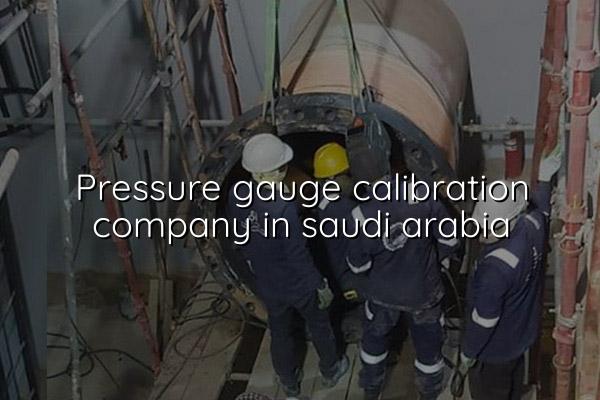
Pressure gauge calibration company in Saudi Arabia services matter when a gauge starts drifting on a vessel, compressor skid, hydraulic line, or test bench. You want numbers you can trust, a clear certificate trail, and a team that understands how plant work actually runs.
We support customers from Dammam Industrial City 2 through the Eastern Province and across the wider GCC, with onsite work, in-house calibration, and mobile lab coverage where the instrument can’t leave site easily. Our work is built around ISO/IEC 17025:2017 traceability, practical site conditions, and the sort of records QA, maintenance, and procurement teams ask for during audits.
Pressure Gauge Calibration Company in Saudi Arabia for Plant-Ready Results
A gauge is only useful if the reading matches the process reality. In oil & gas, petrochemical, power, manufacturing, and cold-chain support work, a small error can mean bad testing, weak maintenance decisions, or a report that doesn’t stand up in front of an auditor. That’s why we calibrate against suitable reference standards, check the full range, and record the before-and-after condition so you can see what changed.
Where this service gets used most
We’re regularly asked to calibrate gauges fitted on pumps, hydraulic systems, compressors, fire systems, manifolds, and test rigs. In Saudi Arabia, that often means work around refineries, industrial plants, EPC contractors, and maintenance shutdown teams that need the job done with minimum fuss and proper traceability.
What a proper calibration job includes
We don’t treat a pressure gauge like a loose accessory. The range, unit, accuracy class, process medium, connection type, and intended service all matter. A low-range compound gauge used on a skid needs different handling than a higher-pressure indicator on a hydraulic set, and we make that distinction before any test starts.
- Identify the gauge and service condition — we confirm the range, scale, connection, and where it’s being used so we test it the right way.
- Inspect before calibration — we check for bent pointers, fogging, damaged threads, leakage signs, and obvious physical wear.
- Compare across the range — the gauge is checked at suitable points up and down the scale against traceable reference equipment.
- Record the result clearly — you receive the measured readings, the observed error, and the pass/fail outcome for your internal file.
- Calibrate gauges before critical shutdowns, not after a process issue shows up.
- Keep process and test gauges separate; they don’t age the same way.
- If the pointer sticks or overshoots, remove the gauge from service first.
- Ask for traceable documentation that names the instrument and serial number.
- For site work, confirm pressure, media, and connection details before the team arrives.
Pressure Gauge Checks, Calibration, and Replacement Decisions
| Scenario | What We Look For | Typical Action |
|---|---|---|
| Routine plant gauge | Pointer movement, zero error, repeatability, range fit | Calibrate and label for continued service |
| Gauge with physical damage | Cracked lens, bent needle, housing distortion, leakage signs | Remove from service and assess before testing |
| Gauge used on critical equipment | Stability across points, traceability, clear certificate record | Use tighter control and scheduled recalibration |
| Gauge showing erratic readings | Hysteresis, sticking, inconsistent return to zero | Test carefully; replace if performance is unstable |
Why Saudi Projects Ask for ISO/IEC 17025 Traceability
In Saudi industrial work, people don’t just want a stamp on paper. They want evidence that the calibration was done against suitable reference standards, with the instrument identified properly and the results written in a way that stands up during an internal review or customer audit. That’s where ISO/IEC 17025:2017 matters most.
What your team gets from proper records
Good records help maintenance decide whether to keep a gauge in service, reclassify it, or replace it. They also make life easier when a client asks for proof on a project file, especially for EPC, O&M, and shutdown packages where documentation gets checked line by line.
Built for industrial sites, not a showroom
Our mobile calibration lab helps when a gauge is installed in a live plant, on a rooftop skid, or inside a process area where removal would create delay. If the instrument needs special handling, our temperature-controlled in-house lab and pick-up and delivery support keep the work practical.
What We Commonly Calibrate for Saudi Arabia Sites
General process gauges
These appear on pressure lines, skids, and utility systems, and they often need routine checks because they’re exposed to vibration, dust, and daily operator use.
Hydraulic and test gauges
We handle gauges used on hydrotest pumps, manifolds, and cylinder testing setups, where the reading has to stay steady during pressurization and hold tests.
Maintenance and QA gauges
These are often tied to verification work, inspection routines, or internal standards checks, so the paperwork needs to be tidy and easy to follow.
How Mayon Industrial Services Can Help
We calibrate pressure gauges as part of a wider support range that includes calibration, mechanical services, inspection, and testing support. If your team is working across Saudi Arabia or the GCC, we can help with onsite calibration, mobile-lab work, or controlled in-house handling when the instrument needs that route.
Our engineers also support shutdown teams, maintenance groups, and QA departments that need clear records, proper identification, and practical advice on the next step for each gauge. If you need a pressure gauge calibration company in Saudi Arabia that understands real plant conditions, get in touch and we’ll take it from there.
Call +91 99447 80844 (India) or +966 59 633 8012 (Saudi Arabia), email services@mayonservices.com, or message us on WhatsApp.
Frequently Asked Questions
The right interval depends on how hard the gauge works. A gauge on a stable utility line may stay in service longer than one on a vibrating compressor skid or a test rig used every day. We usually look at the operating environment, the process criticality, and the history of drift before recommending a schedule.
Yes. We do onsite work where the location, access, or process setup makes removal inconvenient. Our mobile calibration lab helps with live plant work, and we’ll confirm the site conditions first so the job is done safely and cleanly.
We need the pressure range, connection type, gauge condition, and where it’s used. If you have the instrument serial number or a previous certificate, that helps too. For site jobs, it also helps to know whether the gauge is linked to process media, hydraulic oil, water, or another service.
Yes, we provide documentation that records the instrument details and the calibration results. That paperwork is what most QA teams and maintenance managers want on file for audits, asset control, and project handover packs. We keep it practical and readable.
Honestly, the safest move is to take it out of service first. If the lens is cracked, the pointer is bent, or the reading jumps around, calibration may not be enough. We’ll inspect the unit and tell you if it can be retained, repaired, or replaced.
Yes, we also serve India and the wider Middle East. Our teams work from Medavakkam, Chennai and Dammam Industrial City 2, which helps us support projects across the regions we actually cover without overpromising elsewhere.
Ready to put the right gauge back on the right job?
If your team needs traceable pressure gauge calibration, proper reporting, and site-friendly support in Saudi Arabia, speak with Mayon and we’ll help you plan the next step.
Contact Mayon