
Thermocouple and RTD Calibration Company in Najran
Traceable temperature calibration for furnaces, process lines, cold rooms and instruments used across Najran projects.
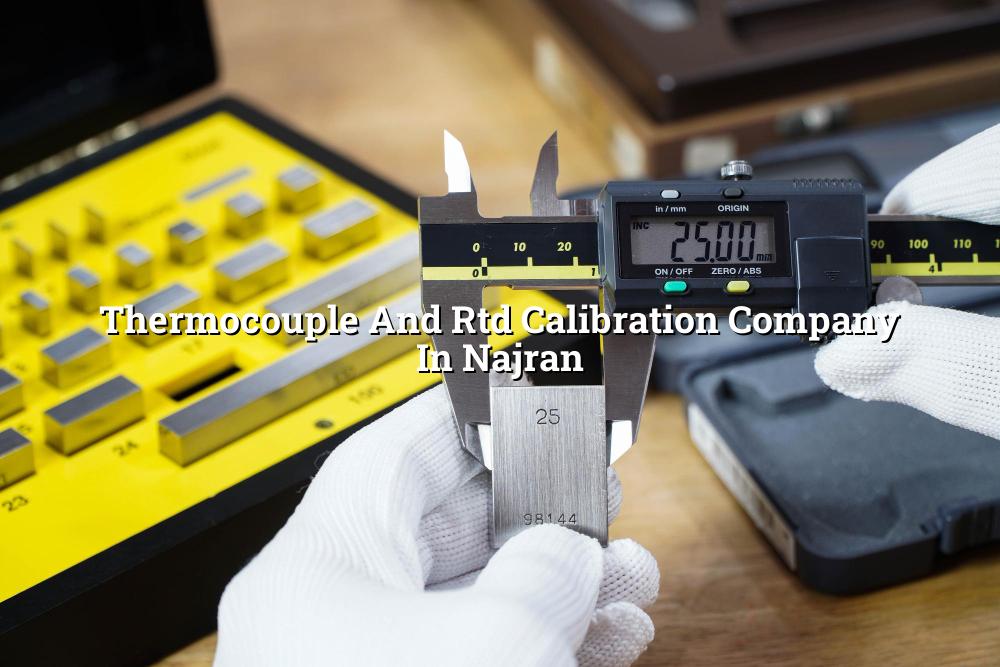
Thermocouple and RTD calibration company in Najran services are what you need when process temperatures have to stay believable, repeatable, and traceable. We help you check the sensors that feed furnaces, ovens, cold rooms, pipelines, and test rigs, so your readings are based on calibration data rather than guesswork.
For Najran plants, contractors, and maintenance teams, that matters on the floor, not just on a certificate. We work with Saudi industrial sites that need practical temperature support, and our team can handle in-lab work, mobile lab visits, and pickup for instruments that need special handling.
Thermocouple and RTD calibration company in Najran for plant reliability
A thermocouple and RTD calibration company in Najran is usually called in for one of three reasons: a process drifts, a quality team finds a mismatch between channels, or a maintenance shutdown gives you a window to verify the sensors before the next run. We see this often in oil and gas support work, food and beverage plants, warehouses, and manufacturing lines where temperature data affects product quality and safety checks.
How thermocouples and RTDs are checked
Thermocouples are typically compared against a reference source at set points, then checked for stability and error across the range you actually use. RTDs need careful attention to probe condition, lead resistance, and the temperature span of the application. For most Najran users, the important thing is that the result is tied to usable points, not just a lab number that looks fine on paper.
Why the site conditions matter
Najran work can mean hot ambient conditions, dusty outdoor areas, or equipment installed far from a controlled room. That changes how the calibration plan is built. If a sensor runs in a freezer, a reefer vehicle, or a thermal chamber, the test points should reflect that service range, and if the instrument must be removed carefully, we can support pickup and delivery for special-condition handling.
- Identify the sensor type — confirm whether the device is a thermocouple, RTD, transmitter, indicator, or a combination assembly.
- Check the use range — note the actual process temperatures, not just the nameplate rating, so the test points match the job.
- Perform comparison calibration — verify readings against reference equipment and record the deviation at relevant points.
- Review the result for action — decide whether the sensor can stay in service, needs adjustment, or should be replaced before the next shutdown.
- Match calibration points to the sensor's working range, not a generic list.
- Keep thermocouple junctions, connectors, and extension wire in the same review scope.
- Inspect RTD probes for bent tips, moisture ingress, and damaged insulation before testing.
- Ask for traceable results that fit ISO/IEC 17025:2017 expectations.
- For installed systems, confirm whether onsite service or lab work is the better option.
Reference points for temperature sensor calibration
| Item | Thermocouple | RTD |
|---|---|---|
| Typical use | High-temperature process monitoring and fast response points | Stable measurement where accuracy and repeatability matter |
| Common checks | Junction condition, polarity, drift, and comparison at selected points | Probe integrity, lead resistance, insulation condition, and comparison at selected points |
| Best fit in Najran sites | Furnaces, heaters, process lines, and rugged field applications | Cold rooms, chambers, labs, utilities, and controlled process loops |
| Calibration focus | Confirm usable readings across the temperature band you operate in | Confirm stable output and low deviation across the operating range |
What good temperature calibration should give you
Good temperature calibration gives your team confidence to sign off batch records, maintenance checks, and quality files without second-guessing the numbers. That is especially useful in Saudi Arabia, where petrochemical and power sites often work with strict internal controls and layered approval steps. A clean calibration record also helps when a customer, auditor, or client asks how the reading was verified.
Why traceability matters more than the label
Some teams only ask whether the sensor "passed." We usually ask a second question: passed against what, and at which points? ISO/IEC 17025:2017 traceability gives that answer. It makes the result easier to trust across shifts, across sites, and across procurement reviews.
Typical Najran use cases
We often see thermocouples on heaters, ovens, and process skids, while RTDs show up in chilled storage, utility systems, and laboratory equipment. When the sensor is part of a wider loop, we can also look at indicator, transmitter, and wiring issues that affect the final reading.
Onsite or in-lab: how Najran teams usually choose
Onsite calibration makes sense when the sensor is part of a running process, when removing it would risk downtime, or when you need the result against the installed setup. Our mobile calibration lab is useful in those cases because it brings the work closer to the asset. In-lab service is a better fit when the instrument needs tighter environmental control or careful handling before testing.
For Najran customers, the choice often comes down to access, risk, and how much of the system must stay live. We can also coordinate pickup and delivery for instruments that should not travel in ordinary transport. That is common for sensitive temperature devices used in cold chain, chamber work, and quality-critical production areas.
Small checks that save time on temperature calibration
Before you send a batch of thermocouples or RTDs, a few simple checks make the job smoother. We tell customers to group instruments by type, note the process location, and mark any sensor that has already shown drift or intermittent readings. That saves back-and-forth later.
- Label each probe or channel so the report matches the exact point in use.
- Share the operating range and any critical alarm limits.
- Separate field damage from simple calibration drift when you send the instruments.
- Include transmitters, indicators, and accessories if the loop is being checked as a set.
How Mayon Industrial Services Can Help
We support Najran customers with thermocouple and RTD calibration, onsite checks through our mobile lab, and controlled in-house work when instruments need closer handling. If your temperature devices sit inside a process loop, we can also help alongside electrical testing, inspection, mechanical support, and laboratory setup work. Call us when you want a practical temperature partner, not just a certificate issuer.
Call +91 99447 80844 (India) or +966 59 633 8012 (Saudi Arabia), email services@mayonservices.com, or message us on WhatsApp.
Frequently Asked Questions
Most often it's plants and contractors running heaters, cold storage, process lines, or utility systems. We also get requests from maintenance teams that want to check spare probes before shutdown work. If temperature affects product quality or safety, calibration is usually part of the routine.
Yes, we can support onsite work where the setup and access allow it. That's often the better choice when pulling the sensor would stop a process or disturb the wiring. Our mobile calibration lab helps us work close to the asset while keeping the job practical.
RTDs are usually checked for resistance behavior, probe condition, and stability across the range you use. Thermocouples are checked against a reference source and are more sensitive to junction and wiring issues. The test method changes because the sensor technology is different.
Yes, we work with sensors used in cold rooms, freezers, reefer vehicles, and thermal chambers. Those jobs need careful range matching because the operating conditions are very different from a furnace or a general utility loop. We can also discuss temperature mapping if the wider space needs verification.
If the element is physically damaged, badly drifted, or unstable after repeated checks, replacement is often the cleaner answer. If the issue is wiring, connection quality, or an isolated offset, repair or re-termination may be enough. We usually look at the full picture before recommending the next step.
Ready to get your temperature readings back on track?
Send us your thermocouples, RTDs, or complete temperature loop details and we'll help you choose the right calibration route for Najran or wider Saudi operations.
Contact Mayon