
Valve Testing Company in Uthmaniya
Get valve testing support for process lines, shutdown work and quality checks in Uthmaniya and nearby industrial sites.
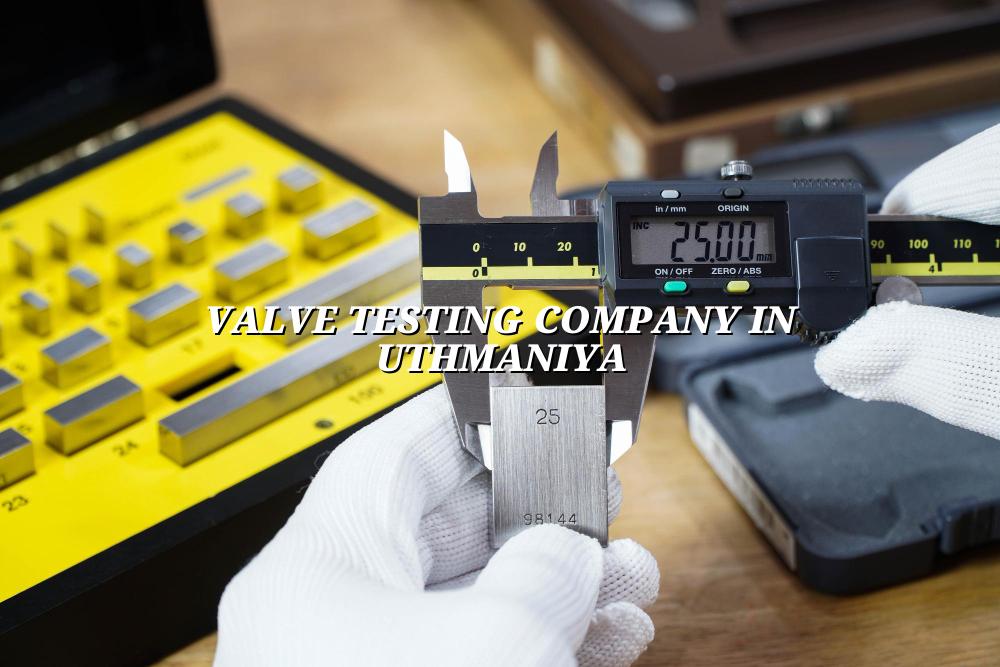
Valve testing company in Uthmaniya searches usually come from one of two places: a shutdown team that needs proof before restart, or a maintenance manager who has already seen a valve leak once too often. We help you check whether the valve is holding pressure, opening and closing properly, and behaving the way your process line expects.
At Mayon Industrial Services, we work with oil & gas, petrochemical, power, manufacturing and cold-chain facilities across Saudi Arabia and the wider Middle East. Our team brings field-ready testing support, calibrated instruments, and the discipline of ISO/IEC 17025:2017 traceability into jobs where a small valve issue can turn into a larger plant problem fast.
What valve testing should cover before you put a line back in service
Good valve testing is not just about saying a valve passed. In practice, you want evidence that the body, seats, trim and operating parts can handle the pressure, medium and duty cycle expected on site. For facilities around Uthmaniya, that often means a mix of onshore process systems, utility lines, water circuits and associated equipment where shutoff integrity matters as much as mechanical movement.
Leakage, seat tightness and actuation behavior
We usually start with the basic question: does the valve hold? From there, the test method depends on the valve type and service. Some valves need pressure hold checks, some need leakage checks at the seat, and others need a functional test that confirms the actuator or handwheel moves cleanly without binding, sticking or abnormal torque. If a valve is meant for critical isolation, we treat a questionable result as a maintenance signal, not a paperwork issue.
Why calibrated equipment matters on site
Field testing only helps if the measuring instruments are trustworthy. That is why our work is built around calibrated pressure gauges, test manifolds, comparators and related equipment supported by ISO/IEC 17025:2017 procedures and traceability. In our experience, the wrong gauge range or a poorly chosen test setup can hide a problem or create a false alarm, and neither is useful when your crew is waiting on a sign-off.
- Identify the valve and service condition — confirm the valve tag, size, duty, fluid and pressure class before the test starts.
- Inspect the valve body and connections — check for visible damage, flange issues, packing wear and signs of corrosion or prior leakage.
- Set up the test rig — connect the valve to a suitable pressure source, test media and calibrated instruments.
- Run the acceptance checks — hold pressure, observe leakage, verify opening and closing action, and record any abnormal behavior.
- Match the test pressure and medium to the valve duty, not to guesswork.
- Keep serial numbers and calibration status visible in the test record.
- Use the right adapters, blanks and test manifold so you don't damage the valve body.
- Separate pass/fail findings from repair notes, because they answer different questions.
- Re-test after maintenance if the valve is going back into critical service.
Typical checks used during valve testing work
| Check | What we look for | Why it matters |
|---|---|---|
| Pressure hold | No visible loss of pressure during the test window | Shows the valve can contain the medium under expected conditions |
| Seat leakage | Leakage at the sealing surface or through the body is within acceptable limits for the service | Protects isolation duties and reduces process losses |
| Operation test | Smooth opening and closing, no seizure, no unusual resistance | Confirms the valve is usable in real plant conditions |
| External inspection | Condition of flanges, packing, stem, actuator and fasteners | Finds wear that often shows up before a failure |
How valve testing fits into shutdown planning
Most plant teams don't ask for testing only because they are curious. They need a decision before recommissioning, turnaround closeout, or a maintenance release. That is where a structured valve test helps: it gives you a documented check on the equipment that sits between safe isolation and an ugly leak call. If a valve is part of a critical loop, we usually recommend tying the test to the broader maintenance record so your team can track the result later.
When repair is smarter than repeat testing
If a valve fails leakage checks, binds during operation, or shows stem or packing issues, more testing alone will not fix the root cause. A repair, refurbish or replacement decision is usually the better path. We see this often on older assets and on lines that have seen repeated thermal cycling, especially where vibration or poor alignment has stressed nearby pipework. The real goal is safe service, not a perfect-looking report.
Field conditions change the result
Bench testing and site testing are not always the same story. Temperature, access, line condition and system cleanliness can affect how a valve behaves once it's back in place, so we plan the test around the actual service environment whenever possible.
What our valve testing process usually looks like
We keep the workflow clear because plant teams need usable answers, not long stories. The exact setup changes with the valve type, size and service, but the rhythm stays the same. Measure carefully, test safely, record clearly, then decide what happens next.
Site review and isolation
We confirm the valve location, access path and isolation needs before any pressure is applied. That keeps the job aligned with your permit-to-work and shutdown rules.
Test setup and calibration check
Our team prepares the manifold, gauge set and adapters, then checks the instrument status so the readings are dependable during the test sequence.
Functional and integrity checks
We verify the valve response, seat performance and visible leakage behavior, noting any sign that the valve needs repair or further inspection.
Report and follow-up action
You get the findings in a form your maintenance team can use. If the valve fails, we help you decide whether the next step is repair, re-test or replacement planning.
Who usually asks for valve testing in Uthmaniya?
We hear from maintenance teams in petrochemical plants, utilities, construction sites, fabrication yards and service contractors. In Saudi Arabia and across the GCC, valve work often sits inside larger packages that include pressure systems, hydrotesting, mechanical maintenance or commissioning. The common thread is simple: nobody wants a valve failure to be the thing that stops start-up.
For buyers and QA teams, the value is traceability. A valve test with calibrated equipment, clear identification and practical records makes audits easier and handovers cleaner. It also helps when you need to compare a valve's current condition against a later repair or retest.
Used alongside broader engineering work
Valve testing often sits next to flange work, hydrotesting, commissioning checks and mechanical support. That gives us a better view of the real system, not just the isolated component on the bench.
How Mayon Industrial Services Can Help
If you need a valve testing company in Uthmaniya, we can support the job with calibrated pressure equipment, mechanical inspection, and field-ready testing methods that fit plant work. Our team also handles related services like hydrotesting, flange work, testing & commissioning, repair and maintenance, so you're not chasing three contractors for one shutdown. Tell us the valve type, site condition and service risk, and we'll help you plan the next step.
Call +91 99447 80844 (India) or +966 59 633 8012 (Saudi Arabia), email services@mayonservices.com, or message us on WhatsApp.
Frequently Asked Questions
We normally check pressure holding, leakage at the seat or body, and how the valve operates under the test setup. For actuated valves, we also look at movement and whether the valve reaches the open and closed positions cleanly. The exact test depends on the valve type and service.
Yes, in many cases it can. Site testing is useful when the valve is already installed, access is available, and you need the result without removing the item from the line. We also work around shutdown and maintenance plans so the test fits the job instead of slowing it down.
Because the pressure reading is only as good as the instrument behind it. If the gauge or comparator is out of control, you can get a false pass or a false fail. We keep the setup aligned with ISO/IEC 17025:2017 working methods so the data is traceable and defensible.
We record the failure point and discuss the practical next step. That may mean repair, reconditioning, replacement, or another check after corrective work. A fail is useful when it leads to a clear decision for the maintenance team.
Yes, we do. Our team also supports hydrotesting, flange work, bolt torquing, testing & commissioning, and repair and maintenance. That helps when the valve test is part of a bigger mechanical package on the same site.
Ready to put the valve issue to bed?
Send the valve details, site location and service condition, and we'll help you choose the right test path for the job.
Contact MayonIf you're comparing a valve testing company in Uthmaniya, choose the team that can test, document and support the next maintenance step without confusion. Mayon Industrial Services brings practical field experience, calibrated equipment and a direct line to engineers who understand plant work.