
Bolt Torquing Service Company in Dammam Industrial City 2
Controlled bolting for flanges, equipment skids and plant turnaround work in Dammam Industrial City 2 and nearby Saudi operations.
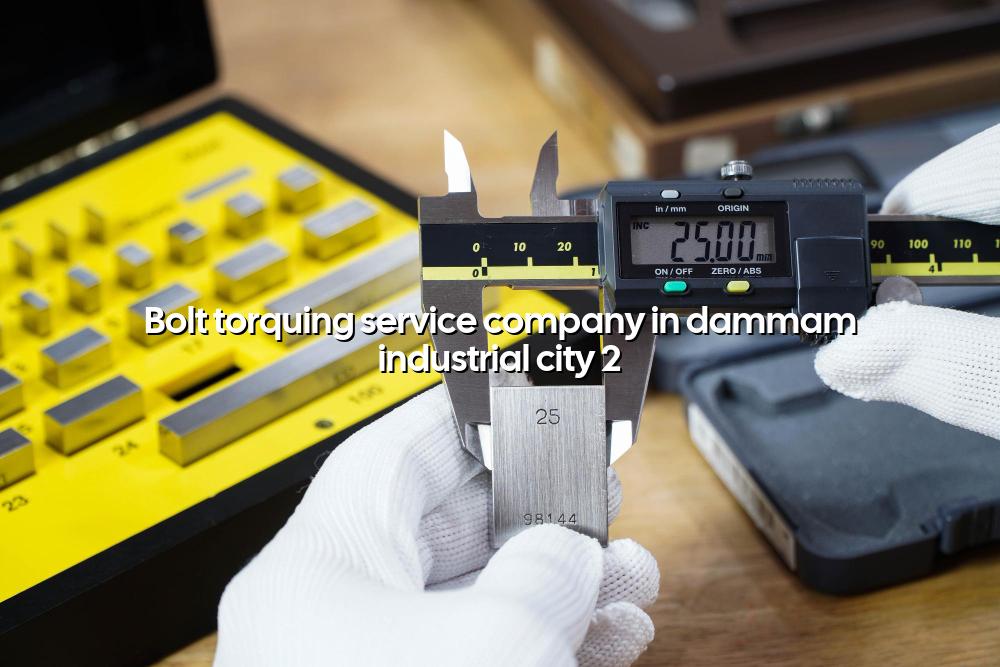
Bolt torquing service company in Dammam Industrial City 2 is what you call when flange joints, machine bases, and critical equipment need even clamping load instead of guesswork. We help you get repeatable tightening on site, with the tools and discipline that plant teams expect during shutdowns, turnaround work, and commissioning.
From Saudi Arabia's industrial corridors to heavy plants in the Eastern Province, our team works with maintenance managers who need joints to hold under heat, vibration, and pressure. We bring the practical side of bolting, together with ISO/IEC 17025:2017 traceability where calibration support is part of the job.
Bolt torquing service company in Dammam Industrial City 2 for plant work
In Dammam Industrial City 2, most bolting calls come with a deadline and a very short tolerance for error. A flange that is tightened unevenly can leak, distort gasket seating, or create a problem that only shows up after start-up. That is why our bolt torquing service is built around sequence, load control, and proper documentation, not just “tight enough” hand work.
Where controlled torque matters most
We see the same pattern across oil & gas, petrochemical, power, and manufacturing sites in Saudi Arabia. The critical joints are usually on pumps, vessels, skids, heat exchangers, compressors, and pipeline flanges. On those jobs, torque values, bolt condition, lubrication state, and tightening pattern all matter. If one of those changes, the final clamping load changes too.
What our team does on site
We start by checking the job scope and the joint type. Then we plan the bolt sequence, select the right hydraulic or mechanical torque tools, and verify the condition of the fasteners and flange faces before tightening begins. For teams that need calibration support, we can back the work with our own ISO/IEC 17025:2017 laboratory and mobile calibration capability, which is useful when the site wants a clean traceability chain.
- Inspect the joint first — confirm the flange condition, bolt size, gasket type, and any signs of damage or previous leakage.
- Plan the tightening pattern — set the cross sequence, pass count, and target torque so the load comes in evenly.
- Apply torque in controlled stages — tighten in measured increments rather than jumping straight to the final setting.
- Record the result — document the work for maintenance files, inspection packs, and handover to operations.
- Use the correct lubricant state for every bolt, because dry and lubricated joints do not behave the same.
- Replace bolts with damaged threads or stretched shanks instead of forcing them back into service.
- Check access and clearance before the crew starts, especially on skid-mounted equipment with tight frames.
- Keep the same tool set and method across all bolts in the joint to avoid uneven clamp load.
Common bolt torquing methods and where they fit
| Method | Best For | What You Get |
|---|---|---|
| Manual torque wrench | Smaller flanges, routine maintenance, access-friendly joints | Simple controlled tightening when the torque range is modest |
| Hydraulic torque wrench | Large flanges, high-load joints, shutdown work | Higher output with better control on critical bolting |
| Hydraulic tensioning | High-integrity joints, repeatable load requirement | More direct bolt preload control for selected applications |
| Staged cross-pattern tightening | Gasketed flange joints | Even load distribution and reduced flange distortion risk |
Why proper torquing protects production
Good bolting is about more than meeting a number on a chart. It helps keep seals seated, protects flanges from distortion, and reduces the stop-start work that maintenance crews know too well. In a plant environment, a poor joint can trigger rework, leak checks, and extra downtime that nobody planned for.
Better results when the whole job is controlled
We pay attention to bolt condition, flange face preparation, tightening sequence, and final verification because each one changes the result. On mixed industrial sites, that discipline matters even more when the same team is handling pressure equipment one week and rotating machinery the next. The job may look simple from a distance. It rarely is.
Built for shutdown and turnaround work
Our crews are used to site constraints in Dammam, Jubail, and wider Eastern Province operations. Tight access, hot weather, vendor coordination, and inspection hold points are normal parts of the job. We plan around them so your bolted joints are handled in a controlled way, with less room for field improvisation.
What we check before we start tightening
Fastener condition
We look for galling, thread damage, corrosion, and signs of reuse that could affect the final preload. If the bolt is wrong for the job, torque alone will not save it.
Flange and gasket fit
Uneven faces, old gasket residue, and poor alignment change how the joint seats. We want the mating surfaces ready before the first pass starts.
Tool calibration
Torque tools must be in a known state. Where needed, we support this with our calibration services and temperature-controlled laboratory back-up.
How Mayon Industrial Services Can Help
We handle bolt torquing as part of a broader industrial service scope, so you can bring us in for flange work, mechanical maintenance, inspection support, and related calibration needs. If your job in Dammam Industrial City 2 also needs torque tool verification, onsite support, or coordination with other shutdown tasks, we can line that up with the same crew. That keeps the work tidy and easier to hand over.
Call +91 99447 80844 (India) or +966 59 633 8012 (Saudi Arabia), email services@mayonservices.com, or message us on WhatsApp.
Frequently Asked Questions
Yes, we do. Mayon Industrial Services supports bolt torquing work for industrial plants in Dammam Industrial City 2 and nearby Saudi sites. We handle the job on site with the right tightening method, and we can coordinate it with flange work, inspection, or maintenance tasks if your shutdown plan needs that.
Torque applies a measured turning force to the fastener, while tensioning stretches the bolt more directly to reach preload. For many flange jobs, torquing is the practical choice. For some high-integrity joints, tensioning may be the better fit, depending on the design and site requirement.
Usually it comes down to uneven tightening, wrong lubrication, gasket compression, vibration, or poor bolt condition. In real plants, the problem often starts before start-up, during installation. That is why the tightening sequence and the joint prep matter so much.
Yes. That is where a lot of our bolting work sits. We’re used to planned shutdown windows, interface with other contractors, and the kind of access constraints that come with turnaround jobs in Saudi industrial facilities.
We can support calibration through our ISO/IEC 17025:2017 compliant setup, including onsite and in-lab work where suitable. That matters when the site wants traceability for the tools used on critical joints. It keeps the bolting task aligned with quality and maintenance records.
Small details that change the final joint quality
On paper, a torque value looks simple. On site, the picture is messier. A bolt that has been reused too many times, a flange face with old sealant, or a rushed tightening pattern can change the result before anyone notices. That is why experienced crews slow down at the start and verify the basics.
We also see a lot of mixed equipment histories in plants around Dammam and the Eastern Province. Some joints have been opened and closed many times, while others are new after a refurbishment or revamp. The method has to match the condition of the hardware, not just the drawing.
Need bolt torquing done right on site?
If you want controlled tightening, cleaner handover records, and support from a team that works with Saudi industrial sites every day, get in touch and tell us what the joint needs.
Contact MayonFor plants that care about flange integrity, bolt condition, and proper traceability, Mayon Industrial Services is a practical partner. We keep the work focused, the method disciplined, and the support close to the site so your maintenance team can move on with confidence.