
Bolt Torquing Service Company in Duba
Controlled tightening, traceable methods and site-ready crews for critical bolted joints.
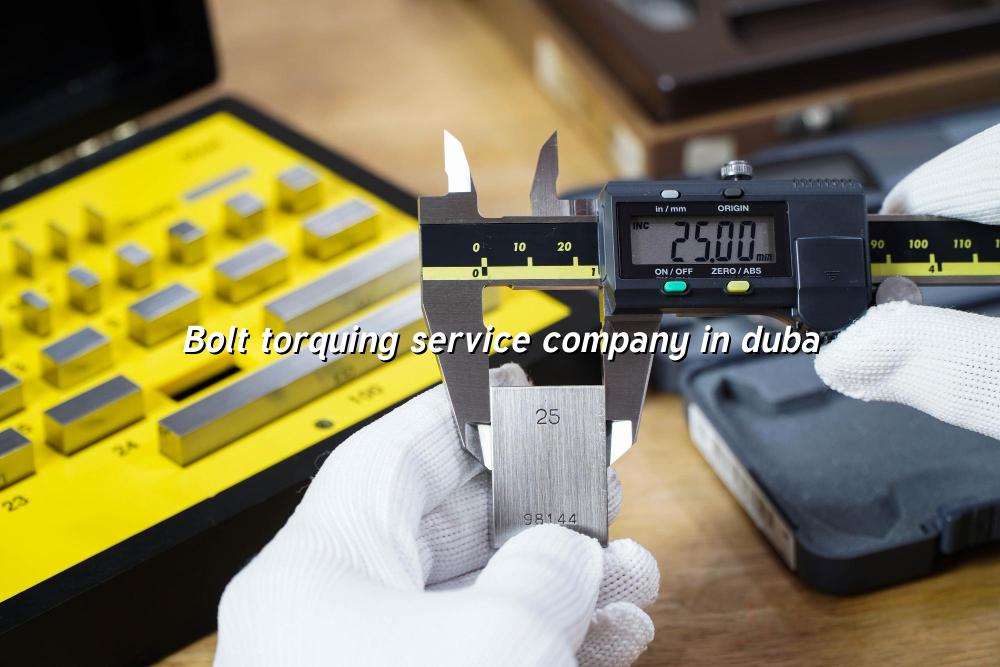
Bolt torquing service company in Duba is the kind of search people make when a flange has to hold pressure, a skid has to go back online, or a shutdown crew needs the bolts tightened the right way first time. We help you control clamp load, protect gasket integrity and avoid the kind of leak that turns a short job into a long one.
Our team works on industrial assemblies across oil and gas, petrochemical, power and manufacturing jobs in Saudi Arabia, India and the wider Middle East. In practice that means site crews, calibrated tools, clear records and a method that fits the joint, not guesswork.
Bolt Torquing Service Company in Duba for Plant and Shutdown Work
When clients ask for bolt torquing, they usually need more than a wrench on a flange. They need a disciplined tightening sequence, the right torque range for the joint, clean bolt threads, correct lubrication where specified and a record that the maintenance team can stand behind during inspection. That matters on cooling water lines, process skids, pump packages, compressors, heat exchangers and pipeline interfaces where uneven load can distort the flange face.
What we do on site
We support controlled bolt tightening, bolt tensioning, flange alignment checks and related mechanical work during shutdowns, erection and commissioning. For many plants, the real problem is not the final torque number; it is the consistency across every nut in the pattern. Our crews work in a way that reduces that spread, especially on large flanges and on joints that have been opened more than once.
Why engineers keep asking for traceability
In our experience, maintenance managers care about what happens after the job is signed off. A bolted joint may hold today and still creep later if the tightening pattern was rushed or the surfaces were not prepared properly. We keep the work aligned with documented quality practice, and where the job links to calibration or testing, we can back it up through ISO/IEC 17025:2017 competence in the wider service chain.
- Inspect the joint first — we check the flange faces, stud condition, gasket seating area and access before any tightening starts.
- Select the right method — torque tightening, tensioning or a mixed approach is chosen based on the flange size, service duty and site constraints.
- Prepare the fasteners — bolt threads, nut faces and lubrication conditions are set to match the procedure, not left to chance.
- Tighten in sequence — the pattern is applied in stages so load is shared evenly across the joint.
- Verify and record — final checks, mark-up and handover notes help the maintenance team track what was done.
- Suitable for flanges, covers, exchangers, pumps and heavy equipment bases
- Helpful during shutdowns, turnaround work and pre-commissioning checks
- Supports repeatable tightening on joints that need uniform clamp load
- Can be paired with flange facing, hydrotesting and testing & commissioning
How Different Joint Tightening Methods Compare
| Method | Best used for | Why teams choose it |
|---|---|---|
| Manual torque tightening | Smaller flanges and accessible joints | Simple setup, quick deployment and useful for controlled maintenance work |
| Hydraulic tensioning | Critical bolted joints and larger flanges | Helps achieve more uniform load where access and repeatability matter |
| Staged cross-pattern tightening | Flanges that need balanced seating | Reduces uneven gasket compression during the first pull-down |
| Final verification pass | Shutdown handover and inspection points | Gives the crew a documented check before startup or pressure testing |
Why Proper Bolt Torquing Protects Equipment and People
Bad tightening shows up in ugly ways. A gasket can weep, a cover can distort, or a bolt can fail under vibration after startup. That is why bolted joints on process plants, utilities and rotating equipment should be treated as a controlled mechanical task, not a routine handyman job. The cost of doing it badly is often higher than the cost of doing it right.
Where we see the biggest risk
We usually see trouble on flanges that were opened during repairs, on joints exposed to heat cycling, and on equipment assembled during a rushed turnaround. The issue is rarely one single bolt. It is the combination of surface condition, tightening order, tool accuracy and the pressure to finish before the shift ends.
Built for industrial handover
Our work supports maintenance closeout, startup readiness and inspections tied to plant reliability. If the job also needs calibration support, mechanical repairs, or testing and commissioning, we can line those tasks up under one coordinated plan.
What a Good Site Team Checks Before the First Turn
Good bolt torquing starts before the tool touches the nut. The crew should know the joint specification, the gasket type, the bolt material, the tightening pattern and the access restrictions around the line or vessel. On live plants, even small details matter: a seized nut, a damaged thread or a dirty flange face can ruin the result.
We also find that communication on shutdown sites makes a big difference. Operations, maintenance and inspection teams need the same picture of the job. If one team expects a dry joint and another assumes a hydrotest will follow, the work plan gets messy fast. Clear handover avoids that.
How Mayon Industrial Services Can Help
We bring bolt torquing, flange work, hydrotesting support, testing and commissioning, and related mechanical services to plant sites that need careful execution. If your job also needs calibration, inspection, orbital welding or repair work, we can keep the moving parts under one technical team. That saves time in coordination and keeps the work aligned with the same quality mindset.
Call +91 99447 80844 (India) or +966 59 633 8012 (Saudi Arabia), email services@mayonservices.com, or message us on WhatsApp.
Frequently Asked Questions
Teams handling flanges, exchangers, pumps, compressors and pipeline connections usually need it. The main reason is control: you want the joint tightened in a known sequence with records that make sense during inspection and startup. That is especially true on oil, gas and power sites where even a small leak can hold up the whole schedule.
Bolt torquing applies a measured turning force to the fastener. Bolt tensioning stretches the bolt so the clamp load is created more directly. We choose the method based on the flange, access, service duty and the joint condition on site.
Yes. We handle flange-related mechanical work such as bolt tightening, bolt tensioning, flange facing support, hydrotesting preparation and related commissioning tasks. Shutdown work usually needs tight coordination, so we keep the site team, inspection team and maintenance crew aligned on the same workfront.
Yes, we support industrial sites in Saudi Arabia from Dammam Industrial City 2 through our local setup. Our work fits oil and gas, petrochemical, power and other plant environments that need careful mechanical control and practical site coordination.
We start with joint inspection, then we set the tightening method, prepare the fasteners and follow a staged sequence. After that we verify the result and hand over the work in a way your team can review. The point is to keep the load even and the record clean, not just to finish the turn of the wrench.
Absolutely. Many clients combine it with hydrotesting, cold cutting, flange weld testing, testing and commissioning or equipment repair work. That makes site coordination easier and helps one team carry the job from preparation through handover.
Ready to tighten the joint with confidence?
Send us the flange details, site location and job scope, and we’ll help you plan the right mechanical support for the work.
Contact Mayon