
Bolt Torquing Service Company in Khurais
Onsite bolt torquing support for flanges, equipment skids and critical joints in Khurais.
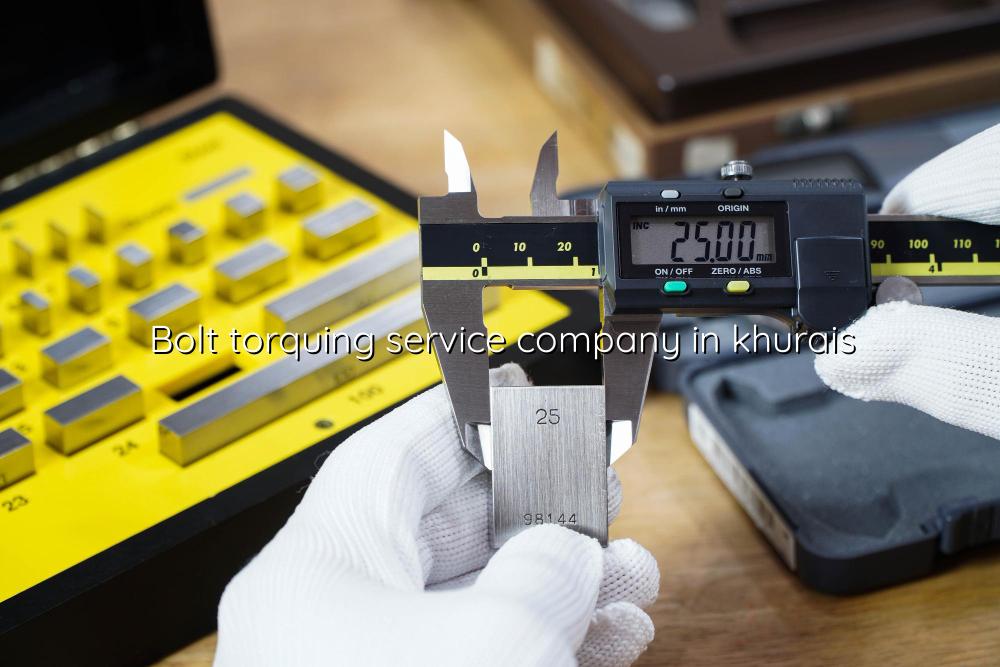
Bolt torquing service company in Khurais support starts with one simple goal: keep flanged joints tight, aligned, and ready for service without guesswork. If you're dealing with pump skids, separators, piping spools, or shutdown work, this page shows how we handle torque-controlled fastening the right way.
We work with maintenance teams who need repeatable tightening on real industrial assets, not a lab-only theory. In Khurais and nearby Saudi oilfield operations, that usually means disciplined bolt tensioning, clean records, and onsite coordination that fits plant safety rules and turnaround windows.
Bolt Torquing Service Company in Khurais for Safe Flange Integrity
In our experience, most bolt failures are not dramatic at the start. They begin as uneven loading, dirty threads, a wrong sequence, or a wrench that was never checked before the job. That's why our bolt torquing work is built around preparation, calibrated tools, and a clear tightening pattern that suits the joint design and the job risk.
What we check before any torque work
We start by looking at the joint, the bolt grade, washer condition, gasket type, and access around the flange. A 24-inch line flange does not get treated like a small utility connection. If the job calls for controlled tightening, we plan the sequence so the final load is even and the joint faces are not pulled out of alignment.
Why torque control matters in Khurais service work
Khurais assets often sit in high-duty service, so the joint has to survive vibration, pressure cycles, heat, and repeated maintenance. Proper torque helps reduce leakage risk, but only when the method is matched to the actual joint condition. We also keep the work practical for site teams by using tools and procedures that can be repeated on the next maintenance round.
- Joint review — we inspect the flange type, bolt condition, and access points before any wrench touches the job.
- Tool setup — torque wrenches, tensioning gear, and related equipment are checked and prepared for the required range.
- Cross-pattern tightening — we tighten in a controlled sequence so the load is drawn in evenly across the flange.
- Final verification — the team rechecks the set points, records the job, and confirms the joint is ready for service.
- Use calibrated torque tools, not a shop wrench with no traceable check.
- Clean threads and nut faces before tightening so friction doesn't distort the result.
- Keep the tightening sequence documented for repeat jobs during shutdowns and turnarounds.
- Match the method to the joint: torque, tensioning, or a controlled combination.
Common Bolt Torquing Job Points We Review On Site
| Job point | What we look at | Why it matters |
|---|---|---|
| Flange condition | Face damage, alignment, gasket seating | Helps stop uneven loading and leakage paths |
| Bolt condition | Thread wear, corrosion, correct grade | Bad threads change the actual clamp load |
| Tool control | Calibration status and suitable range | Gives you a traceable tightening result |
| Tightening sequence | Cross pattern, staged passes, final check | Improves load spread across the joint |
How We Keep Torque Work Traceable and Site-Ready
Torque work should never feel casual. On live plant and shutdown projects, the record behind the job matters as much as the physical tightening. We keep the process clear so your QA, maintenance, and inspection teams know what was done, which tools were used, and how the joint was handled.
Where this helps most
This approach is useful on piping systems, rotating equipment bases, pressure-related assemblies, and flange connections tied to process uptime. It also fits Saudi oil and gas sites where work packs, permits, and handover records are part of daily discipline. A job that is neat on paper usually stays neater in service.
Built for shutdowns and planned maintenance
We support maintenance windows where access is tight, the sequence is fixed, and the joint needs to be closed with confidence. That includes bolt torquing, bolt tensioning, flange work, and related mechanical support when the line must go back into service cleanly.
When a Khurais Site Should Call a Bolt Torquing Team
Call in a specialist when the joint is critical, the flange has a history of seepage, or the team wants a repeatable tightening method instead of a rushed field fix. We see this most often during shutdown planning, equipment reinstatement, and after component replacement where the final assembly has to be right the first time.
If the job involves adjacent mechanical work, we can align the torque scope with flange facing, hydrotesting, testing and commissioning, or inspection support. That saves rework. It also keeps the sequence cleaner for whoever signs the handover.
- Shutdown reassembly with controlled bolt loading
- Leak-prone flanges that need careful retightening checks
- Skid, vessel, and pump package bolt work
- Jobs that need a documented tightening sequence
How Mayon Industrial Services Can Help
Mayon Industrial Services supports bolt torquing with the same field discipline we use across mechanical services, inspection, and calibration. If your work in Khurais needs controlled tightening, flange support, torque tool verification, or linked mechanical tasks, our team can plan the job around your site procedure and handover needs. We also work across Saudi Arabia from Dammam Industrial City 2, so coordination stays practical for oilfield projects and maintenance stops.
Call +91 99447 80844 (India) or +966 59 633 8012 (Saudi Arabia), email services@mayonservices.com, or message us on WhatsApp.
Frequently Asked Questions
Mayon Industrial Services supports bolt torquing for industrial joints in Khurais and across Saudi Arabia. We handle onsite work for maintenance, shutdown, and reinstatement jobs where controlled tightening and proper records matter. The same team can also coordinate with flange work and inspection support.
Usually it includes joint review, tool setup, tightening in the correct pattern, and final verification. On a shutdown, the big difference is control: the job has to fit the permit, the access window, and the handover sequence. We keep the work practical for field teams, not just technically correct on paper.
Yes, onsite work is part of how we operate. That matters on oilfield and plant assets because moving the joint is rarely practical. We come prepared for the site conditions, and we coordinate with your maintenance team so the tightening work fits the actual job scope.
We do. Those are common jobs in oil and gas, petrochemical, and heavy industrial sites. Each one needs a slightly different approach because access, joint size, and service conditions change the way the tightening sequence should be managed.
The tool range has to suit the required torque level, and the tool should be in proper condition before the job starts. If the range is wrong or the tool is tired, the result can be misleading even when the wrench clicks. We check that early so the field team isn't guessing later.
Yes, and that often makes the job easier. We can align torquing with flange work, hydrotesting, testing and commissioning, or inspection tasks, depending on what your shutdown plan needs. That keeps the workflow tighter and helps avoid repeated opening and closing of the same joint.
Ready to get the joint closed the right way?
If you need a bolt torquing team that understands field pressure, site paperwork, and real industrial hardware, talk to Mayon Industrial Services.
Contact MayonA good torque job doesn't shout. It just holds. That's the standard we work to at Mayon Industrial Services, and it's why maintenance teams in Saudi Arabia keep coming back when the flange has to be right.