
Bolt Torquing Service Company in Red Sea
Controlled torque, correct sequence and traceable records for offshore and plant maintenance work.
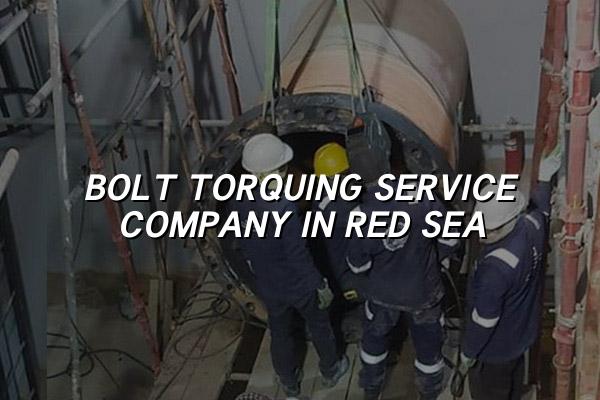
Bolt torquing service company in Red Sea support matters when a flange has to hold pressure, vibration and heat without excuses. We help you tighten the joint the right way, with the right sequence, and with records that your maintenance team can stand behind.
In our work across Saudi Arabia and the wider Middle East, the jobs are rarely simple. You may be dealing with pumps, compressors, pipe spools, skid packages or shutdown work where access is tight and the margin for error is small. That is where controlled bolt torquing, bolt tensioning and proper bolt handling make a real difference.
Bolt Torquing Service Company in Red Sea for Critical Flanges
When a flange leaks, the issue is not always the gasket. Many times the real problem starts with uneven loading, poor lubrication, the wrong tightening pattern or a wrench that was never checked against a traceable standard. That is why buyers in oil & gas, petrochemical, power and marine support work ask for a bolt torquing service company in Red Sea that understands the joint, not just the tool.
What proper torque work should look like
Good bolt torquing starts before the first turn. The crew should confirm bolt size, grade, lubrication condition, flange face condition and the tightening method to be used. On a crowded site, especially around offshore utilities or Red Sea industrial assets, the practical issues matter just as much as the numbers on the procedure sheet.
Where bolt tensioning fits in
Some joints respond better to bolt tensioning than to plain torque alone. That comes up on larger flanges, heavily loaded piping and jobs where even load distribution is the priority. We see this often during commissioning, shutdown maintenance and equipment reassembly, where repeatability is more important than speed.
- Review the joint — confirm the flange rating, bolt condition, gasket type and access before any tightening begins.
- Prepare the fasteners — clean threads, check lubrication and replace damaged nuts or studs if the condition is not acceptable.
- Apply the sequence — tighten in the correct cross pattern so the load builds evenly across the flange.
- Verify and record — recheck the final torque or tension value and log the result for maintenance and QA files.
- Use calibrated torque tools with traceable status before mobilizing to site.
- Match the method to the joint, not the other way around.
- Watch for galling, damaged threads and distorted flange faces.
- Keep tightening records ready for shutdown packs and handover files.
Torque, tensioning and field checks in one view
| Method | Best Use | Field Consideration |
|---|---|---|
| Manual torque wrench | Smaller flanges and routine maintenance joints | Needs correct sequence, clean threads and sound calibration status |
| Hydraulic torque wrench | Larger bolts, tighter access and heavier service joints | Useful where higher and more consistent loading is needed |
| Bolt tensioning | Critical flanges and joints needing more even load distribution | Often preferred where uniform clamping is the main concern |
| Visual verification | Final check before restart or handover | Confirms alignment, nut engagement and absence of obvious defects |
Why Red Sea sites need tighter control
Red Sea and offshore environments are hard on mechanical joints. Heat, vibration, salt exposure and repeated maintenance cycles all push the fastening system harder than a normal workshop job. If the crew rushes the work, the flange may pass first start-up and still fail later under service load.
Records matter after the crew leaves
Procurement teams, maintenance leads and QA managers usually need proof that the job followed a defined method. That means tool status, tightening pattern, work location, date, operator name and any special notes should be captured cleanly. For shutdown work, that paperwork can be just as useful as the physical repair itself.
Built for plant and offshore maintenance
Our team gets called when the job is awkward: confined space access, high-value equipment, pipework that must go back in service with confidence, or a joint that has already failed once. The fix is rarely only about torque. It is about method, fit-up, verification and discipline.
What clients usually ask before they book
Is the tool status current?
That is usually the first question, and it should be. A torque tool without a clear status or a missed check can ruin an otherwise careful job. We treat tool condition as part of the job, not as paperwork after the fact.
Can the job be done onsite?
Most of the time, yes. Offshore support, plant shutdowns and remote industrial sites often need field work, and that is where mobile capability matters. If a joint or related instrument needs special handling, pickup and delivery can be arranged through our normal service flow.
Do we need torque or tensioning?
That depends on the flange, the application and the joint history. Some connections are fine with controlled torque. Others do better with tensioning because the load needs to be distributed more evenly across the bolt set.
How Mayon Industrial Services Can Help
Mayon Industrial Services supports bolt torquing with the kind of field discipline industrial teams expect from an ISO/IEC 17025:2017 compliant company. If your job also needs calibration, mechanical work, inspection, testing and commissioning, or flange-related support, we can coordinate the right crew and tools for the site.
We work with clients across Saudi Arabia, India and the Middle East, including offshore and Red Sea-related industrial projects. If you need a team that can turn up prepared and handle the fastening work with proper records, talk to us.
Call +91 99447 80844 (India) or +966 59 633 8012 (Saudi Arabia), email services@mayonservices.com, or message us on WhatsApp.
Frequently Asked Questions
We handle this kind of work for industrial and marine-related sites in Saudi Arabia and the wider region. The right provider should bring the torque method, the tools and the records together, not just a wrench. That matters a lot on joints that have to go back into service without rework.
Yes. Some flanges are better served by tensioning, especially where even load distribution matters more than simple tightening force. We review the joint conditions and the site need before choosing the method.
Yes, onsite work is a normal part of this service. Many jobs happen during shutdowns, commissioning or emergency maintenance, so field readiness matters. We plan around access, equipment condition and the site's work permit requirements.
Ask for the tightening method used, the final values, tool status and the work location details. For maintenance teams, that record helps when the joint is inspected later or when the same equipment comes back for service. Clean documentation saves time.
Send us the job details, site location, flange type and timing needs through the contact page or request quote form. If the work is part of a wider mechanical or commissioning scope, we can group it with related services so the site team is not juggling too many vendors.
Need torque work you can sign off with confidence?
Tell us what joint you’re dealing with, and we’ll help you plan the right method, the right tools and the right crew for the site.
Contact Mayon