
Calibration Training in Spark
Practical training for engineers and technicians who need confident, traceable calibration work in real plant and lab settings.
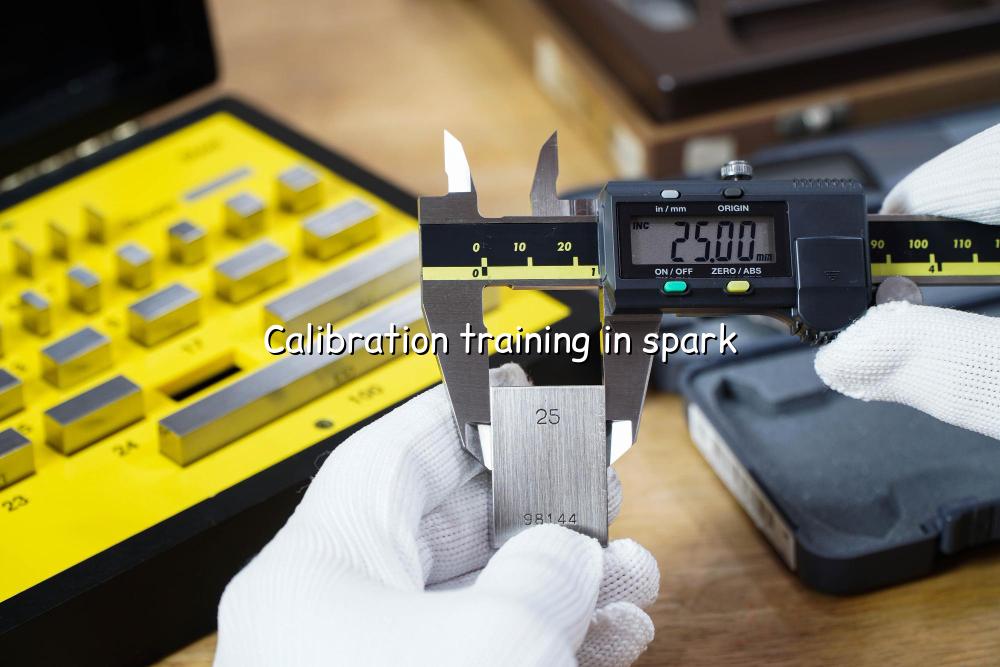
Calibration training in Spark is for teams that want people who can handle instruments with confidence, not just read a manual. We teach the habits that keep results traceable, records clean, and day-to-day work consistent from one shift to the next.
Our sessions are shaped by the work we see every week in Chennai, Dammam Industrial City 2, and across India and the Middle East. That means the training speaks to lab benches, mobile calibration jobs, and plant-floor checks for oil & gas, power, manufacturing, healthcare, cold chain, and construction teams.
Calibration Training in Spark for Day-to-Day Lab and Field Work
If you're searching for calibration training in Spark, you're probably trying to close a very real gap: people know how to use an instrument, but they need to understand checks, traceability, uncertainty, repeatability, and how to write it down properly. That is the gap this program is built to close. We keep the focus on practical use, especially for teams working toward ISO/IEC 17025:2017 discipline in a lab or onsite environment.
Why Spark teams ask for hands-on training
In our experience, the first issues are rarely complicated. A technician forgets a warm-up time, a record is incomplete, or a customer instrument is accepted without checking the range properly. Small misses like these cause bigger headaches later, especially when audits or client reviews ask for proof. Our training works through those common mistakes using real calibration examples from pressure, temperature, mass, torque, dimensional, electrical, and mechanical jobs.
What people usually want to be able to do after the session
Most trainees want three things. First, they want to understand the flow from receiving an instrument to returning it with the right paperwork. Second, they want confidence using test equipment without damaging the unit or compromising results. Third, they want better judgement when readings drift, pass/fail decisions look borderline, or a customer asks for an explanation that needs to be clear and technical.
- Check the instrument and its condition — confirm ID, range, physical condition, seals, accessories, and any special handling needs before anything is powered on or connected.
- Set up the reference and environment — match the standard, stabilize the area, and make sure the reference equipment is suitable for the job and within traceable control.
- Take readings in a controlled way — use the right sequence, allow settling time, and avoid casual habits that hide drift or create false confidence.
- Record results and decide correctly — compare data, note observations, apply the correct pass/fail logic, and keep the report readable for QA and customer review.
- Built around practical lab habits, not theory alone
- Useful for new technicians and experienced staff who need a refresh
- Covers ISO/IEC 17025:2017 thinking, traceability, and good records
- Can be aligned to your own instruments, procedures, and work orders
Topics That Matter in a Working Calibration Environment
| Topic | What the trainee learns | Typical use case |
|---|---|---|
| Traceability | How reference standards connect back to known standards and why that chain matters in audits | Lab work under ISO/IEC 17025:2017 |
| Reading stability | How to wait, observe, and repeat so the result is trustworthy instead of rushed | Temperature, pressure, and electrical checks |
| Record keeping | What must be written down, how to note observations, and how to avoid gaps in the report | Customer returns, internal verification, QA files |
| Pass/fail judgement | How tolerance and observation affect the final decision on the instrument | PAT testing, dimensional checks, workshop instruments |
How the Training Helps Your Team Work Cleaner
This kind of training helps when your people are moving between an in-house lab, a mobile calibration job, and a plant shutdown schedule. The same habits apply in all three places. Good preparation, correct reference equipment, clean observations, and clear documentation make the work easier to defend and easier to repeat.
Where teams see the difference fastest
We usually see the biggest improvement in first-pass accuracy and reporting discipline. Teams start checking condition before calibration, asking better questions about uncertainty, and noticing when an instrument is outside its useful range. That matters in Indian industrial hubs as much as it does in Saudi and GCC projects, where clients often expect traceable records and steady communication.
Training that matches the plant floor
We keep the discussion grounded in real instruments, real paperwork, and real timing pressures. That makes it easier for technicians to remember the process once they are back at work, especially when the next calibration job is waiting and the line supervisor wants an answer quickly.
Typical Training Flow for Technicians and Engineers
1. Review the job
We start with the instrument type, range, and the reason it needs calibration or verification. That sets the right level for the session.
2. Explain the method
The trainer walks through the steps, reference setup, environmental checks, and the points where errors usually creep in.
3. Practice the work
Trainees handle readings, note observations, and work through sample records so the process feels familiar.
4. Review outcomes
We discuss what was done well, where risk sits, and how to tighten the next job without overcomplicating the workflow.
Why Training Content Needs to Match Actual Calibration Work
Training only helps if it looks like the work your team actually does. A technician who calibrates a pressure gauge, a temperature probe, or a torque wrench needs different checks, but the same disciplined thinking. That is why we use examples drawn from our own calibration services, condition monitoring work, inspection tasks, and lab setups.
Simple habits that make a serious difference
We always push for clear labeling, correct warm-up, proper handling, and records that another engineer can read without guessing. Those habits are basic, but they are the ones that stop repeated rework. They also make audits less stressful because the file tells the story without extra chasing.
Built around ISO/IEC 17025 thinking
We keep the focus on competence, traceability, and controlled measurement practice. That suits lab teams, mobile calibration crews, and maintenance departments that want a cleaner internal system before they scale up their work.
How Mayon Industrial Services Can Help
We deliver calibration training, lab setup support, and practical technical guidance for teams that want better measurement discipline. If you also need instrument calibration, inspection, condition monitoring, or mechanical support, we can link the training back to the same real-world work your team handles every week. That makes the learning stick. If you'd like to discuss a batch training plan or a focused session for your site, talk to us and we’ll map it to your instruments.
Call +91 99447 80844 (India) or +966 59 633 8012 (Saudi Arabia), email services@mayonservices.com, or message us on WhatsApp.
Frequently Asked Questions
It usually covers the working steps of calibration, how to use reference equipment properly, what traceability means, and how to write records that QA can actually follow. We also spend time on the mistakes that show up again and again, like poor setup, weak observation notes, and rushed decisions.
Yes. New technicians usually benefit the most because they can build good habits early instead of learning by trial and error on live jobs. We keep the language practical, and we can pace the session so it works for fresh staff as well as experienced people who need a refresh.
Absolutely. That is often the best way to do it. If your site works with pressure gauges, thermometers, torque tools, electrical meters, or dimensional instruments, we can shape the examples around the equipment your team sees every day.
Yes, the training is designed to support the way an ISO/IEC 17025:2017-minded team thinks about competence, traceability, and documentation. We don't turn it into a lecture. We show how those ideas show up in normal lab and field work.
We can support teams in India, Saudi Arabia, and the wider Middle East. Our work already spans those markets, so the discussions are grounded in the way industrial plants, maintenance teams, and calibration users operate there.
That works well, because the training and the service can reinforce each other. We can calibrate your instruments, explain the workflow to your team, and help you tighten the internal process so the next round of work is easier to manage.
Ready to train your team the practical way?
If you want calibration training that fits real instruments, real records, and real industrial work, we're ready to talk.
Contact Mayon