
Inspection Lab Setup Consulting in Mecca
Plan, design and commission an inspection lab that fits ISO/IEC 17025 expectations and real site conditions in Mecca.
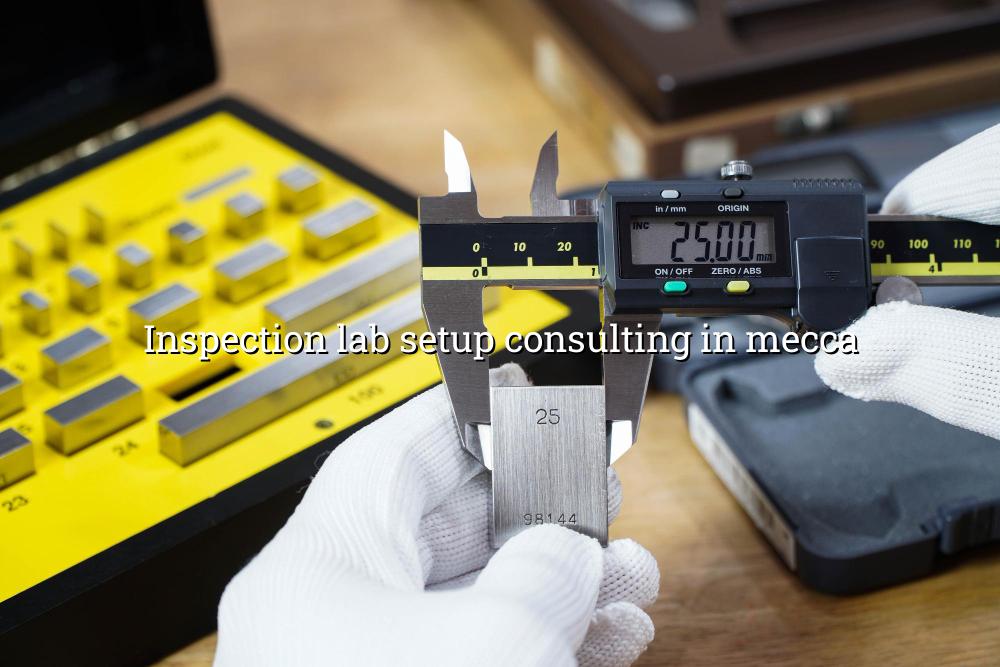
Inspection lab setup consulting in Mecca starts with a simple question: what will your team inspect, document, and defend during audits? We help you shape the lab around that answer, so the space, workflow, tools and records all work together from day one.
For Saudi inspection teams, that usually means a lab that supports lifting-equipment checks, NDT support, PPE inspection, calibration traceability and clean document control. We design with ISO/IEC 17025 expectations in mind, while still keeping the layout practical for real site work in Makkah Al Mukarramah and nearby industrial zones.
Inspection Lab Setup Consulting in Mecca for Working Facilities
Most clients don’t want a fancy lab. They want one that actually passes internal review, supports safe inspection work, and doesn’t become a bottleneck after the first month. That’s where planning matters. We look at sample flow, tool storage, calibration status, test benches, lighting, segregation of clean and dirty work, and the paperwork trail that inspectors and customers will ask for later.
What a good inspection lab needs on the floor
In our experience, the first mistakes happen before a single wall is built. People buy benches before they decide the workflow. They choose instruments before they know the measurement range. We help you avoid that. For a Mecca-based operation serving construction, maintenance, petrochemical, power or heavy equipment clients, the lab must make sense for the work you actually expect to do, not for an ideal drawing on a screen.
Why the Saudi context changes the design brief
Saudi projects can move quickly, and inspection teams often need records that are tidy, traceable and easy to explain. If your lab supports contractor audits, OEM checks, lifting gear inspection or incoming verification, your space should reduce confusion. We also factor in local realities such as controlled storage, easy instrument movement, and the possibility that some items may need pickup, delivery or mobile-lab support from outside the lab room itself.
- Start with the service scope — define exactly which inspection activities, support tests and records the lab must handle.
- Map the room flow — place receiving, quarantine, inspection, storage and dispatch in a sequence that cuts backtracking.
- Select instruments and fixtures — choose only the tools that match your ranges, standards and expected load.
- Set control systems — build document control, status labels, traceability logs and maintenance routines into the setup.
- Commission and verify — check the layout, equipment condition, environmental stability and staff readiness before live use.
- Plan around inspection categories you actually serve, not a generic lab list.
- Keep calibration status visible so tools don’t get mixed up.
- Design storage for gauges, PPE, lifting gear and consumables separately.
- Leave space for document review, digital records and sign-off.
- Prepare for onsite or mobile-lab support when special handling is needed.
Typical Elements in an Inspection Laboratory Setup
| Lab Area | Purpose | Common Example |
|---|---|---|
| Receiving and logging | Record incoming instruments, components or inspection items | Register, tag, and status label |
| Inspection bench | Carry out visual checks and controlled measurements | Stable bench, lighting, magnifier, gauges |
| Controlled storage | Keep calibrated tools and pending items segregated | Locked cabinet, shelf coding, quarantine zone |
| Documentation area | Handle reports, certificates and traceability records | PC workstation, printer, archive files |
How we keep the design audit-friendly
A lab is easier to manage when the controls are built in early. We think about ISO/IEC 17025:2017 traceability, ISO 9001:2015 quality routines, BS EN requirements for lifting and inspection work, and EURAMET CG-15 where electrical calibration support is needed. That keeps the lab from becoming a patchwork of workarounds.
Controls that help during real audits
We usually recommend clear status tags, simple zoning, written acceptance criteria, calibration registers and a practical maintenance schedule. Those details sound small until an auditor asks where an item came from, who handled it, and whether the instrument used to check it was in date. A well-planned room answers those questions without a scramble.
Built for field teams, not just paperwork
Inspection teams in Saudi Arabia often work across plants, workshops and project sites. A good setup should support fast retrieval, easy packing for mobile jobs, and clean separation between tested, pending and rejected items. That’s what keeps daily work moving.
Equipment, layout and documents you should decide first
Before you buy racks or benches, settle the test range and the inspection workload. A lifting-equipment inspector needs different storage and reference tools than a team focused on PPE checks or NDT support. We see many projects waste space because those decisions were made backwards.
The document set matters just as much. You’ll need job cards, incoming logs, rejection records, calibration status tracking, and a clean way to store reports. If staff can’t find the last record in under a minute, the system is too loose.
Power points, bench heights, lighting and access routes should be fixed around the real tools in use. If the lab will support field mobilization, leave room for cases, seals and dispatch handling. Small detail, big difference.
How Mayon Industrial Services Can Help
We support inspection lab projects with the same practical approach we use in calibration, mechanical services and lab setup work. If you need a room planned for inspection records, traceability, equipment control and field use, we can help shape the scope and the layout before you spend on the wrong items. We also work with teams that need onsite support, mobile-lab capability and a setup that fits Saudi operating conditions.
Call +91 99447 80844 (India) or +966 59 633 8012 (Saudi Arabia), email services@mayonservices.com, or message us on WhatsApp.
Frequently Asked Questions
It usually covers scope definition, room planning, workflow, equipment selection, document control and commissioning support. We also look at how the lab will handle traceability, storage and any mobile work linked to field inspections.
Start with the services you will offer, then choose the instruments, layout and records that support them. ISO/IEC 17025 expectations are easier to meet when calibration status, traceability and document control are part of the design, not added later.
Yes. Those labs need clear zoning, safe storage, dedicated inspection benches and a proper way to record pass and fail results. BS EN requirements can also matter for the lifting and inspection side, so the setup should reflect that from the beginning.
Not always, but a mobile lab can make sense when your customers need onsite checks or when some instruments need controlled handling. In Saudi projects, that flexibility often helps with field turnaround and with items that can’t travel well.
That depends on the size of the room, the equipment list and how much documentation is already ready. A clean brief speeds things up a lot; a changing scope slows everything down. We always recommend locking the service scope early.
Yes, we work across Saudi Arabia and the wider Middle East, as well as India. Our support model covers lab design, calibration, mechanical services, inspection and related engineering work, depending on the project need.
Ready to plan the right inspection lab?
If you're setting up a new inspection facility in Mecca, the best time to fix the layout is before the purchases start. Share your scope with us and we’ll help you build a lab that works in the field and stands up to review.
Contact MayonA lab that fits Mecca and the work around it
Inspection teams in Mecca often support projects that connect to construction, maintenance, logistics and industrial services. A lab built for that mix needs clean movement, simple recordkeeping and enough flexibility to handle both planned work and sudden requests from site. That practical fit is what keeps the setup useful after the opening day.
One last detail that saves trouble later
Keep an eye on how items enter and leave the lab. If the path is messy, you’ll lose time, and people will start leaving things on any empty bench they can find. A good setup makes the right path obvious.
Built for traceability
From first sketch to commissioning, we focus on measurable control points: storage, status, access, records and tool readiness. That’s what inspection customers notice, and auditors do too.