
Mass Instruments Calibration Company in Dammam Industrial City 2
Traceable mass and weighing calibration for plants, labs and maintenance teams working in Saudi Arabia.
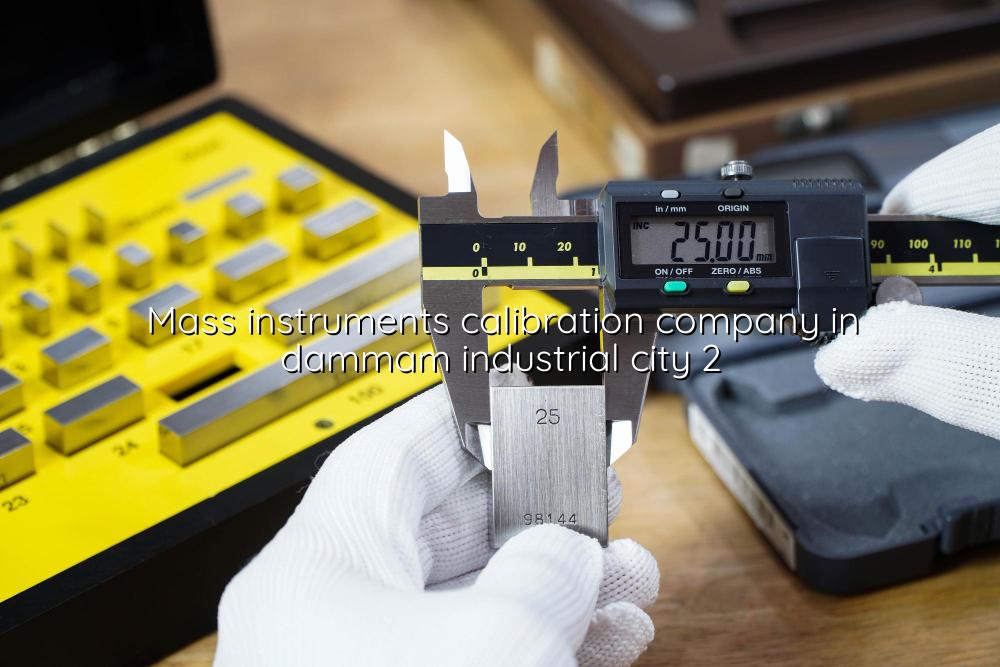
Mass instruments calibration company in Dammam Industrial City 2 is exactly what many maintenance and QA teams search for when a scale, balance, or set of weights starts drifting outside tolerance. You want numbers you can trust, certificates that stand up in audits, and a team that can work onsite without slowing the shift.
We support manufacturers, warehouses, food lines, chemical plants, and service shops around Dammam Industrial City 2 with ISO/IEC 17025:2017 traceability, a temperature-controlled in-house laboratory, and a mobile calibration lab for field work. For instruments that need special handling, we can arrange pick-up and delivery too.
What a mass instruments calibration company in Dammam Industrial City 2 should cover
A proper mass calibration job is more than placing a load on a scale and printing a number. We look at the instrument type, the verification points, the environment, the load cell behavior, and the way your team actually uses the equipment on the floor. That matters in Dammam Industrial City 2, where many sites run hot, busy, and around the clock.
Which instruments usually need mass calibration?
In our work, the common items are platform scales, bench scales, precision balances, floor scales, hanging scales, checkweighers, and reference weights used for internal verification. We also see requests from laboratories and production teams who need confirmation before stock audits, batch release, or maintenance shutdowns. If the instrument is part of a process line, the calibration plan should match that process, not just a generic checklist.
Why traceability matters in Saudi industrial sites
Clients in Saudi Arabia often ask for a clear link between the reading on the instrument and the reference standard used for the check. That is where ISO/IEC 17025:2017 work helps. It gives your team a cleaner audit trail, and it helps when you need to explain a result to quality, procurement, or an external inspector. For mass instruments, a tidy record is just as useful as the adjustment itself.
- Identify the instrument and its use — confirm whether it is for incoming goods, batching, packaging, or laboratory work.
- Check the condition first — inspect the pan, load cell area, display, leveling feet, cables, and obvious contamination before any reading is taken.
- Apply reference loads — use suitable standards across the operating range so the result reflects how the instrument behaves at low, mid, and high points.
- Record the performance clearly — note errors, repeatability, and any adjustment made, then issue the certificate or report for your files.
- Use calibration points that match your real production loads, not just a single check at the middle of the range.
- Keep the weighing area stable and free from vibration, especially near forklifts, presses, or heavy rotating equipment.
- Ask for onsite work when the instrument is fixed in place or too sensitive to move safely.
- Keep reference weights and master standards controlled and checked at sensible intervals.
- Separate routine verification from full calibration so your team knows what was actually done.
Common mass instruments and how they are typically handled
| Instrument | Typical use | Calibration focus |
|---|---|---|
| Precision balance | Laboratory sampling, formulation, QC checks | Repeatability, readability, corner error, traceable reference loads |
| Bench scale | Small parts, packing, receiving inspection | Linearity, zero behavior, mid-range accuracy, display stability |
| Floor scale | Drums, pallets, dispatch, warehouse control | Load response, platform condition, leveling, load distribution |
| Checkweigher | Production line control and reject checks | Speed, decision limits, repeatability under process conditions |
How we handle mass calibration around Dammam Industrial City 2
Some instruments are easy to move. Others are bolted into a line, sensitive to shock, or too awkward to disconnect during normal production. That is where our mobile calibration lab helps. We can come to site for field work, or take special cases back to our controlled lab when temperature, cleanliness, or handling needs are tighter.
What the field team checks before calibration starts
We usually look at the installation, the leveling, the zero condition, and anything around the weighing point that could bias the reading. A loose support frame, floor vibration, or a dirty pan can change the result fast. In industrial sites, those small issues are often the real reason for repeated complaints, not the instrument itself.
Why plants keep asking for a field visit
Teams in oil and gas, petrochemical, food, and manufacturing facilities usually want the least disruption possible. Onsite calibration lets them verify the instrument where it is used, while our reports and certificates keep the quality team covered for internal reviews and customer audits.
What good mass calibration looks like on a working site
A useful calibration report should let your team answer a simple question: does this instrument still support the process it was bought for? That means the report should show the instrument ID, the point checks used, the condition found, and any adjustment or recommendation. If the scale is serving a batch process, the readings need to be meaningful at the loads you really run every day.
We see this often in warehouses and cold-chain operations. A scale may pass a casual check with an empty platform, then drift once a pallet or container is added. The real test is how it behaves at working load, under the same site conditions your operators face. That is the kind of detail your QA file should keep.
For Saudi clients, traceability is usually linked to supplier control, customer requirements, or internal quality systems built around ISO 9001:2015. That does not mean every instrument needs the same treatment. A laboratory balance, a truck scale, and a production checkweigher each need a different plan. We size the job to the instrument and the risk it carries for your operation.
If you have a fleet of instruments spread across a plant, the smart approach is to group them by type and use. That keeps maintenance records cleaner and makes annual planning easier for your team.
How Mayon Industrial Services Can Help
We calibrate mass instruments for industrial teams that need clean records and practical site support, not just paperwork. If your scales, balances, or reference weights need verification, our calibration service can be paired with inspection, repair and maintenance, or even lab setup advice when you’re building a new QC room. For plants in Dammam Industrial City 2 and across Saudi Arabia, we keep the process straightforward and traceable.
Call +91 99447 80844 (India) or +966 59 633 8012 (Saudi Arabia), email services@mayonservices.com, or message us on WhatsApp.
Frequently Asked Questions
We usually calibrate balances, bench scales, floor scales, platform scales, checkweighers, and reference weights. In some plants, the job also includes verification checks for internal QA records. The exact method depends on the load range and how the instrument is used on site.
Yes, we can. Our mobile calibration lab is set up for field work, so a lot of instruments can be checked without moving them off site. That helps when the scale is built into a process line or when shutdown time is tight.
Because it gives them a traceable process and a clearer audit trail. In practice, that helps quality teams, procurement, and internal auditors see what standard was used and how the result was recorded. It’s especially useful when the instrument affects product release or billing.
If the instrument is part of a quality-critical process, has been moved, had repairs, or shows drift at working load, a full calibration is the safer choice. A routine check is lighter and can help between scheduled calibrations, but it won’t replace a proper traceable job when the risk is higher.
We support clients in Saudi Arabia, India, and the wider Middle East. Dammam Industrial City 2 is a major area for us, but we also work with industrial teams in other locations across the region where onsite or in-lab support makes sense.
Need mass calibration you can stand behind?
Send us the instrument list, location, and the kind of use it sees on site, and we’ll help you plan the next step.
Contact Mayon