
Onsite Pipeline Hydrotesting Service Company in Dawadmi
Onsite hydrotesting support for pipeline systems, pressure integrity checks and industrial shutdown work in Dawadmi and nearby Saudi sites.
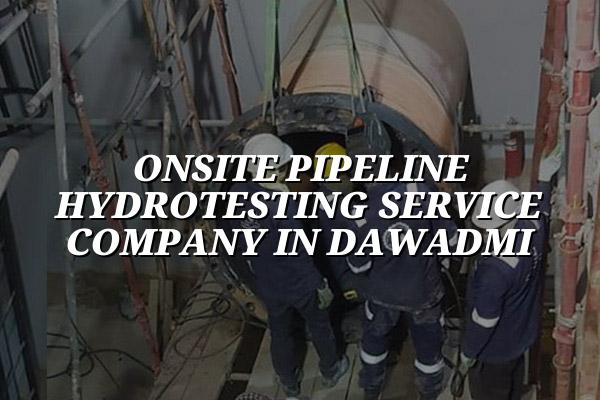
Onsite pipeline hydrotesting service company in Dawadmi is the kind of search most project teams make when they need a pressure test done without losing days to transport, reassembly, or guesswork. If you're checking new pipework, a repair spool, or a section before commissioning, we help you prove integrity with controlled onsite hydrotesting and clear test records.
We work the way Saudi industrial sites expect: methodical setup, traceable instruments, careful isolation, and practical communication with site engineers. From Dawadmi and nearby western Riyadh region jobs to wider Saudi Arabia and the Middle East, our team supports pipeline, mechanical and commissioning work where downtime costs money and pressure integrity really matters.
What an onsite pipeline hydrotesting service company in Dawadmi should handle
Hydrotesting is simple in concept and unforgiving in practice. You fill the line, remove trapped air, raise pressure in a controlled way, hold it for observation, and document the result against the project method statement. The job only works well when the crew understands the line size, the medium, the isolation points, the relief path, and the condition of the gauges being used on site.
Why on-site work matters for Saudi projects
In Dawadmi, crews often work around plant maintenance windows, new construction packages, or tie-ins that sit between fabrication yards and operating assets. Bringing the test to site saves handling, avoids unnecessary dismantling, and keeps the test focused on the actual installed line. That matters for oil and gas, utilities, fabrication shops, and process plants where the client wants a pressure test tied to the real installation, not a workshop substitute.
What we check before pressurizing the line
Our team looks at the basics first: line identification, end caps, blanking arrangements, vent points, drains, visible supports and the test medium plan. We also confirm the gauges and accessories are fit for use, because a hydrotest is only as credible as the instruments on the skid. When the line includes special components such as valves, manifolds, flexible sections or repaired spool pieces, we plan the sequence so the test reflects the system safely and cleanly.
- Review the scope — confirm the line route, test boundaries, drawings and the pressure requirement before any equipment arrives.
- Prepare the system — isolate live equipment, install test blanks, open vents and make sure drains and supports are ready.
- Fill and vent — introduce water gradually, purge trapped air and watch for leaks at joints, valves and temporary fittings.
- Raise and hold pressure — increase pressure in stages, monitor the gauges and keep the hold period under close observation.
- Record and close out — note the readings, any adjustments and the final outcome so the handover pack is usable for QA and commissioning.
- Use calibrated pressure gauges and traceable instruments for every test setup.
- Plan venting properly so trapped air does not distort the result.
- Keep temporary hoses, fittings and manifolds rated for the test pressure.
- Protect nearby equipment, cable trays and finishes from uncontrolled water release.
- Keep the test pack organized for client sign-off and handover.
Common onsite hydrotesting checkpoints for pipeline work
| Checkpoint | What the team verifies | Why it matters |
|---|---|---|
| Boundary isolation | Positive isolation of the section under test, with live equipment protected | Prevents pressure transfer into systems that should stay online |
| Test instrumentation | Gauge range, condition, readability and calibration traceability | Gives the client a test result they can trust |
| Air removal | Vent points at high locations and careful filling sequence | Reduces false readings and unstable pressure behavior |
| Hold observation | Joints, valves, temporary fittings and visible sections during the pressure hold | Helps the crew spot leaks early and document the outcome properly |
How onsite pipeline hydrotesting supports safe commissioning
Pressure testing is more than a formality. It helps the owner and contractor catch poor joints, incomplete installation, damaged spools and assembly mistakes before the line is handed over. In a region like Dawadmi, where project teams may be balancing civil work, mechanical completion and utility tie-ins, that early check can save a lot of rework.
Where this fits into the project sequence
We usually see hydrotesting sit near the end of mechanical completion, after fabrication, installation and pre-checks are done but before final commissioning closes out the package. The best test packs are the ones built with the handover in mind: clean boundary definitions, clear witness points and enough detail that the QA file reads sensibly months later if someone needs it.
Built for field reality
Some lines are easy. Others sit in tight access areas, around live plant, or on skids that cannot be moved. We plan for those conditions, bring the right equipment, and work with the site team so the test is controlled instead of improvised. That's how the job stays clean when the schedule gets tight.
What clients usually need from a hydrotest contractor in Saudi Arabia
Most clients don't just want pressure applied. They want a contractor who can coordinate with the QA team, speak the same language as the maintenance crew, and leave behind records that are easy to file. For pipeline packages in Saudi Arabia, that often means the ability to mobilize onsite, communicate clearly during the test window, and work around the realities of hot weather, plant access and shared work fronts.
We also see value in keeping the test support broad. If the same project needs calibration, mechanical work, electrical checks or inspection, it helps to have one team that can coordinate more than one package. That reduces handover friction and keeps the schedule from fragmenting into small, disconnected tasks.
- Clear line boundaries and witness points for the client's QA team.
- Reliable temporary equipment suited to pressure testing on site.
- Practical coordination with mechanical completion and commissioning teams.
- Reports and records that match the job scope, not generic templates.
How Mayon Industrial Services Can Help
We support hydrotesting alongside calibration, mechanical services, inspection, orbital welding, lab setup and repair work, so your project team can deal with one practical industrial partner instead of several disconnected vendors. For Dawadmi and other Saudi sites, that mix is useful when the test package sits next to commissioning, shutdown support or equipment verification.
Our team works with real site constraints, not just ideal drawings. If you need onsite pipeline hydrotesting service company in Dawadmi support for a pipeline package, a repair section or a commissioning hold point, talk to us and we'll help you plan the next step.
Call +91 99447 80844 (India) or +966 59 633 8012 (Saudi Arabia), email services@mayonservices.com, or message us on WhatsApp.
Frequently Asked Questions
Usually it's the contractor, plant owner, or commissioning team that needs proof the line can hold pressure safely before handover. We see this most often on new installations, tie-ins, repaired sections and shutdown work where the line cannot be moved offsite. The point is to test the actual installed system, not a nearby mock-up.
That depends on the line, but the basics are test pumps, pressure gauges, hoses, temporary fittings, vents and drains, plus isolation and safety accessories. We also check that the instrumentation is fit for the pressure range and appropriate for the job. If the system needs special handling, we plan the setup around that instead of forcing a standard layout.
We start by confirming the test boundary, then isolate the section, install blanks or temporary closures, and open the vents and drains. After that, the line is filled slowly and air is removed before pressure is raised in steps. The final result depends on careful preparation more than raw pump capacity.
Yes, but the boundary control has to be tight and the site team needs a clear plan. We isolate the section carefully, coordinate with the client, and work in a way that respects live equipment and nearby work fronts. On mixed sites, that discipline matters more than anything else.
Yes. A lot of our clients ask us to coordinate hydrotesting with mechanical completion, flange work, bolting, repair or commissioning support. That keeps the workflow simpler, especially when the same project needs more than one technical package handled by the same team.
Oil and gas, petrochemical, power, construction and manufacturing are the common ones, and we also see work tied to utilities and process facilities. Any project with new pipework, repaired lines or pressure-containing systems can need a proper hydrotest before handover. The exact package changes, but the expectation for safe proof testing stays the same.
Ready to check your pipeline pressure integrity?
If your Dawadmi project needs a field-ready test team, contact Mayon and we'll help you plan the hydrotest cleanly from first setup to final handover.
Contact Mayon