
Pneumatic Testing Service Company in Khafji
Certified pressure checks for industrial piping, vessels, and equipment serving Khafji and the Saudi Eastern Province.
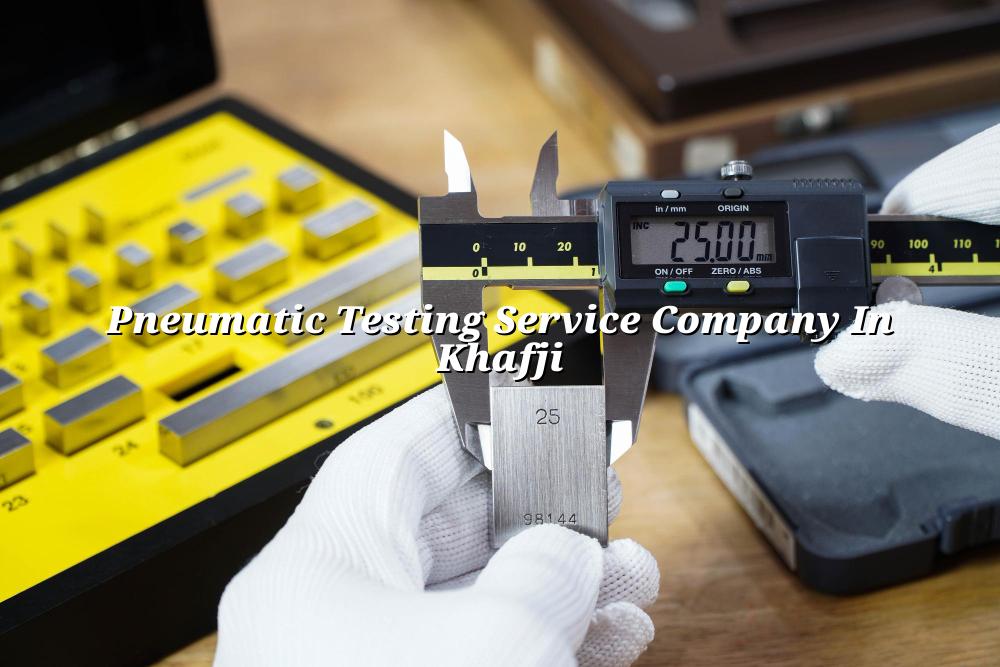
Pneumatic testing service company in Khafji support matters when your line cannot take water, or when you need a controlled pressure test before handover. We help you verify tightness, check joints, and document the result so your team can move with confidence.
In Khafji, that often means oil and gas piping, utility skids, fabricated assemblies, and site packages where dry testing is the safer choice. Our team works to ISO/IEC 17025:2017 discipline, with the kind of traceability Saudi operators and contractors expect on live project sites.
Pneumatic testing service company in Khafji for site-critical checks
When a project team asks for pneumatic testing, they usually want one thing first: proof that the system can hold pressure without leaks. That sounds simple, but the setup needs care. The test medium, the isolation method, the gauge selection, the relief arrangement, and the acceptance criteria all need to match the job, not just a checklist. For Khafji work, that usually means assets tied to oil and gas, fabrication yards, maintenance shutdowns, and pre-commissioning packages where compressed air or nitrogen is used instead of hydrostatic water.
Where pneumatic testing fits best
We see this service used most often on low-volume systems, dry lines, assemblies that must stay moisture-free, and equipment that cannot be flooded before startup. That includes control piping, certain vessel internals, skids, and field-fabricated sections that need a clear leak check before they go to the next phase. If you're working in the Saudi Eastern Province, the practical question is not just “can it hold pressure?” It is “can we test it safely, record it properly, and keep the schedule moving?”
What our team looks at before starting
Before any test, we review the line condition, the pressure rating, the fittings, and the isolation points. We also look at the test area itself. A pneumatic test stores energy, so the surrounding layout matters. Barriers, safe stand-off distance, calibrated instruments, and clear communication are part of the job, not extras. We like to confirm the test media, target pressure, hold period, and reporting format in advance so there are no surprises when the crew is already on site.
- Review the test pack — confirm the drawing, the test limit, the media, and the acceptance criteria before equipment arrives.
- Prepare and isolate the system — blank, cap, or valve-off the section so the test volume is controlled and safe.
- Install calibrated instruments — fit the pressure gauges and support tools needed to monitor the line correctly.
- Pressurize in stages — raise pressure gradually, inspect for leaks, then hold at the agreed test level.
- Record and release — document results, depressurize safely, and hand over the test record to your QA or construction team.
- Suitable for dry systems where water is not acceptable.
- Useful for leak checks before pre-commissioning and startup.
- Backed by calibrated pressure instruments and traceable records.
- Planned for industrial sites in Khafji and nearby project areas.
- Can be coordinated with other mechanical and inspection work.
Common pneumatic testing choices for industrial jobs
| Test situation | Typical reason to use it | Site note |
|---|---|---|
| Dry piping run | Water cannot remain inside the line | Often used for air, gas, and utility systems |
| Skid assembly leak check | Confirm joints before dispatch or installation | Useful for fabricated packages and modular units |
| Pre-commissioning verification | Check integrity before startup work begins | Needs clear test pack and agreed hold period |
| Maintenance shutdown test | Validate repairs after replacement or rework | Best scheduled with the client’s isolation plan |
Why pressure control and documentation matter
Pneumatic testing needs respect. The stored energy is much higher than many teams expect, which is why the exclusion area, pressure ramp-up, and leak-check sequence have to be controlled from the start. We also keep the records clean, because in Khafji projects the test sheet often ends up in a broader QA dossier with fabrication, commissioning, and inspection documents.
Traceable instruments make the difference
For pressure checks, the gauge and support instruments should be fit for the range being used and handled like inspection tools, not spare parts. That's where an organized calibration mindset helps. When a contractor can show a neat instrument trail, field notes, and a clear result, the handover conversation is much easier. That is true on a plant shutdown, and it's just as true on a smaller packaged system.
Built for field conditions
We work with the reality of project sites: hot weather, access limits, tight shutdown windows, and teams that need practical answers. If your line is in an industrial yard, plant area, or fabrication workshop near Khafji, we aim to keep the work clear and controlled.
What to prepare before a pneumatic test
Most clients already know the line needs a test. What they are really asking is what to prepare so the job doesn't stall on site. We recommend having the latest drawing or test pack, clear isolation points, the agreed test medium, and the responsible contact person ready before mobilization. That sounds basic, but it's where many delays start.
We also ask for a short discussion on the project’s risk controls. If a system has sensitive fittings, nearby operations, or limited access, we plan around those constraints. In practice, that makes the work smoother for everyone: your maintenance team, your QA group, and the people who need to sign off the result.
Our usual sequence on site
First, we confirm the package and the work area. Next, we fit the required instruments and check the isolation. Then we pressurize slowly, watch for pressure stability, and inspect for leakage at the joints and accessories. After the hold period, we depressurize in a controlled way and issue the result notes for your file.
- Have the latest test pack and drawing ready.
- Confirm the line medium and pressure limit before mobilization.
- Mark the isolation boundaries so the crew can work safely.
- Keep the client representative available for witness and sign-off.
How Mayon Industrial Services Can Help
We handle pneumatic testing as part of a wider industrial support scope, so you can keep one team in the loop for calibration, mechanical services, inspection, and commissioning support. That helps when your Khafji job needs more than a quick pressure check, such as instrument verification, flange work, or follow-on maintenance. If you want a clean test record and a crew that understands site pressure work, we can help.
Call +91 99447 80844 (India) or +966 59 633 8012 (Saudi Arabia), email services@mayonservices.com, or message us on WhatsApp.
Frequently Asked Questions
We pressure-test a closed system using compressed air or another agreed gas to check for leaks and pressure stability. In Khafji, that usually means piping, skids, utilities, or maintenance packages that can't be filled with water. The result is a practical field check with documented readings.
Honestly, the biggest reason is that some systems must stay dry. That can be because of process sensitivity, moisture concerns, or the way the package is built. We usually discuss the project requirement first, then decide whether pneumatic testing is the better choice for that job.
Yes. Khafji projects often need controlled testing on piping, fabricated assemblies, and support systems tied to oil and gas work. We can coordinate with your site team, follow the test pack, and help keep the record ready for QA review.
We need the test pack, the drawing or P&ID reference, the test limit, the agreed medium, and the isolation plan. If you have a client witness requirement, tell us early. That helps us set up the job without stopping halfway to clarify the basics.
Yes, we work with calibrated instruments and issue records that support your project file. That matters when the job later moves into commissioning or handover, because pressure data without a traceable trail usually causes questions. We keep the paperwork practical and easy to file.
Ready to book pneumatic testing in Khafji?
Send us the test pack and site details, and we’ll help you plan a controlled pressure test that fits your project needs.
Contact Mayon