
Pneumatic Testing Service Company in Uthmaniya
Field-ready pneumatic testing support for industrial assets that need reliable pressure verification in Uthmaniya and nearby projects.
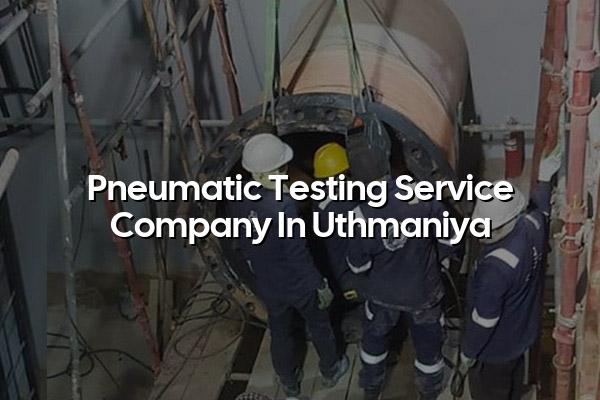
Pneumatic testing service company in Uthmaniya is exactly what you need when a line, vessel, or package has to prove it can hold pressure before it goes live. We help teams check integrity, spot leaks early, and keep the work tied to a clear test record.
In our day-to-day work, that usually means supporting oil and gas, petrochemical, power, and construction jobs where the site wants clean documentation and careful control. From our Chennai head office and our Saudi Arabia base in Dammam Industrial City 2, we support projects across India, Saudi Arabia and the wider Middle East with onsite and mobile-lab capability.
Pneumatic Testing Service Company in Uthmaniya for Industrial Pressure Checks
Pneumatic testing is usually chosen when hydrotesting is not practical, when the item cannot be filled with water, or when the job calls for dry pressure verification. We see this often with process skids, small-bore piping, fabricated assemblies, and equipment that needs careful leak checking before commissioning. The main goal is simple: pressurise safely, inspect methodically, and document the result without guesswork.
Where pneumatic testing fits on a real project
On Saudi and GCC sites, the request often comes from a shutdown team, QA/QC engineer, or commissioning lead who needs proof that a system is tight before handover. The same need shows up on Indian plant expansion work, especially in manufacturing yards and utility systems where delays are expensive and access is tight. For those jobs, we plan the test around the actual system conditions, not around a generic checklist.
What we check before pressurising
Before any test starts, we review the drawing, service duty, test medium, allowable pressure, isolation points, and the risk controls already in place. If the job includes valves, gauges, fittings, or temporary test blanks, we make sure the setup is suited to the pressure range and the site crew understands the sequence. That preparation matters because a rushed setup usually creates the very leaks the test is meant to expose.
- Confirm the scope — we check the line list, boundary, test pressure, and the reason the client wants pneumatic rather than hydrostatic testing.
- Prepare the system — the circuit is isolated, cleaned, blinded where needed, and fitted with calibrated instruments and controlled pressure sources.
- Increase pressure in stages — pressure is raised gradually while the team watches for abnormal behaviour, sound, or movement.
- Hold and inspect — once the target is reached, we inspect joints, flanges, welds, and fittings for leakage and unstable pressure.
- Record and hand over — test readings, observations, and pass/fail results are documented for QA files and commissioning records.
- Use pneumatic testing when the system must stay dry or cannot be water-filled.
- Calibrated gauges and traceable records matter more than a fast setup.
- Leak checks should be done slowly and with clear exclusion control around the test zone.
- Documentation helps QA teams close punch points without repeated site visits.
Common Pneumatic Test Considerations for Site Teams
| Item | Why It Matters | Typical Site Check |
|---|---|---|
| Pressure boundary | Defines what is included in the test and what stays isolated. | Verify valves, blinds, and flanges before pressurising. |
| Test medium | Dry gas is used when water is unsuitable for the equipment. | Confirm the medium matches the system and project procedure. |
| Instrumentation | Readings need to be stable and traceable for QA sign-off. | Check gauge range, calibration status, and readable scale. |
| Leak inspection | Even small leaks can affect commissioning and safety. | Inspect welds, joints, fittings, and instrument taps carefully. |
| Documentation | Test records support handover and future maintenance. | Capture pressure readings, hold time notes, and acceptance status. |
Why the right testing partner changes the result
Pneumatic testing stores energy in compressed gas, so the process has to be handled with a lot of care. That is why many maintenance managers ask for a team that can plan the test, provide calibrated instruments, and keep the paperwork tidy for the client file. We work to ISO/IEC 17025:2017 for calibration competence, and that traceability helps when the pressure reading itself is part of the acceptance decision.
Practical benefits for plant owners
When the job is done properly, you get a clearer picture of leak integrity before startup, fewer rework loops, and less back-and-forth between the contractor and the owner team. In Uthmaniya and nearby industrial zones, that matters because shutdown windows are tight and commissioning crews rarely have time for repeated retesting. A good test team keeps the site moving without cutting corners.
Built for field conditions
We support pressure testing alongside calibration, mechanical services, electrical testing and commissioning, so the client does not need five different vendors for one close-out package. That mix is useful on plant turnarounds, skid builds, and utility packages where the work sequence changes fast.
How we keep pneumatic testing practical on busy sites
Busy industrial sites need a pressure testing crew that can work around permits, access limits, and other trades on the same plot. We plan around those realities. If a line is in a tight rack, if a compressor is already running nearby, or if the test has to be done near live equipment, we adapt the sequence so the site team stays in control.
We also know that the request usually comes with a larger handover package. That may include calibration support for gauges, mechanical isolation work, or even inspection services if lifting equipment and PPE checks are part of the same shutdown. The advantage is fewer handoffs and fewer chances for the scope to drift.
Questions we ask before we mobilise
We normally ask about the medium, the system volume, the required boundary, the pressure rating of the assembly, and whether the client wants onsite support or a pickup-and-return arrangement for any related instruments. If the job also needs temperature mapping, orbital welding, or repair work, we can line that up too. That keeps the project moving with one accountable team.
- Keep the test boundary clearly marked so the whole crew knows what is included.
- Use gauges with a sensible range for the pressure being applied.
- Separate the test area from other work to reduce site risk.
- File the record with QA and commissioning notes as soon as the test ends.
How Mayon Industrial Services Can Help
If you need a pneumatic testing service company in Uthmaniya, we can support the work from planning through final handover. Our team handles calibration, mechanical services, inspection, orbital welding and lab setup, so we can fit into shutdowns, commissioning jobs, and vendor close-out packages without creating extra churn. We serve industrial clients across India, Saudi Arabia and the Middle East, and we keep the approach practical, careful, and traceable.
Call +91 99447 80844 (India) or +966 59 633 8012 (Saudi Arabia), email services@mayonservices.com, or message us on WhatsApp.
Frequently Asked Questions
We check whether the isolated system can hold pressure and whether any leakage shows up at joints, welds, flanges, or fittings. The process also confirms that the test boundary, instruments, and hold conditions make sense for the actual job. On site, that usually means a lot of careful preparation before any pressure is applied.
It usually makes sense when water cannot be used, when the system has to stay dry, or when the equipment design or site condition makes hydrotesting impractical. We often see that on skids, small pipe assemblies, and certain pre-commissioning jobs. The final choice should still follow the project procedure and the client’s engineering requirement.
Yes, we support clients in India and Saudi Arabia, and we also work with projects across the Middle East. Our Saudi base in Dammam Industrial City 2 helps us support industrial customers there, while our Chennai head office handles India work. The service model is built for field use, not just lab work.
Yes. We can support the calibration side so the pressure readings you use for the test are traceable and suited to the range being applied. That matters because a poor gauge selection can make the result hard to trust, even if the system itself is fine.
Send the scope, line or equipment details, test pressure, site location, and any client procedure you need followed. If there are drawings, an equipment list, or a boundary sketch, that helps us understand the job faster. The clearer the scope, the easier it is to plan the visit properly.
We do. Along with pneumatic testing, we support mechanical services, inspection services, orbital welding, electrical testing and commissioning, and repair work. That helps when the shutdown pack needs one vendor to cover several technical tasks without losing track of the paperwork.
Ready to get the pressure test planned properly?
Send us the scope and we’ll help you work out the safest, cleanest way to test the system and close the job.
Contact Mayon