
Calibration Labs Setup Consulting in Khurais
Plan, build and commission a calibration lab that fits Khurais project demands and Saudi industrial standards.
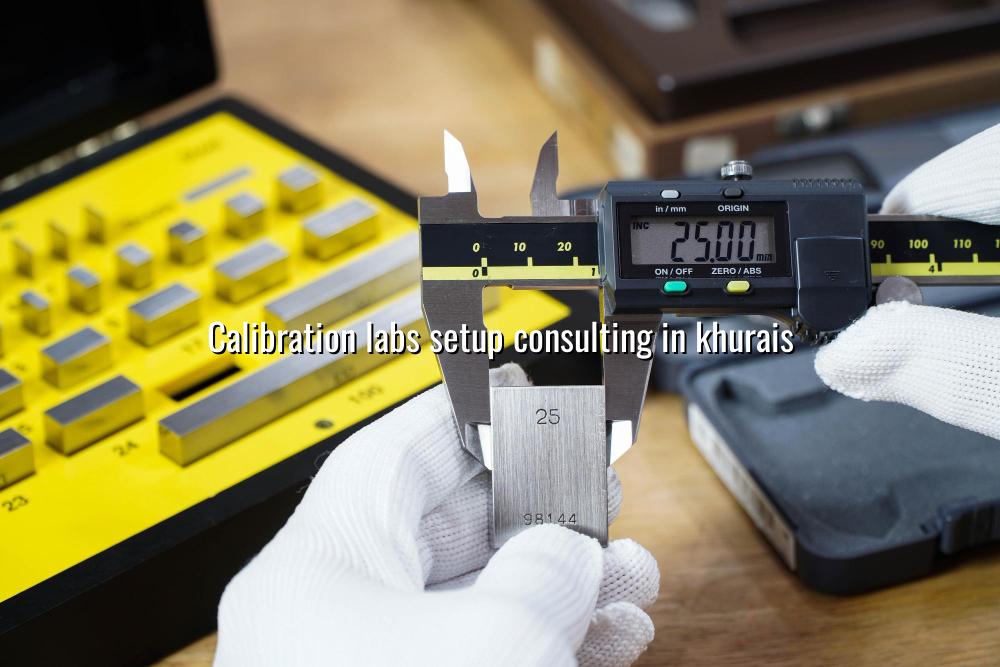
Calibration labs setup consulting in Khurais helps you turn a blank room, container, or workshop bay into a lab that can actually support field instruments, QA records, and ISO/IEC 17025 thinking from day one. We help you avoid the usual mistakes: poor zoning, wrong utilities, undersized benches, and equipment that looks right on paper but fails in real use.
For oilfield support teams, EPC contractors, maintenance crews, and industrial QA managers working around Khurais and the wider Eastern Province, the lab has to match the site reality. That means clean power, temperature control, traceable workflows, and practical access for calibration, repair, verification, and document control.
Calibration Labs Setup Consulting in Khurais for Real Industrial Use
When a client asks for calibration labs setup consulting in Khurais, we start with the actual work list. Which instruments will live there? Electrical test meters, pressure gauges, torque tools, thermometers, balances, or a mix of all of them? A calibration lab serving Saudi industrial work needs clear zoning, a controlled environment, good storage, and a layout that keeps incoming items, testing, labeling, and dispatch moving without people crossing back and forth with instruments in hand.
Start with the workflow, not the furniture
Most site teams focus on benches first. We usually push that back. The better question is how instruments move through the space, from receipt and visual check to calibration, review, labeling, and release. If the process is messy, even expensive equipment won't save it. In our experience, a simple and tidy sequence works better than a crowded room packed with instruments, tools, and paperwork.
Build around traceability and control
A lab in Khurais often supports operations that expect documented traceability, repeatability, and clean records. That means you need proper calibration intervals, a controlled reference standard chain, clear status labeling, and a system that supports ISO/IEC 17025:2017 practice. For many projects, ISO 9001:2015 document discipline also matters because the lab doesn't sit apart from the rest of the quality system.
- Define the scope first — list the instrument types, measurement ranges, and industries the lab will support, so the room and equipment plan match the job.
- Map the space — separate receiving, calibration, storage, and issue areas to keep movement simple and reduce handling errors.
- Select the utilities — check power quality, earthing, lighting, air conditioning, bench load, and any special needs for thermal or pressure work.
- Set up procedures — create intake logs, calibration methods, labeling rules, and reference control steps before the first instrument arrives.
- Leave enough floor space for carts, cases, and mobile-lab movement.
- Keep temperature-sensitive standards away from doors, windows, and hot walls.
- Use clear status tags for accepted, in process, hold, and released items.
- Plan for pick-up and delivery if instruments need special conditions.
- Keep records easy to read for audits, customer review, and internal checks.
Reference Table for a New Calibration Lab in Khurais
| Planning Area | What to Check | Why It Matters |
|---|---|---|
| Room layout | Receiving, calibration, storage and release flow | Keeps instruments moving without mix-ups |
| Environment | Temperature control, dust control, lighting and ventilation | Supports repeatable results and stable standards |
| Utilities | Power, earthing, benches and compressed air where needed | Prevents nuisance faults and unsafe handling |
| Documentation | Logs, labels, calibration records and equipment status | Supports traceability and audit readiness |
What a Khurais Lab Should Be Ready For
A good setup does more than look tidy. It supports the work your team actually does in the field and in the workshop. If your lab will handle pressure, torque, electrical, thermal, or dimensional instruments, the benching and reference equipment should be chosen around that scope, not copied from a generic catalogue. We also look at whether the lab needs a temperature-controlled room, a mobile calibration option, or a pickup-and-delivery flow for items that shouldn't be moved casually.
Keep the design close to the work order
That means avoiding oversized plans that never get used. A smaller, well-structured room with the right standards, fixtures, and document control often performs better than a large room that has no real process behind it. This is especially true for Saudi industrial sites where maintenance windows are tight and every tool needs a clear life cycle.
From empty room to working lab
We help with lab design, equipment selection, layout planning, commissioning, and the practical handover steps that make day-to-day use easier for technicians and supervisors.
Common Problems We See Before Lab Commissioning
We see the same issues again and again. A room is selected without checking airflow. Standard weights or electrical references are ordered before the scope is fixed. There’s no defined quarantine space for incoming instruments. Sometimes the client has a good technical team, but no one has written down how items should move through the lab. That slows everything down once operations begin.
For projects in and around Khurais, the local conditions matter too. Heat, dust, site access, and the pace of oil-and-gas work all shape the lab design. A setup that ignores those realities usually ends up needing rework, and rework costs time that maintenance teams don't have.
- No clear boundary between dirty incoming items and clean release items.
- Missing reference equipment plan for electrical, pressure, or thermal work.
- Poor labeling and weak calibration status control.
- No room for future instrument growth or mobile support.
How Mayon Industrial Services Can Help
We support calibration lab planning with the same practical mindset we use in our ISO/IEC 17025:2017 calibration work, lab setup projects, and industrial engineering services. That includes layout advice, equipment planning, utility checks, document flow, and commissioning support for labs that need to serve field teams, QA departments, and maintenance contractors across Saudi Arabia and the wider Middle East.
Call +91 99447 80844 (India) or +966 59 633 8012 (Saudi Arabia), email services@mayonservices.com, or message us on WhatsApp.
Frequently Asked Questions
It usually covers scope definition, room layout, utilities, equipment selection, document flow, and commissioning planning. For industrial sites, we also look at how instruments will enter, be checked, calibrated, labeled, and released so the process is practical from day one.
If you want traceable calibration work and a lab that can stand up to customer review, then yes, the design should support ISO/IEC 17025:2017 thinking. That doesn't mean every room detail is prescribed, but the workflow, records, control of standards, and environment should all make sense for competent calibration practice.
Yes, we can help with that. A mobile lab needs secure storage, controlled packing, power planning, and a workflow that keeps field instruments organized while still protecting standards and records during transport and onsite work.
That depends on the business, but common planning areas include electrical meters, pressure gauges, torque tools, thermometers, balances, and dimensional items. We also look at whether the lab needs support for thermal, biomedical, mass, or mechanical measurements.
We help verify the room setup, check the planned workflow, review basic documentation, and support the handover so the team knows how to use the lab in daily work. If needed, we can also align the setup with repair, maintenance, training, or calibration service needs.
Ready to set up a lab that works in the real world?
If you need practical calibration lab planning for Khurais or nearby industrial sites, talk to our team and start with a clear scope, not guesswork.
Contact Mayon