
Calibration Labs Setup Consulting in Neom
Plan a calibration lab in Neom with practical layouts, utilities and compliance-focused setup advice built around real industrial use.
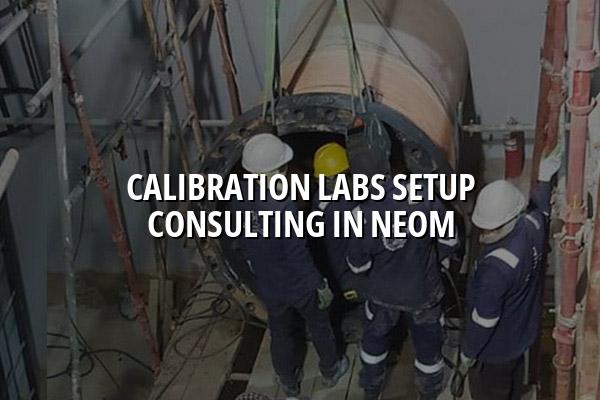
Calibration labs setup consulting in Neom helps you start with the right layout, utilities and equipment choices, so the lab can support traceable work without messy redesigns later. If you're planning a new facility or a satellite lab for industrial projects, this page shows what to think about before walls, benches and instruments arrive.
We work in industrial environments where paperwork, traceability and practical access all matter. In Saudi Arabia and the wider GCC, that usually means a lab built for ISO/IEC 17025 expectations, with temperature control, clean power, safe storage and a workflow that matches how engineers actually use the room day after day.
Calibration Labs Setup Consulting in Neom for Real Industrial Work
When a client asks for calibration labs setup consulting in Neom, the first thing we look at is the actual service scope. A pressure and torque room needs a different flow from a thermal, dimensional or electrical calibration area, and the utilities have to match the instruments you plan to use. We also check whether the lab will serve construction packages, oil and gas contractors, power projects or a mixed industrial base, because that changes the bench layout, storage and movement paths.
What should be decided before fit-out starts?
The early decisions are the ones that save the most trouble. We look at room zoning, controlled access, stable temperature, humidity control, lighting, flooring, benches, compressed air, grounding, network points and safe instrument handling. If you skip those items and focus only on shelves and furniture, you usually end up moving benches later, chasing vibration issues or fighting inconsistent environmental conditions during calibration work.
Why ISO/IEC 17025 thinking matters from day one
Even if the lab will start small, the work should be designed around traceability. That means documented equipment lists, reference standards with valid calibration status, controlled records, and space for sample receipt, verification and return. For projects tied to Neom, Dammam or other Saudi industrial sites, this keeps the lab ready for audits and client reviews without last-minute rework. We see the same pattern in India too: the teams that plan for traceability early spend less time correcting the room after commissioning.
- Define the scope first — list the calibration disciplines, expected instrument ranges and whether the lab will support onsite or in-house work.
- Map the room flow — place receiving, cleaning, testing, storage and dispatch so instruments move in one direction.
- Fix the utility plan — confirm power quality, earthing, air, network, temperature control and any special vibration controls.
- Select standards and benches — choose reference equipment, racks, counters and fixtures that suit the declared scope.
- Keep temperature-sensitive references away from direct sunlight and door openings.
- Separate dirty incoming instruments from the clean testing area.
- Plan enough bench depth for comparators, baths and fixtures, not just hand tools.
- Add clear storage for tags, seals, certificates and quarantine items.
- Build access for pick-up and delivery if special-condition transport is part of the workflow.
Reference Table for a Neom Calibration Lab Setup
| Planning Area | What to Confirm | Why It Matters |
|---|---|---|
| Room layout | Receiving, test, storage and dispatch zones | Prevents cross-traffic and handling mistakes |
| Environmental control | Stable temperature and suitable humidity control | Supports repeatable results for sensitive instruments |
| Utilities | Power, earthing, air and network points | Keeps reference equipment and IT systems stable |
| Traceability | Reference standards, records and calibration status | Aligns the lab with ISO/IEC 17025 practice |
What a Good Calibration Lab Design Usually Includes
A good lab design is practical before it looks polished. For Neom projects, we usually recommend a clean instrument intake point, a controlled work area, secure storage for standards, and enough room for calibration support equipment such as pressure comparators, temperature baths, dead weight testers or electrical test benches. If the lab also supports mobile work, the arrangement should make packing, verification and return easy.
Turnkey setup is more than furniture
People sometimes think lab setup means benches, cabinets and a fresh coat of paint. In real jobs, the harder part is getting the workflow, documentation and utility support right. We help clients think through commissioning, operator movement, records, environmental monitoring and how the lab will scale when the first few projects grow into a steady workload.
Built for Saudi project realities
Neom, Dammam and other Saudi industrial sites often need labs that can support contractor workflows, calibration returns and periodic verification without losing control of reference equipment. That means the setup has to be tidy, documented and ready for repeat use, not just visually complete.
Typical Questions We Hear During Lab Setup Consulting
Should the lab be in-house or split with mobile work?
If the service mix includes onsite calibration across industrial facilities, a mobile calibration lab can take pressure off the main room. The fixed lab can then focus on controlled work, storage and reference handling, while the mobile unit handles field access and urgent site visits.
How much space does the workflow need?
That depends on the range of instruments. A small metrology room, a pressure area and a thermal corner may fit in a modest footprint, but you still need space for movement, packing and verification. Crowding the room usually creates handling errors before it saves any money.
What standards should shape the design?
For calibration labs, ISO/IEC 17025:2017 is the main anchor, with ISO 9001:2015 for quality management where the client needs a broader system. For electrical calibration work, EURAMET CG-15 is a useful technical reference, and BS EN standards matter where inspection and lifting-related work is part of the operation.
How We Shape a Lab Around Your Instruments
We usually start with the instruments, not the wall plan. If the scope includes thermal baths, gauges, torque tools, mass standards or electrical references, we map the room around their storage, stabilization and test sequence. That keeps the path short and reduces unnecessary handling. In our experience, the cleanest labs are not the biggest ones; they're the ones where every item has a place and every movement has a reason.
For industrial clients in Saudi Arabia and India, this approach helps when the lab must support project close-out, periodic checks and field returns. A properly set-up lab also makes it easier to document what was received, what was tested and what went back to the client. That matters when multiple teams touch the same instrument over its life.
- Room zoning supports cleaner handling and faster sorting.
- Controlled storage keeps standards and sensitive tools protected.
- A clear bench plan helps technicians work without crowding.
- Documentation points should sit near the receiving and dispatch areas.
How Mayon Industrial Services Can Help
Mayon Industrial Services helps you plan calibration labs setup consulting in Neom with practical input on layout, utilities, reference equipment, storage and workflow. We also support lab design and setup, calibration services, condition monitoring, inspection, orbital welding and repair work, so the facility fits the real industrial tasks you expect to run. If you want a lab that can stand up to ISO/IEC 17025 expectations and day-to-day use, talk to us before you lock the room design.
Call +91 99447 80844 (India) or +966 59 633 8012 (Saudi Arabia), email services@mayonservices.com, or message us on WhatsApp.
Frequently Asked Questions
It usually covers layout planning, utility checks, workflow design, reference equipment selection and support for ISO/IEC 17025-style traceability. If the project needs onsite and mobile capability, we also look at how the lab will receive, pack and dispatch instruments without confusion.
We start with the scope of work, then shape the room around traceability, equipment control and record handling. That means stable environmental conditions, safe storage for standards and enough separation between intake, testing and dispatch areas.
Yes. A lot of industrial clients want a fixed lab for controlled work and a mobile calibration lab for site visits. We help plan both sides so the equipment, paperwork and handling process stay consistent.
Clean power, reliable grounding, suitable air supply, temperature control and enough data connectivity are the big ones. Depending on the scope, you may also need special bench loads, vibration control or storage for reference equipment that must stay stable between uses.
Yes, we support clients in Saudi Arabia and across the Middle East, including industrial work linked to Neom and Dammam. Our team understands the practical expectations around traceability, equipment handling and setup discipline that project teams usually ask for.
Ready to plan the lab before the fit-out starts?
A good design now saves rework later, and it gives your team a calibration space that makes sense on day one.
Contact Mayon