
Calibration Training in Dammam
Practical calibration training for teams who work with instruments, records, and lab discipline in Saudi industry.
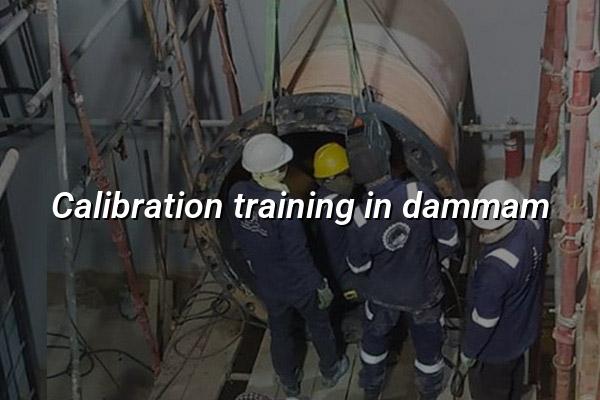
Calibration training in Dammam helps your team handle instruments, records, and traceability with less guesswork and fewer repeat mistakes. If you're setting up a lab, tightening documentation, or training new technicians, this page shows what the workshop should cover and where it fits in daily work.
We run this kind of training for industrial teams across Saudi Arabia and the wider Middle East, especially in oil & gas, petrochemical, power, cold chain, and manufacturing settings. In our experience, the best results come when the training matches the instruments on your floor, not a generic classroom handout.
Calibration Training in Dammam for real workshop use
This is not a theory-only session. Calibration teams usually need the basics of instrument handling, environmental checks, data recording, uncertainty awareness, and a clean way to decide when an instrument should be used, verified, or removed from service. For Saudi plants and service contractors, that matters because audit findings often start with small errors: a missing label, a bad range selection, or a record that doesn't match the actual instrument.
Who should attend
We usually recommend it for calibration technicians, QA staff, maintenance supervisors, and engineers who sign off on instruments or records. It also helps procurement and lab setup teams understand what a calibration room needs before equipment arrives. If your company works with pressure gauges, thermometers, balances, torque tools, electrical test gear, or dimensional instruments, the workshop makes more sense because the examples come from those tools.
What people usually want from it
Most teams call us because they want fewer rejected records, cleaner traceability, and a better grip on ISO/IEC 17025 style discipline. Some want to train a new lab team from scratch. Others already have a lab but need to fix habits around stickers, validity status, checks before use, and the way results are written up for internal review.
- Start with the instrument list — we review the actual gauges, meters, standards, and tools your team uses, so the examples feel familiar.
- Check the workflow — your team sees how receiving, identification, environmental control, calibration, and release should fit together.
- Work through record keeping — we show how to document results clearly, avoid gaps, and keep traceability easy to follow.
- Close with applied practice — the final part focuses on your own site issues, so supervisors can take the lesson back and use it immediately.
- Covers practical calibration management techniques, not just definitions.
- Useful for teams in Dammam Industrial City 2 and other Saudi industrial zones.
- Works well for labs handling electro-technical, thermal, pressure, mass, torque, and dimensional tools.
- Helps teams build habits that support ISO/IEC 17025:2017 discipline and cleaner internal audits.
Calibration training topics and what your team gets from them
| Topic | What the team learns | Typical workplace use |
|---|---|---|
| Instrument handling | How to receive, inspect, identify, and store instruments before calibration or use | Lab intake, tool issue, and pre-use checks |
| Traceability and records | How to keep serial numbers, status, and results aligned with the right instrument | Audit files and internal review |
| Environmental control | Why temperature, humidity, and clean working habits matter for result quality | In-house labs and mobile calibration work |
| Decision making | When to accept, monitor, verify, or withdraw an instrument from service | Maintenance, QA, and release decisions |
Why this training matters for Saudi industrial sites
In Dammam, Jubail, Ras Al Khair, and the wider Eastern Province, teams deal with pressure systems, electrical panels, process equipment, and cold-chain assets that can't afford sloppy records. A short training session can prevent long audit discussions later. It also helps new staff understand why one wrong assumption about range, tolerance, or status can affect a whole batch of instruments.
Built around your site's standards and habits
We keep the focus on ISO/IEC 17025:2017 practices, ISO 9001:2015 quality habits, EURAMET CG-15 where electrical calibration applies, and the BS EN requirements that matter for inspection work. If your team already has a procedure, we can work through it. If the procedure is weak, we point out where the gaps usually appear and how to fix them without turning the session into a lecture.
What supervisors like about it
They get a common language. Technicians stop using loose terms, QA gets cleaner records, and maintenance teams know what to ask for before sending an instrument to the lab. That makes day-to-day work easier, especially on mixed sites where electrical, mechanical, and thermal assets all sit under the same maintenance plan.
How we usually structure calibration management workshops
Site review
We look at the instruments, forms, and routines you already use, then shape the workshop around them.
Classroom discussion
The team goes through core points such as traceability, handling, checks, and record control using plain examples.
Worked examples
We use realistic cases from pressure, thermal, mechanical, and electrical instruments so the lesson sticks.
Action points
Before the session ends, your team gets a short list of changes they can make in the lab or on the floor.
How Mayon Industrial Services Can Help
We provide calibration management techniques workshops for engineers and technicians, and we can connect that training with the practical side of lab work, onsite calibration, and instrument care. Our team also supports mechanical services, inspection, orbital welding, lab setup, and repair work, so the training sits inside a real industrial context instead of a classroom-only example. If you want your Dammam team to work with cleaner records and better lab discipline, talk to us.
Call +91 99447 80844 (India) or +966 59 633 8012 (Saudi Arabia), email services@mayonservices.com, or message us on WhatsApp.
Frequently Asked Questions
It helps your team handle calibration work with better discipline, from receiving instruments to recording results and releasing them back to service. For Dammam-based plants, the biggest gain is usually fewer documentation errors and clearer traceability during QA reviews.
Technicians, QA staff, maintenance supervisors, and engineers who approve or review instruments get the most value. It's also useful for teams setting up a new lab or trying to standardize practices across multiple shifts.
Yes. We use ISO/IEC 17025:2017 style discipline as the backbone for traceability, records, instrument status, and clean working habits. We keep the discussion practical, so the team can apply it to their own calibration room or field service process.
Yes, and that's usually the best way to do it. We can shape the session around your pressure, thermal, electrical, dimensional, torque, or mass instruments, plus the forms and routines your team already uses.
It is. We serve Saudi Arabia and the wider Middle East, so teams in industrial areas across the region can use the same practical format. The content changes a bit depending on the site, but the core discipline stays the same.
Ready to train your calibration team properly?
If you want cleaner records, better lab habits, and a workshop built around your actual instruments, speak with Mayon Industrial Services.
Contact Mayon