
Calibration Training in Hail
Practical training for teams who need stronger calibration habits, cleaner records and better traceability.
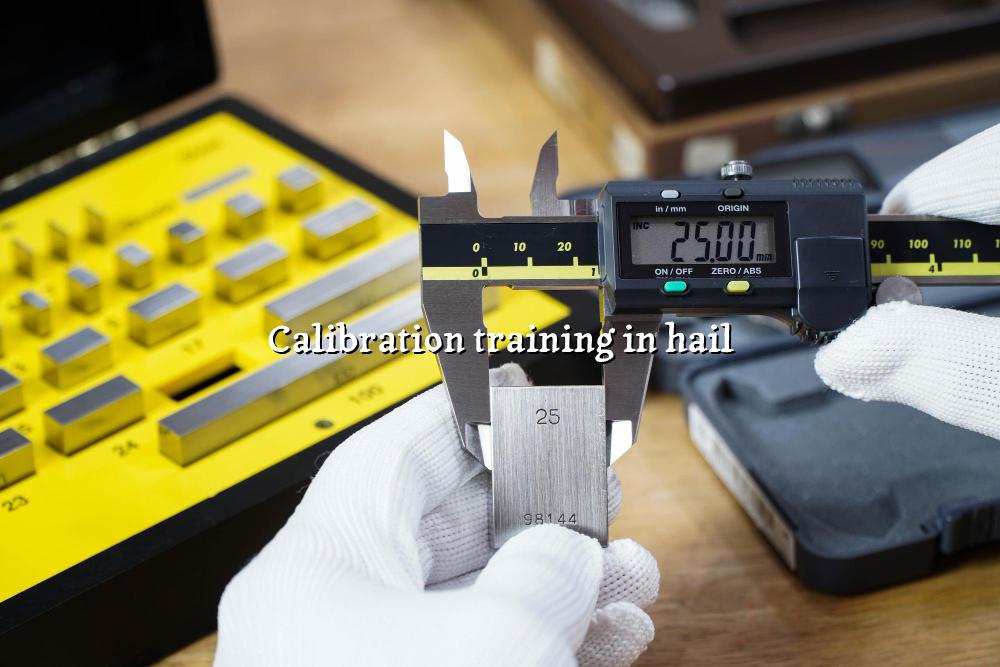
Calibration training in Hail helps your team handle instruments with more care, record results properly, and make better day-to-day decisions on the shop floor or in the lab. If you're dealing with recurring audit comments, mismatched readings, or inconsistent records, this page shows how focused training can solve those problems without slowing production.
We work with engineering teams that support oil & gas, power, manufacturing, healthcare and cold-chain operations across Saudi Arabia, India and the Middle East. In practice, that means training people who need to work around ISO/IEC 17025 expectations, real instruments, and real deadlines rather than classroom theory alone.
Calibration Training in Hail for Engineers and Technicians
Most teams don't need more slides. They need people who can check an instrument, read the certificate correctly, understand uncertainty at a basic level, and keep traceability intact from the counter to the report. Calibration training in Hail is useful when supervisors want cleaner internal processes, better handover between shifts, and fewer avoidable mistakes in fields like pressure, temperature, mass, torque, dimensional and electrical calibration.
What the training covers
Our calibration management workshops are built around practical tasks. We talk through how an instrument is received, identified, verified, calibrated, labelled and released, and we show what good documentation looks like. People usually ask about certificates, interval setting, equipment history cards, and how to decide when an instrument should be sent for in-house work, onsite work, or pick-up and delivery when special handling is needed.
Why Hail teams ask for it
Hail has a mix of industrial activity and remote-site operating conditions, so the same team may deal with workshop tools one day and field instruments the next. That puts pressure on maintenance and QA staff to keep standards consistent. Training helps them compare instruments properly, understand why a reading drifts, and spot when a problem is really process-related rather than a fault with the device itself.
- Start with the instrument list — we group the actual devices your team handles, such as gauges, thermometers, balances, torque tools or electrical test gear.
- Review current records — we look at certificates, labels, intervals and the way results are filed, so gaps show up early.
- Walk through the calibration flow — attendees see how a check starts, how a reference standard is used, and how traceability should appear in the paperwork.
- Practice real scenarios — we use examples like failed readings, damaged seals, out-of-tolerance instruments and release decisions after recheck.
- Close with team-specific actions — the group leaves with clearer internal rules for handling, logging and escalation.
- Build better habits around instrument identification and tag control.
- Reduce confusion between calibration status, verification and simple visual checks.
- Improve understanding of ISO/IEC 17025-style traceability and documentation.
- Help technicians know when onsite service or lab work is the better option.
- Support QA, maintenance and procurement teams with a shared process.
Common calibration training topics and where they help most
| Topic | What the team learns | Typical use |
|---|---|---|
| Traceability basics | How reference standards, certificates and records connect | Audit preparation and lab discipline |
| Instrument handling | Storage, transport, labeling and simple protection steps | Maintenance stores and field use |
| Calibration records | How to read results, status tags and out-of-tolerance notes | QA review and handover control |
| Interval planning | How usage, risk and history influence review cycles | Asset control and procurement planning |
How the training supports audits, maintenance and lab work
Good training reduces the small errors that create big headaches later. A technician who understands reference hierarchy is less likely to mix up working instruments and standards. A supervisor who knows the difference between a check and a calibration is in a better position to approve records, defend a decision during an audit, or send the right item for recalibration before production stops.
Where it makes an immediate difference
We usually see the quickest gains in plants that run pressure gauges, temperature sensors, weighing equipment, torque tools, or test instruments for electrical and mechanical work. Teams become more confident when they have a simple method for receiving equipment, checking status, and escalating anything damaged or uncertain. That practical discipline matters in Hail, and it matters just as much in Dammam, Chennai and other industrial centres we serve.
Built for real industrial teams
We keep the session grounded in actual work: certificates, labels, uncertainty basics, standard handling, and the simple decisions people make every day. No classroom filler. Just the parts that help technicians do the job with more consistency and less rework.
What your team can practice after the session
People remember the parts they can use the same week. That's why we build the workshop around routine tasks such as checking instrument condition, confirming identification, and spotting anything that could affect measurement confidence. We also explain how temperature-controlled laboratory work differs from mobile onsite calibration, and why special handling or pick-up and delivery may be the safer option for sensitive devices.
For teams in Saudi Arabia and the wider Gulf, that can mean better preparation for oil & gas, petrochemical and power environments where traceability and documentation are expected. For Indian sites, it often means better control across multi-shift operations and fewer delays when equipment moves between departments, vendors or project locations.
How Mayon Industrial Services Can Help
We run calibration management training alongside our ISO/IEC 17025 calibration services, so the advice comes from day-to-day field and lab work, not from theory alone. If your team in Hail needs stronger habits around traceability, instrument care, or certificate reading, we can shape the session around your actual equipment and workflow. We also support related needs such as calibration, inspection, mechanical services, lab setup and repair work when your operation needs more than a workshop discussion.
Call +91 99447 80844 (India) or +966 59 633 8012 (Saudi Arabia), email services@mayonservices.com, or message us on WhatsApp.
Frequently Asked Questions
It helps your team handle instruments properly, read calibration documents with confidence, and keep traceability clear. That usually matters most where QA, maintenance and production all touch the same equipment and nobody wants avoidable rework.
We normally see engineers, technicians, QA staff, maintenance supervisors and procurement people attend. If a person handles instrument receipt, release, storage or record review, they benefit from the session quickly.
Yes. That's usually the best way to do it. We can focus on the instruments you actually use, such as pressure, temperature, electrical, dimensional, torque or mass and volume devices, so the discussion stays practical.
No, it supports the people and process around the laboratory or onsite work. The training helps staff understand records, traceability and handling, while the actual calibration work still needs the right setup, standards and controls.
Yes. We serve clients across Saudi Arabia, India and the Middle East, including site-based work from Dammam Industrial City 2 and our head office in Chennai. If your team is spread across more than one location, we can still keep the training aligned.
Send us your site location, the instruments your team handles, and the kind of problems you're seeing with records or process control. We'll then shape the discussion and coordinate the next step through our contact page, quote request form or phone lines.
Ready to make your calibration process easier to manage?
If your team in Hail needs practical training that fits real industrial work, talk to Mayon and we'll build the session around your equipment and records.
Contact Mayon