
Onsite Pipeline Hydrotesting Service Company in Jubail
Field hydrotesting for pipelines, manifolds and connected systems with traceable methods for Jubail and nearby industrial plants.
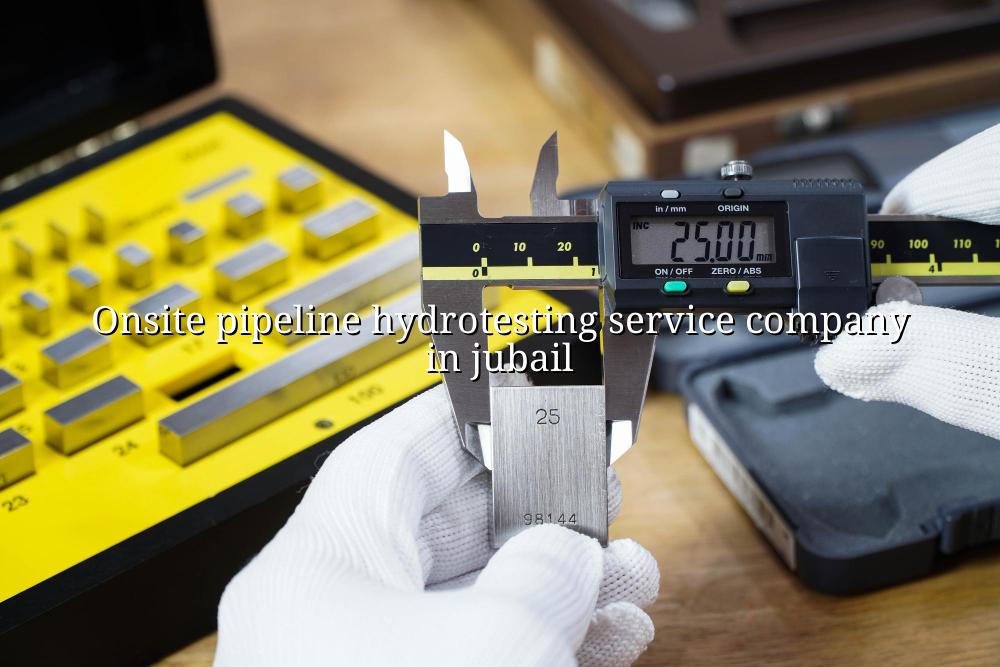
Onsite pipeline hydrotesting service company in Jubail is exactly what you need when a project can't afford guesswork. You want controlled pressure testing, clean records, and a team that can work around live industrial schedules without wasting time.
We support fabrication yards, plant maintenance teams, shutdown crews, and commissioning engineers across Jubail and the wider Saudi industrial corridor. Our work fits the reality on site: tight access, hot weather, permit rules, and the need for traceable results that stand up during handover.
Why an onsite pipeline hydrotesting service company in Jubail matters
Pipeline hydrotesting is more than filling a line with water and raising pressure. For Jubail projects, the job needs proper isolation, calibrated gauges, controlled pressurization, stable hold periods, and a clear record of what happened at each stage. That matters for oil & gas skids, utility lines, process piping, firewater networks, and package systems where a small leak can stop the next workfront.
What we check before pressure goes up
We start with the practical basics. Line routing, end caps, vents, drain points, test medium quality, and the condition of fittings all get checked before the first pump stroke. If the circuit includes a manifold, valve train, or flexible section, we make sure the setup is suitable for the test pressure and the sequence the site team wants to follow.
How the test is carried out on site
Once the line is ready, the test is built up in steps and held at the agreed level for observation. Our team watches for pressure drop, visible seepage, flange sweating, seal movement, and any abnormal response from the line. We work with calibrated instruments and controlled methods so the result is useful for QA, mechanical completion, and final acceptance.
- Plan the circuit — confirm the line limits, test medium, test pressure, and isolation points with your site engineer.
- Prepare the system — install blanks, vents, drain connections, and the pump set; then check that the line is clean and full of water where required.
- Pressurize in stages — bring the line up gradually so the system can settle and any issue shows up early.
- Hold and inspect — maintain the target pressure, watch gauges and joints, and document the condition at each check point.
- Depressurize safely — release pressure in a controlled way, drain the line, and hand over the test records for review.
- Use calibrated pressure gauges and recording tools tied to ISO/IEC 17025:2017 traceability.
- Keep the test medium, pressure level, and hold time aligned with the project procedure.
- Check flanges, valves, hose connections, and temporary fittings before pressurizing.
- Make sure the area is barricaded and the line of fire is controlled during the test.
- Record the setup, pressure behavior, and final condition for the handover file.
Common onsite hydrotesting elements and what they do
| Item | Purpose | Site benefit |
|---|---|---|
| Hydrotest pump | Raises the line pressure in a controlled way | Lets the crew step up pressure without sudden shock |
| Calibrated pressure gauge | Shows the actual pressure during filling and holding | Supports traceable readings for QA and handover |
| Hoses and fittings | Connects the pump set to the pipeline or equipment | Helps avoid leaks at temporary test connections |
| Vent and drain points | Removes trapped air and empties the circuit after testing | Improves test stability and makes post-test cleanup easier |
| Blanks / caps / isolation devices | Seals off the section being tested | Keeps the test boundary clear and safer to manage |
How hydrotesting supports safer commissioning in Jubail
Good hydrotesting catches weak points before hot work closes the job. In Jubail, that can mean a flange face that was nicked during installation, a joint that was tightened unevenly, or a branch connection that needs another look before start-up. When the test is done properly, the line team gets confidence, and the client gets a cleaner commissioning path.
Why traceable records matter
Industrial clients often ask for more than a pass or fail note. They want the pressure readings, the equipment used, the test boundary, and the site conditions captured in a way that can be reviewed later. That is where disciplined records and calibrated tools make a real difference, especially on projects tied to ISO 9001:2015 quality systems and demanding shutdown schedules.
Built for live industrial sites
We see the same pattern on many projects: the pipe is ready, the schedule is tight, and the site wants one team that can mobilize, test, report, and leave the area tidy. That is the kind of job we work on every week.
Where onsite hydrotesting is used across Saudi industrial work
We often support pressure testing on process piping, utility piping, and pre-commissioning circuits in and around Jubail Industrial City. The exact scope changes from job to job, but the expectation stays the same: controlled testing, clear records, and a crew that understands the site permit process.
For package systems, skids, manifolds, and fabricated assemblies, onsite testing helps avoid unnecessary transport and rework. That matters when the equipment is already installed or connected to adjacent systems and can't be shifted easily.
We also see hydrotesting linked with repair work after modification or replacement of sections, nozzles, and fittings. In those cases, the test gives the client a clean checkpoint before the final mechanical completion sign-off.
What makes a good hydrotest plan before the truck reaches site
A solid hydrotest plan saves time on site. It tells the crew which line is being tested, what the boundaries are, which instruments will be used, and how the test medium will be handled. It also helps the site arrange access, barricading, and permit approvals before the team starts setting up.
We usually ask for the drawing or loop boundary, the required test pressure, the agreed hold period, and any special constraints such as temperature, access, or nearby operating equipment. If the scope sits inside a larger shutdown, those details matter even more because one delay can ripple into the rest of the schedule.
- Confirm the test medium and disposal plan before mobilization.
- Verify that temporary blinds, caps, and hoses match the pipe size and pressure class.
- Keep the calibration status of gauges and recorders current.
- Set up clear communication between the test crew and the site permit holder.
How Mayon Industrial Services Can Help
We support hydrotesting alongside calibration, mechanical services, inspection work, commissioning support, and repair jobs, so you don't need to coordinate five different vendors for one site. Our team can bring the right pressure-testing setup, handle the reporting, and work with your maintenance or QA staff on the boundary and test sequence. If your Jubail project needs onsite pipeline hydrotesting with practical field support, talk to us and we'll map the scope with you.
Call +91 99447 80844 (India) or +966 59 633 8012 (Saudi Arabia), email services@mayonservices.com, or message us on WhatsApp.
Frequently Asked Questions
We do, through Mayon Industrial Services and our Saudi operation in Dammam Industrial City 2. We mobilize for industrial projects in Jubail and nearby areas, with the focus on safe testing, proper records, and a setup that fits the site. If the line needs calibration support or commissioning backup too, we can cover that in the same job plan.
Typical scope includes setup of the pump and gauges, isolation of the circuit, filling and venting, staged pressurization, pressure hold, inspection of joints and fittings, and safe depressurization. The exact scope depends on your project procedure, pipe size, and the test boundary. We align with the site team before the work starts so there are no surprises.
Because a gauge is only useful if the reading can be trusted. Calibrated instruments help the client, QA team, and commissioning crew rely on the pressure value shown during the hold period. It also fits the traceability expectations that industrial sites in Saudi Arabia usually ask for.
Yes. Skids, manifolds, and fabricated assemblies are common hydrotest candidates because they're often tied into a larger package or installed in tight spaces. The main thing is to define the boundary clearly and make sure the temporary test connections are suitable for the pressure involved.
Yes, and that is often the cleanest way to handle it. We can support the hydrotest alongside flange work, bolt torquing, repair tasks, inspection, and commissioning support so your site team isn't juggling separate contractors. That usually makes the handover smoother.
Send us the line details, test pressure, boundary drawing, and your site location in Jubail or nearby. You can call, email, or message us on WhatsApp, and we'll come back with the next steps for mobilization and scope review. If you already have a shutdown window, include that too.
Ready to test your pipeline with confidence?
If your Jubail project needs onsite hydrotesting, talk to a team that understands pressure, permits, and the reality of industrial work.
Contact Mayon