
Pneumatic Testing Service Company in Arar
Onsite pneumatic pressure testing for valves, lines and equipment in Arar, with practical reporting for maintenance and inspection teams.
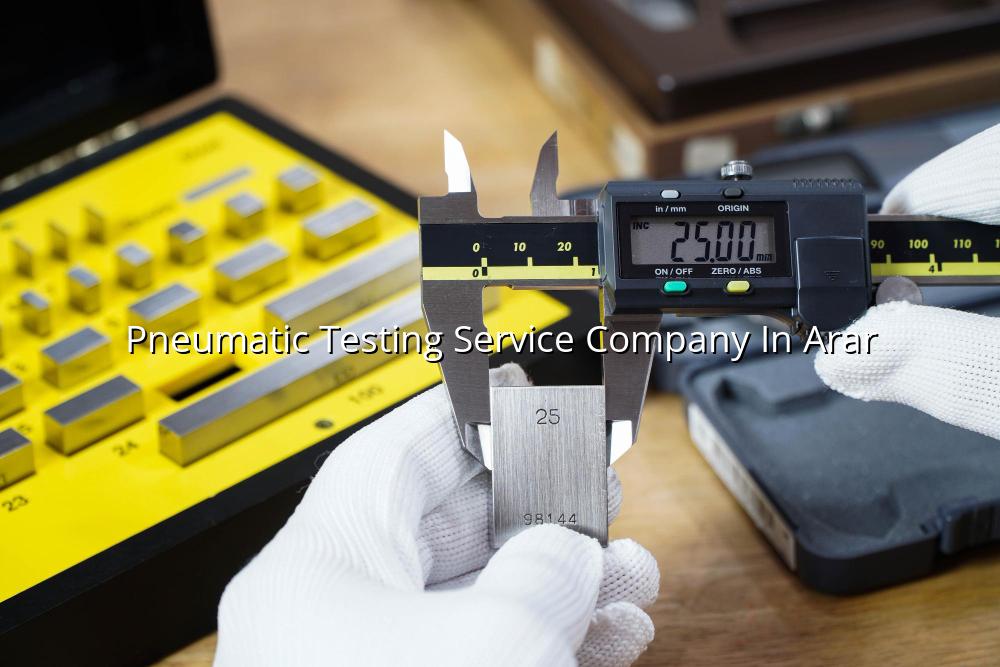
Pneumatic testing service company in Arar searches usually come from teams that need a safe, practical pressure test without taking a plant offline longer than necessary. We help you verify tightness, find leaks early and document the result in a way maintenance, QA and project teams can use.
In Saudi industrial work, especially around Arar and the wider Northern Borders region, you often need proof that a line, vessel or assembly can hold pressure before handover or restart. We support that need with onsite work, mobile lab capability and the kind of traceable process clients expect under ISO/IEC 17025:2017 thinking, even when the job is on a busy site.
Pneumatic Testing Service Company in Arar for site work that matters
When people call us for pneumatic testing, the real need is usually simple: confirm that a system holds pressure safely and that any leak is found before the equipment goes into service. That can be a package skid in an Arar industrial yard, a section of piping at a construction site, or equipment tied into a larger mechanical completion package. We treat each job as a controlled test, not a checkbox exercise.
Where pneumatic testing fits best
Pneumatic testing is used when the system needs a gas-based pressure check, often with air or nitrogen depending on the job specification and site rules. It’s common on low-volume systems, instrument lines, small assemblies and equipment that cannot be filled with water. In our experience, the best results come when the line is cleaned, isolated and properly prepared before the test starts.
What we look at before pressurising
We first check the test boundary, the isolation points and the pressure rating of the parts in the circuit. That sounds basic, but it’s where most delays begin. A flange left loose, a temporary blind left out of the package or a valve not fully isolated can waste half a shift. We keep the sequence steady so the team on site knows exactly what is happening and why.
- Review the test pack — we confirm the line list, test pressure, acceptance point and the equipment that will be included.
- Inspect and prepare the boundary — our team checks blanks, vents, fittings and isolation points before any pressure is applied.
- Pressurise in stages — we raise pressure gradually so the system can stabilise and any leak shows up safely.
- Hold, observe and record — the result is watched closely, with leak points, pressure behaviour and final status documented for your file.
- Use pneumatic testing only when the procedure calls for gas testing, not as a default for every system.
- Prepare a clear test boundary so your team knows what is included and what is not.
- Keep a calibrated reference on hand where the job requires documented pressure verification.
- Plan the work around site access, permits and isolation windows to avoid stop-start delays.
Choosing the right pressure test for the job
| Test type | Typical use | Site consideration |
|---|---|---|
| Pneumatic testing | Gas pressure hold checks for lines, assemblies and low-volume systems | Needs tight control of the boundary and careful staged pressurisation |
| Hydrostatic testing | Water-based strength and leak verification for many piping systems | Useful where the system can be safely filled and drained after test |
| Leak testing | Finding the exact point where pressure loss is happening | Often used after initial isolation or during troubleshooting |
| Commissioning support | Final check before handover or startup | Works best with clear documentation and the right sign-off chain |
Why pressure testing needs a disciplined method
Pneumatic tests carry more stored-energy risk than a lot of teams first expect, which is why the work has to be planned with care. The system must be isolated, the personnel around it briefed, and the pressure raised in a controlled way. We’ve seen good projects slowed down by rush decisions, and we’ve also seen difficult jobs go smoothly when the boundary was defined properly from the start.
Records that stand up in handover meetings
Procurement and project teams in Saudi Arabia and across the GCC usually want clear evidence that the test was carried out properly. That means the pressure level, the equipment tested, the observation period and the final condition should all be written down in plain language. If your system is part of oil & gas, petrochemical, power or construction work, the report needs to make sense to the next person who reads it, not just the person who wrote it.
Useful on shutdown and project work
We often support shutdown crews, commissioning teams and mechanical contractors who need pressure testing at a point in the schedule where every hour counts. A clear plan, the right isolation, and a team that understands industrial site work in Arar make the test much easier to manage.
What you should expect from a pneumatic test contractor
A good contractor doesn’t just show up with gauges. They check the site conditions, ask the right questions and make sure the test is suited to the equipment in front of them. For an Arar job, that might mean dealing with access limits, hot weather, plant movement or a compressed schedule from a shutdown window. We plan for those things instead of pretending they won’t matter.
Our team also understands that a pressure test can affect more than one discipline. Mechanical, QA, operations and safety all have a stake in it. So we keep communication direct and the test sequence clear. No one likes surprise steps in the middle of a live site.
Many clients ask us to tie the test work into broader mechanical or commissioning support. That can include flange work, bolt torquing, hydrotesting, valve preparation or final system checks before start-up. When the same team understands the full chain, the handoff is cleaner and the job tends to move faster.
We also work with companies that need a service partner across Saudi Arabia and the Middle East, not just a one-off visit. That wider operating picture matters when you are managing assets, not just a single repair ticket.
How Mayon Industrial Services Can Help
We support pneumatic testing as part of a wider industrial service line that includes calibration, mechanical work, inspection, orbital welding and lab setup. If your Arar project needs onsite pressure testing, a controlled method for leak checks, or linked support like commissioning and equipment verification, we can work with your team and keep the scope practical. If you want a partner who speaks the language of industrial sites, start with us.
Call +91 99447 80844 (India) or +966 59 633 8012 (Saudi Arabia), email services@mayonservices.com, or message us on WhatsApp.
Frequently Asked Questions
It’s used to verify that piping, assemblies or equipment can hold gas pressure without unacceptable leakage. In practice, that means the team checks the boundary, raises pressure carefully and records what happens during the hold period. It’s a common request before handover, restart or final commissioning.
Choose pneumatic testing when the system cannot be filled with water or when the procedure specifically calls for gas-based testing. That happens on some low-volume lines, instrument circuits and sensitive assemblies. If the job can be hydrotested safely, many sites still prefer that route for strength testing, so the test method should match the equipment and the scope.
Yes, we support onsite work, which is usually what clients need for industrial sites and project packages. Our mobile capability helps when the equipment is fixed in place or when moving it would create more downtime than the test itself. We can also align the job with other mechanical or calibration tasks if that helps your schedule.
We normally ask for the test pack, line or equipment details, intended test pressure, the system boundaries and any site restrictions. If there are permits, isolation rules or special gas requirements, tell us upfront. That makes planning easier and prevents avoidable rework once we’re on site.
Yes, we regularly work with industrial clients across Saudi Arabia and the wider Middle East. Those projects often need clear method control, disciplined reporting and a crew that understands shutdown pressure. We’re set up for that kind of environment, including projects that need support from Dammam Industrial City 2 or coordination with teams in the field.
Yes, we document the essential details so your handover file is usable. That usually includes the test scope, pressure information, observations and result status in a format the project team can keep. Clear records matter because the next person who reads them may not have been on site.
Need a pressure test you can trust?
Send us your test scope, site location and schedule, and we’ll help you plan the work around your project needs.
Contact Mayon
Pneumatic testing is one of those jobs that looks simple from a distance and gets serious fast once pressure is involved. If you need a steady team in Arar that understands industrial testing, reporting and site discipline, Mayon Industrial Services is ready to help.